About this artwork
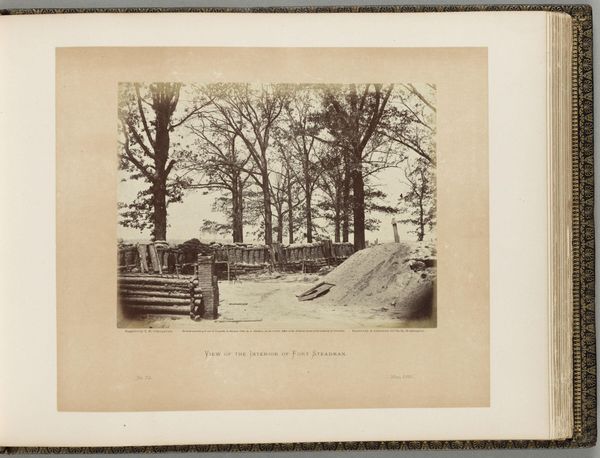
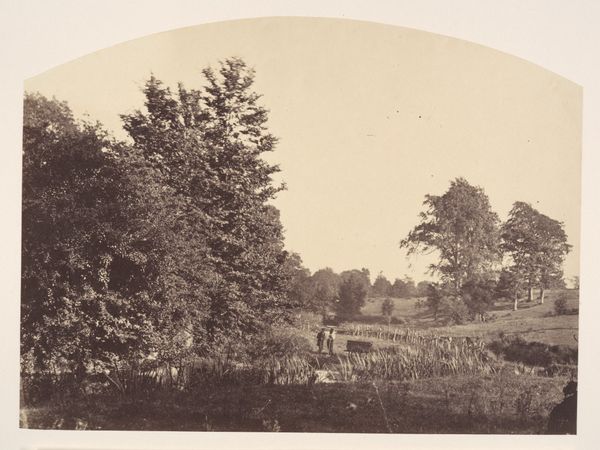
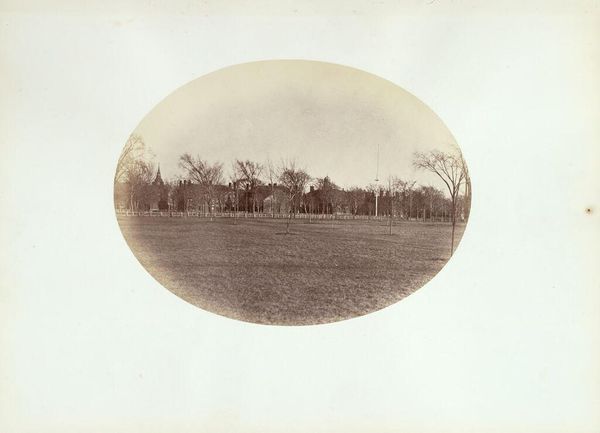
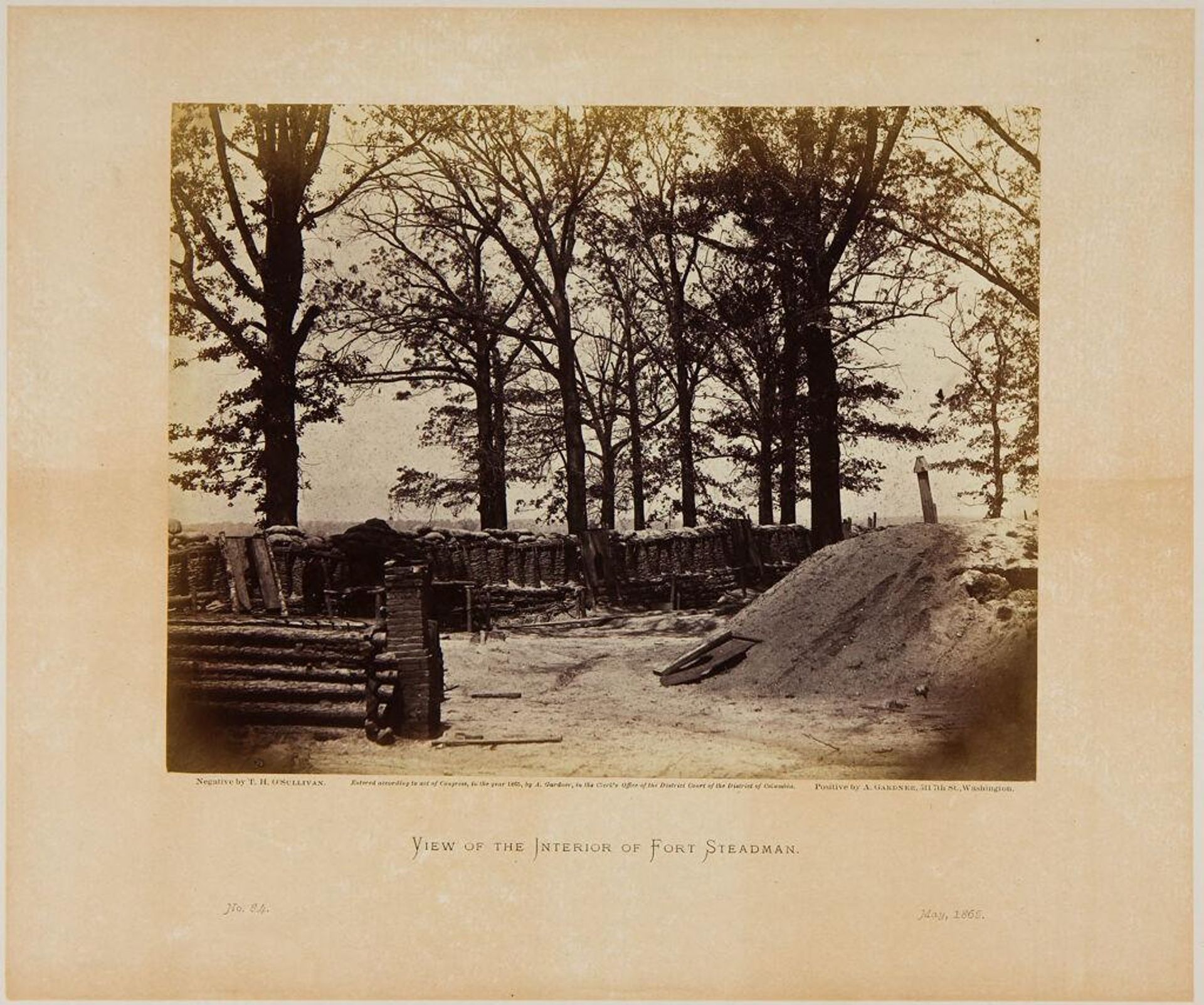
Editor: This is Timothy O'Sullivan's "View of the Interior of Fort Steadman." It's a haunting photograph. It makes me think about the trauma and human cost of war. What do you see in this piece? Curator: I see a space defined by conflict and consider the power structures inherent in war. O'Sullivan's work often implicates the viewer, forcing us to confront the realities of violence and its lasting impact on communities. How does the absence of human figures impact your reading? Editor: It amplifies the sense of loss and emphasizes the environment as a silent witness. Curator: Exactly. The emptiness underscores the systemic violence and the erasure of individual stories within broader historical narratives. I think this photograph critiques the romanticized notions of war that were pervasive at the time. Editor: That’s powerful. I see how it connects to today’s discussions about conflict and its impact. Curator: Indeed. It challenges us to critically examine the narratives we inherit and to consider whose stories are being told – and whose are being left out.
View of the Interior of Fort Steadman
c. 1865 - 1886

Artwork details
- Dimensions
- image: 17.3 x 22.5 cm (6 13/16 x 8 7/8 in.)
- Location
- Harvard Art Museums
- Copyright
- CC0 1.0
Comments
Share your thoughts
About this artwork
Editor: This is Timothy O'Sullivan's "View of the Interior of Fort Steadman." It's a haunting photograph. It makes me think about the trauma and human cost of war. What do you see in this piece? Curator: I see a space defined by conflict and consider the power structures inherent in war. O'Sullivan's work often implicates the viewer, forcing us to confront the realities of violence and its lasting impact on communities. How does the absence of human figures impact your reading? Editor: It amplifies the sense of loss and emphasizes the environment as a silent witness. Curator: Exactly. The emptiness underscores the systemic violence and the erasure of individual stories within broader historical narratives. I think this photograph critiques the romanticized notions of war that were pervasive at the time. Editor: That’s powerful. I see how it connects to today’s discussions about conflict and its impact. Curator: Indeed. It challenges us to critically examine the narratives we inherit and to consider whose stories are being told – and whose are being left out.
Comments
Share your thoughts