c. 1910
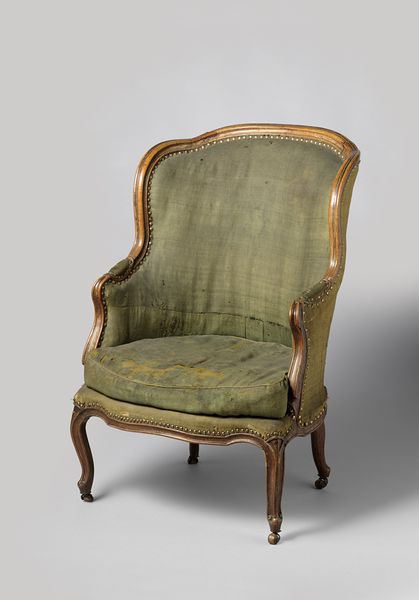
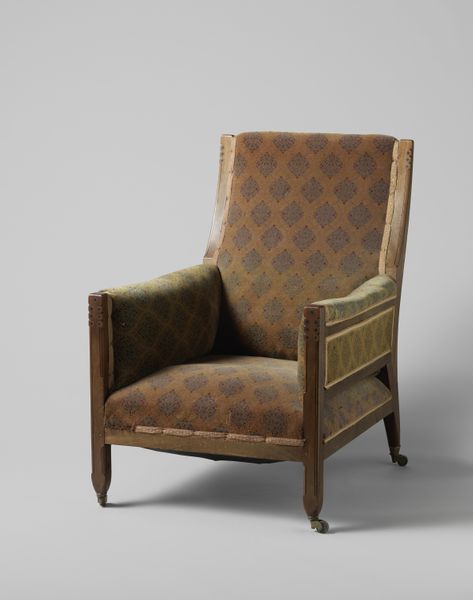
Armstoel bekleed met groenkleurig trijp met bladmotieven

Theo Nieuwenhuis
1866 - 1951Location
RijksmuseumListen to curator's interpretation
Curatorial notes
Curator: This is a stunning example of decorative art from around 1910: an armchair crafted by Theo Nieuwenhuis, residing here at the Rijksmuseum. Note the “Armstoel bekleed met groenkleurig trijp met bladmotieven”—or Armchair upholstered with green baize with leaf motifs. Editor: My first impression is tranquility. The muted green and simple, geometric design give it a restful, almost monastic feel. It evokes a sense of quiet contemplation. Curator: That resonates strongly with the ethos of the Arts and Crafts movement, to which Nieuwenhuis belonged. This chair, utilizing textiles and wood, exemplifies the movement's principles: a rejection of industrial mass production and a celebration of handcrafted artistry. Editor: Absolutely. The handwork here becomes a statement. The choice of natural motifs, like the leaves in the upholstery, underscores that connection to nature and craft, which can also be viewed as a response to increased industrialization. Who had access to such items? Curator: While advocating for accessible art, the Arts and Crafts aesthetic often found itself catering to a bourgeois clientele able to afford handcrafted items. The movement aspired to elevate design to fine art but faced challenges in achieving true social equity. Editor: The decorative carving and high-quality materials like the wood and baize suggest that this chair wasn’t just about utility but also about displaying a certain status. The beauty of the design becomes entwined with the complexities of social class and economic access. How can an everyday object embody social complexities so potently? Curator: This chair speaks volumes. It represents the values, contradictions, and societal nuances inherent within the Arts and Crafts movement. We see art serving multiple roles—aesthetic, functional, and social—within a specific historical context. Editor: I will definitely look at decorative art with new eyes now, understanding the blend of functionality and symbolic value within its historical and socioeconomic framework.