Copyright: Alexander Roitburd,Fair Use
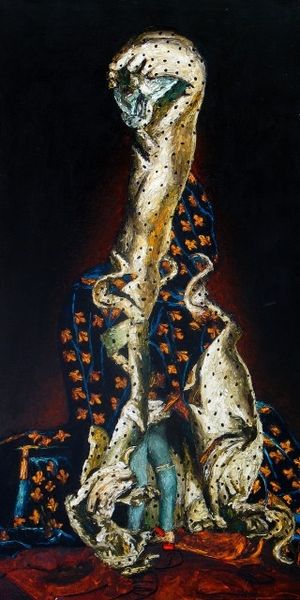
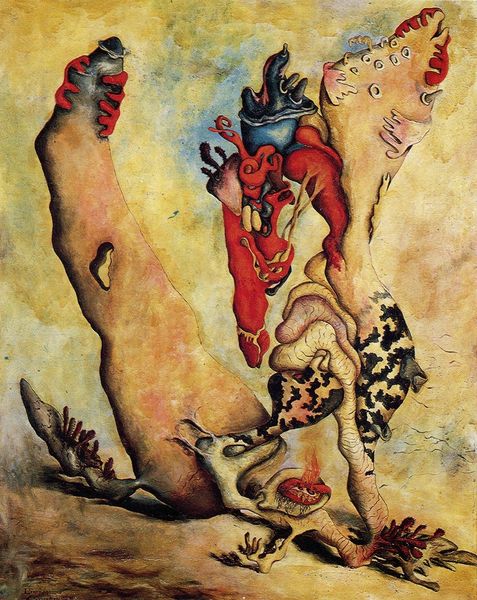
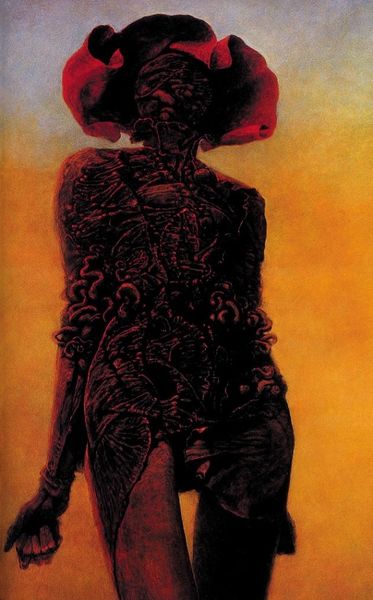
Curator: Let's turn our attention to Alexander Roitburd's "Harmony of the Illuminated Being," completed in 1989, and executed using oil paint, quite heavily applied I might add. What are your initial thoughts? Editor: Goodness, it’s… unsettling, in a fascinating way. That towering figure, almost straw-like, with those grotesque smiles... It’s the stuff of fever dreams, isn't it? Makes me think of some forgotten carnival effigy. Curator: It's interesting you say "straw-like". I see the impasto technique contributing a rawness to the surface, a certain earthiness achieved through the sheer physicality of the paint. The act of applying the pigment, the labor invested, becomes quite palpable. Editor: Absolutely, you can practically feel the artist's hand wrestling with the paint. And yet, beneath that apparent roughness, there’s something…intentional. Those piercing stares – are they joyous? Manic? The expression is ambiguous. Is this some sort of commentary on post-Soviet euphoria, perhaps? Curator: I find it hard to overlook that this painting exists as both a portrait and an abstraction simultaneously. Considering Roitburd’s social circles, I can’t help but analyze how it juxtaposes the aesthetic conventions of traditional portraiture with expressionist abstraction as a way to maybe discuss individuality. Editor: You know, those 'smiles' remind me of political caricatures; overblown, toothy grins plastered on figures of authority. The more I look, the more it feels like a veiled jab at…well, someone powerful. The muted background, almost a stormy sea, only heightens the sense of unease, the looming threat. Curator: The social context of late 80’s Ukraine undeniably shaped Roitburd's artistic output. This piece exists amid a very exciting era where Ukrainian artists challenged socialist realism while still trying to process their own unique history, politics and cultural identity. Editor: I'm thinking there’s a deep-seated anxiety lurking beneath the surface – an anxiety maybe about autonomy, control, identity. It’s certainly not a harmonious image for me. The figure may be ‘illuminated’ but it’s shedding light on something…ugly. Curator: I'm so glad we lingered with this artwork. Seeing Roitburd's paintings and understanding more of their processes help contextualize an artist grappling with the tumultuous changes around them. Editor: Definitely. It's one of those pieces that burrows into your brain and stays there. Even when you’re done, those…smiles keep flashing back!
Comments
No comments
Be the first to comment and join the conversation on the ultimate creative platform.
 Collect
 React
React Comment
More like this