
Curatorial notes
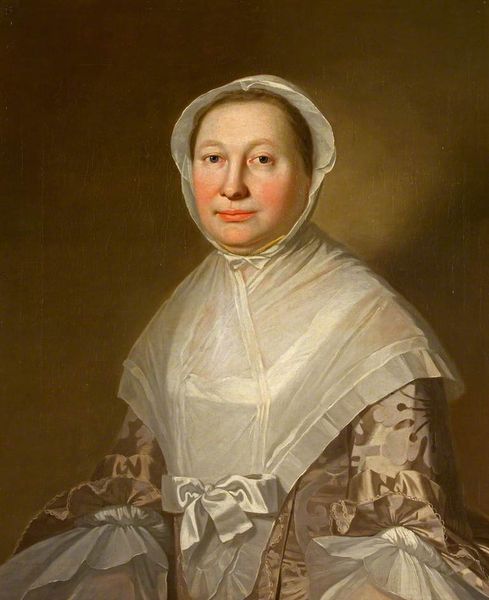
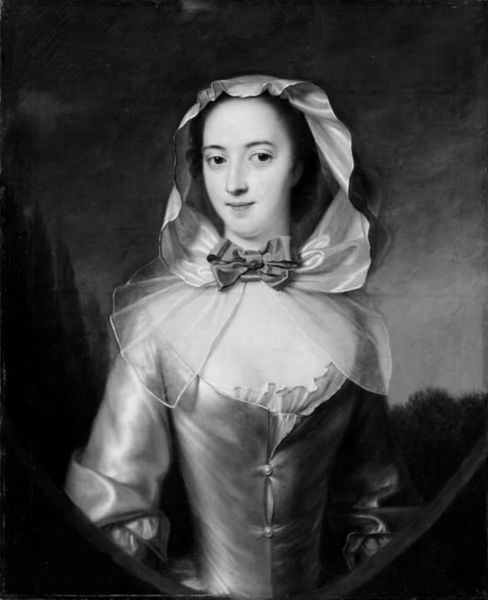
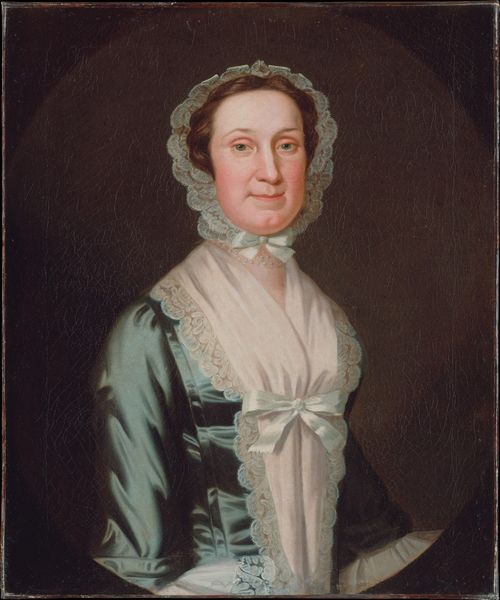
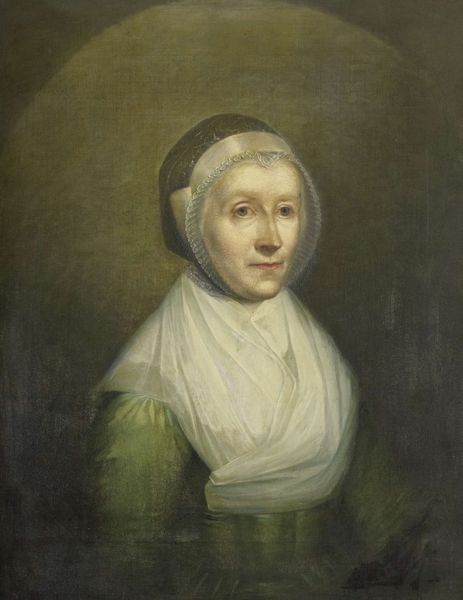
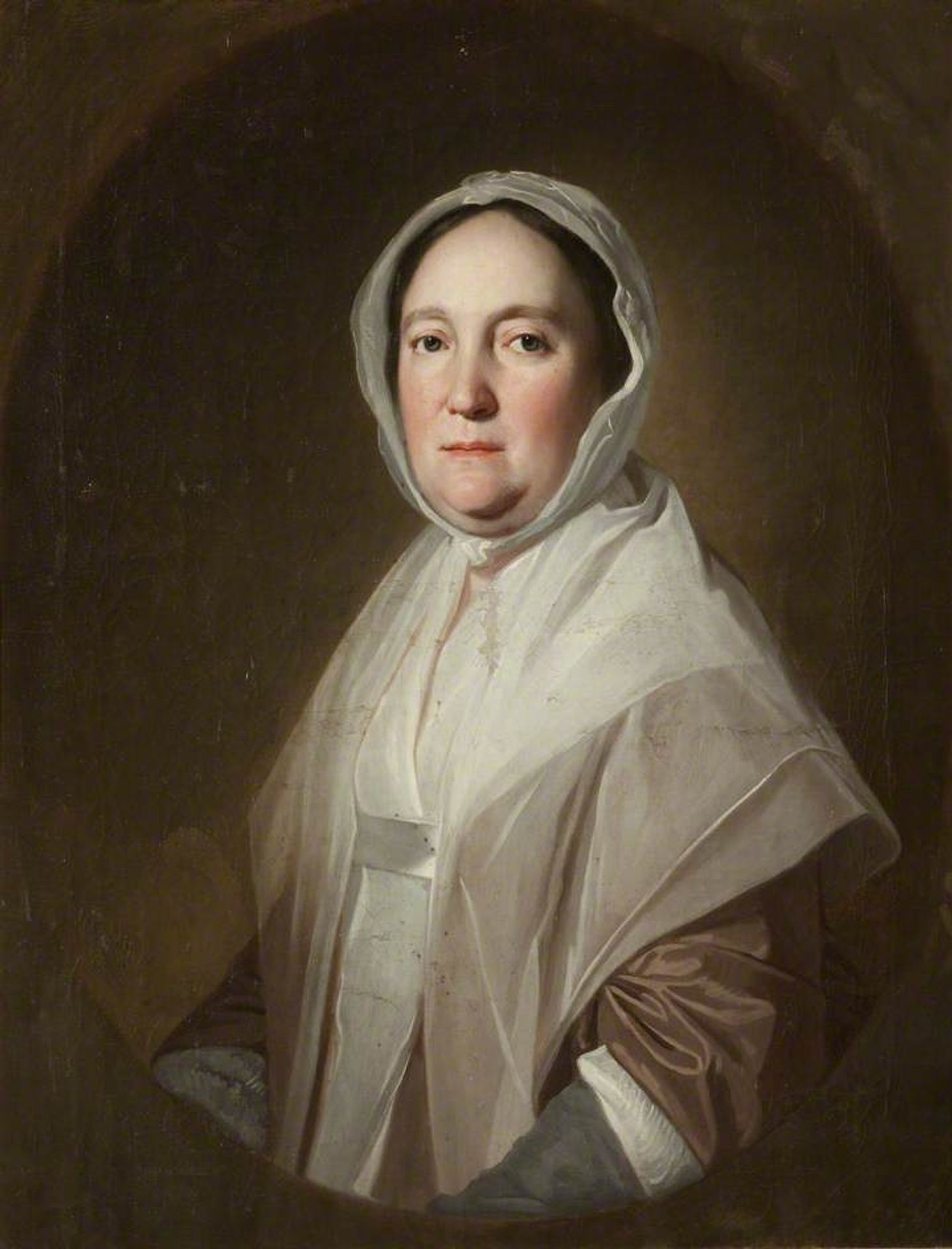
Editor: Here we have George Romney's 1760 oil painting, "Mary Rawlinson." It feels like a very personal and direct portrait. What historical context might illuminate this image for us? Curator: It's important to consider the social and artistic context in which Romney was working. This piece comes at a time when portraiture was increasingly used to project a certain status or image for the sitter. What can you tell me about the symbolism in Mary Rawlinson’s clothes? Editor: Her white cap and modest dress... It suggests humility and perhaps domesticity? Not really aligning with the grandeur you see in other portraits. Curator: Precisely. Think about the social forces shaping the reception of portraiture during the mid-18th century. Romney was vying for recognition amongst established artists, while his patrons, people like Mary Rawlinson, played a crucial role in his success. How do you feel this informs your view of the painting now? Editor: So, it's not just a personal image but a constructed one responding to a specific socio-economic environment and to promote Romney at the same time? Almost like... social media marketing of the era! Curator: Exactly. By de-emphasizing overt displays of wealth and power, the painting perhaps catered to a growing market of patrons who desired portraits that emphasized virtue. In turn, this enabled Romney to showcase his ability to capture emotion in simplicity. Editor: This has really broadened my understanding of portraiture’s public function beyond just capturing a likeness. Thank you. Curator: My pleasure. Reflecting on this piece, I'm struck by the evolving relationship between artists, patrons, and the art market.