Copyright: Public domain
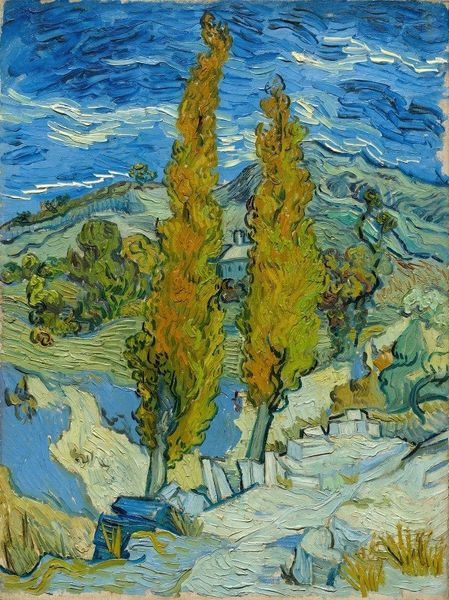
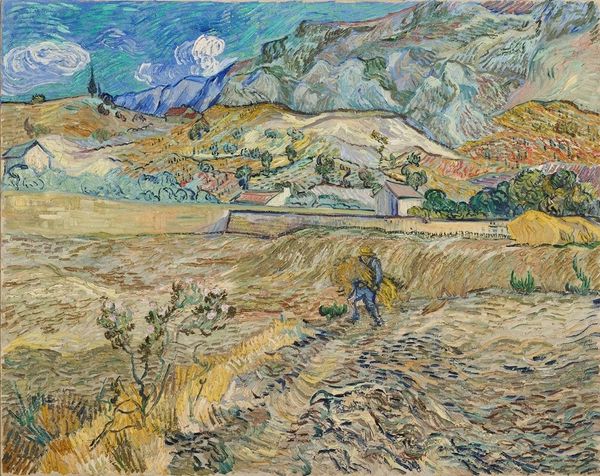
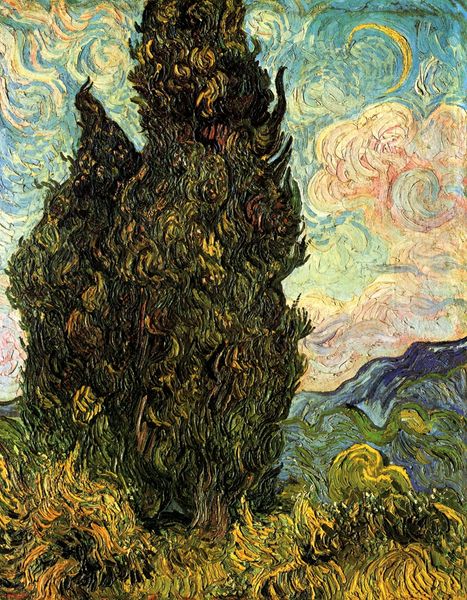
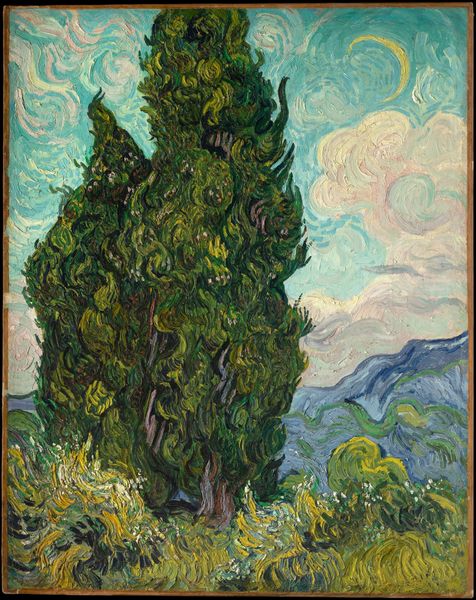
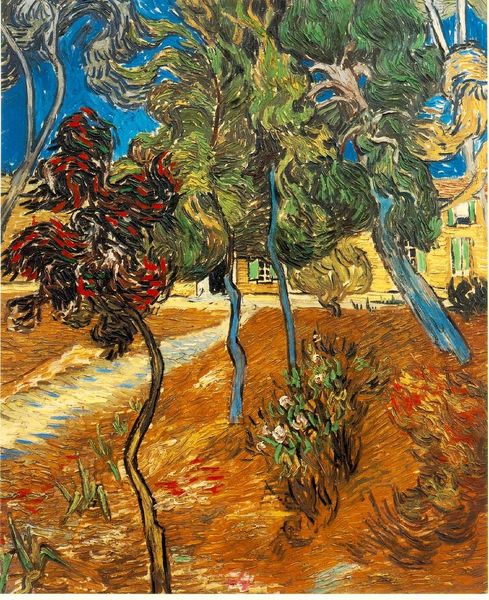
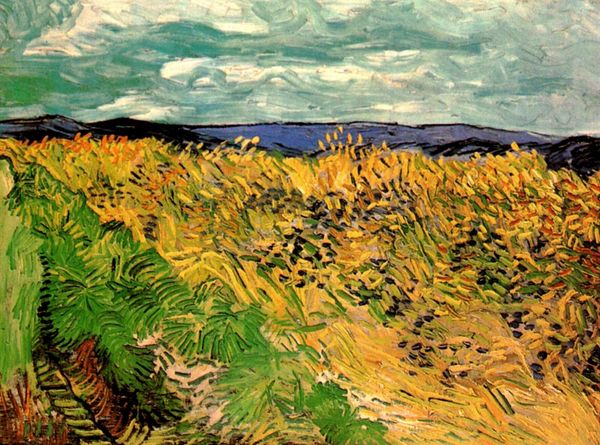
Editor: So, this is Van Gogh’s *Wheat Field with Cypresses* from 1889, currently at the Tate Modern. The texture is incredible; the oil paint practically leaps off the canvas! What strikes me most is the… unease I feel looking at it. The sky seems to churn, mirroring the field below. What do you see in this piece? Curator: Beyond the immediate beauty, I see a potent symbolic landscape. Cypresses, for example, historically link to graveyards and mourning, embodying a transition between life and death. Given Van Gogh’s mental state at the time, confined to an asylum, could these trees symbolize not only death but also a reaching towards something beyond his immediate suffering? Editor: That’s a darker interpretation than I initially considered. I saw more… turmoil, maybe, but not necessarily death. Is the wheat field itself significant symbolically? Curator: Absolutely. Wheat fields, ripe for harvest, are often linked to abundance and prosperity. However, Van Gogh presents a more turbulent version; see how the strokes mirror the sky, blurring the lines between earth and heaven. Is it abundance or a reflection of internal chaos? Also, what emotional connection to nature might explain Van Gogh painting outdoors (‘en plein air’)? Editor: I hadn’t thought of it that way, the blurred lines. Perhaps the turmoil wasn't just external, but a reflection of his internal state projected onto the landscape. Thanks for expanding my reading of the work. Curator: And thank you for prompting a fresh look at familiar symbols! It’s through such shared explorations that artworks continue to reveal their enduring power.
Comments
No comments
Be the first to comment and join the conversation on the ultimate creative platform.
 Collect
 React
React Comment
More like this