

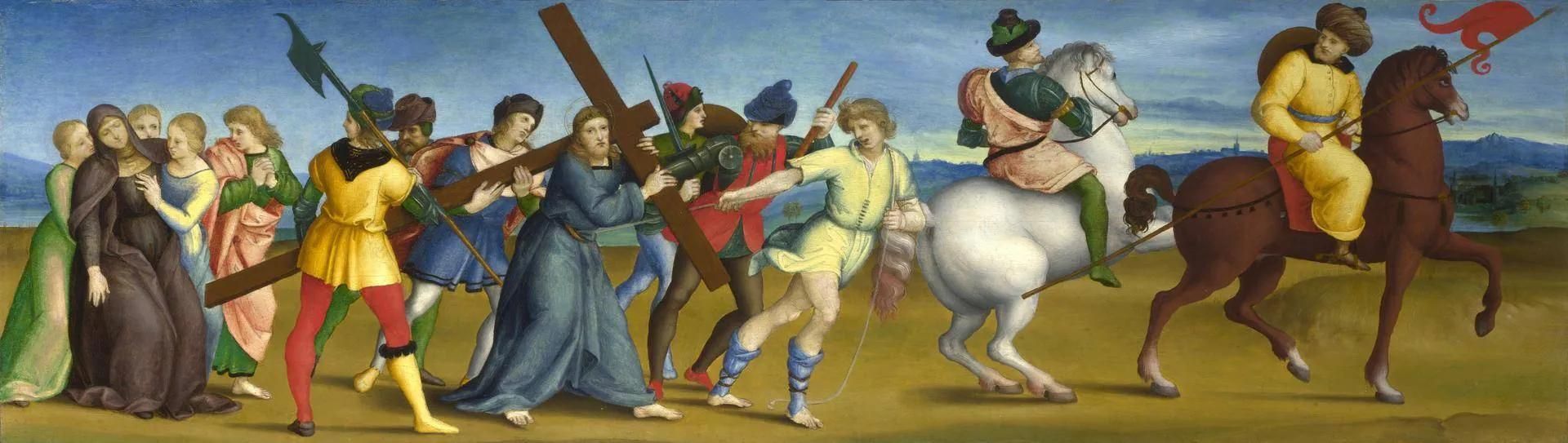
The Procession to Calvary


Listen to curator's interpretation
Curatorial notes
Raphael’s “The Procession to Calvary” was made using oil paint on wood panel. Think about the materials; the way oil allows for blending and layering, enabling soft, lifelike forms. Now consider the wood panel itself; the careful preparation, the smooth gesso surface, all contributing to the painting's luminosity. The artist’s technique, of course, is crucial. But so is the social context. Oil painting was a relatively new technology at the time, associated with wealth and patronage. The detailed work demanded skilled craftsmanship and extensive labor, both in preparing the materials and executing the painting itself. This was work produced on commission, a luxury item made possible by the burgeoning economic system of the Renaissance. The use of expensive materials and the display of skill were not simply aesthetic choices. They were also statements about status, wealth, and the complex relationship between art, labor, and power. Considering the materials and making of “The Procession to Calvary” gives us a far richer understanding of its meaning.