

1732
Schepping

Jan Caspar Philips
1700 - 1775Location
RijksmuseumListen to curator's interpretation
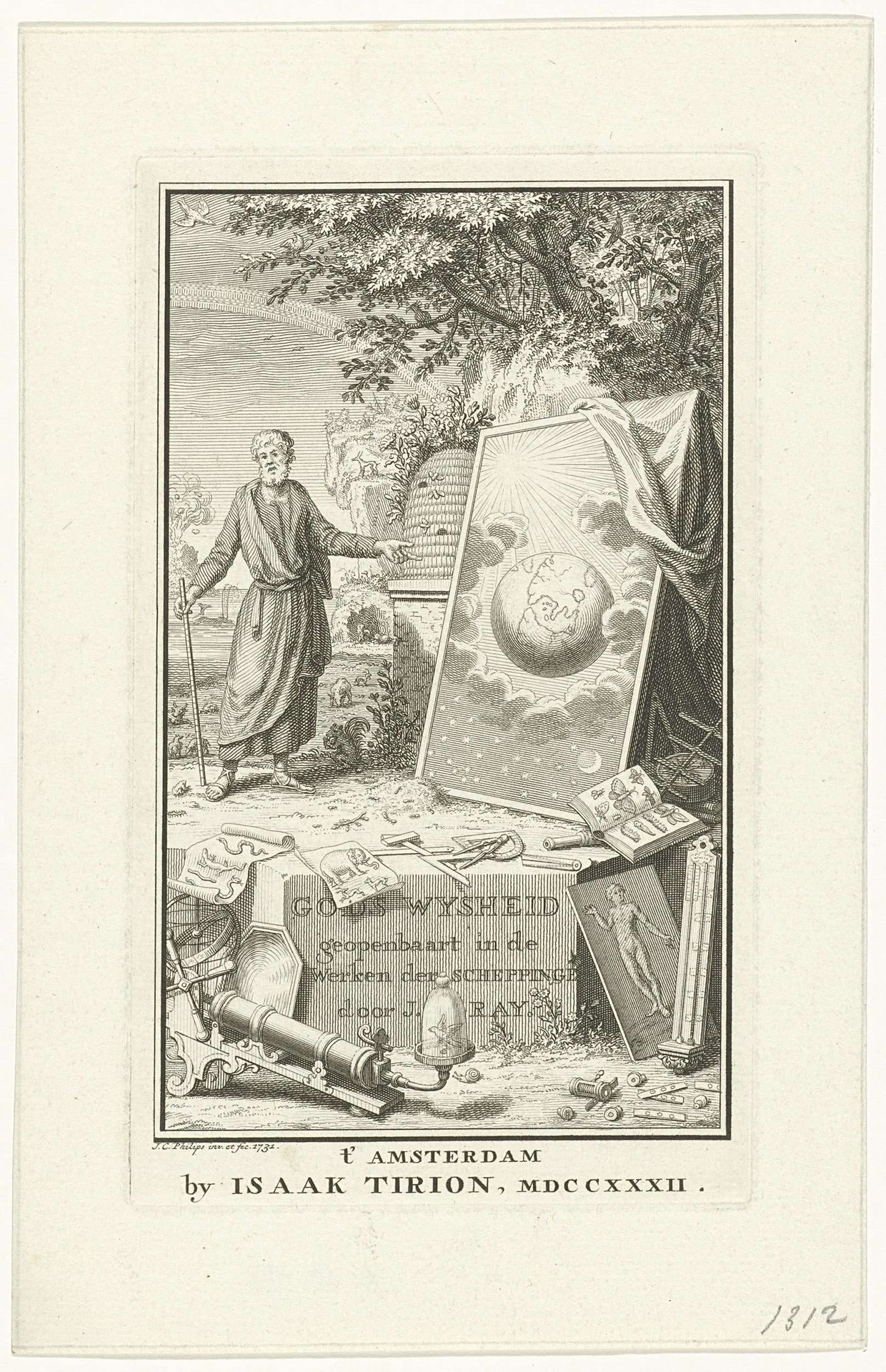
Curatorial notes
Editor: Here we have "Schepping," an engraving from 1732 by Jan Caspar Philips, currently residing at the Rijksmuseum. The density of detail is fascinating! It almost feels like an inventory, but of what exactly? What's your take on this piece? Curator: Well, let's start with the material itself: engraving. This isn't painting or sculpture; it’s printmaking, inherently reproducible and thus, potentially widely distributed. Consider what that accessibility might mean in the 18th century, for ideas of knowledge, scientific exploration, and even religious understanding, which seem intertwined in the image. The choice of this medium democratizes the "creation," if you will. Editor: That's an interesting point. So the material isn't just a neutral vehicle, but actively shaping how the "creation" is understood? The objects included, like the telescope, maps, and drafting tools – are they simply symbols? Curator: Are they *just* symbols, or are they representative of the expanding networks of production, trade, and knowledge? Notice how they’re rendered – painstakingly, almost lovingly. The act of creating the print mirrors the depicted act of ‘creation.’ What does this emphasis on detail suggest about the societal values concerning labour and the dissemination of knowledge through the mechanical process of printmaking during this time? Editor: I never considered the connection between the production of the print and the "creation" it depicts! The print itself is a product of labour, reflecting, or even participating in, that act of creation. Thanks, I have to rethink about the relation between medium, the making and subject now. Curator: Precisely! It reveals how even artistic processes are embedded within broader social and economic forces, shaping both the artwork's form and its content. Hopefully it gave you something new to consider.