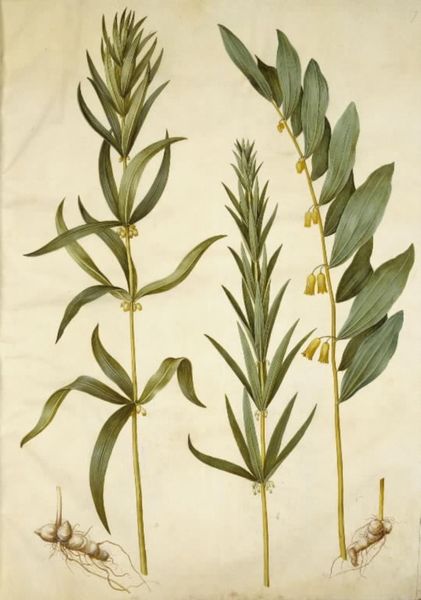
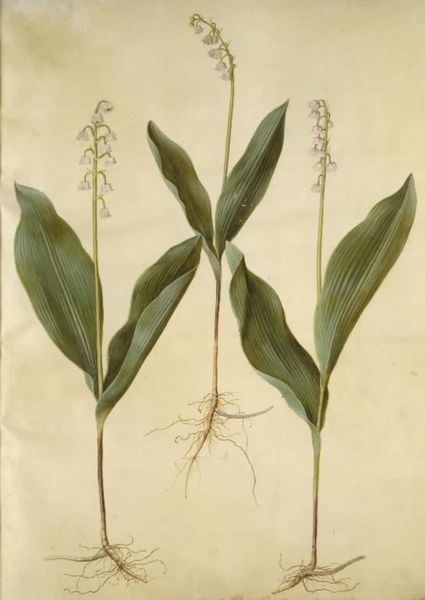
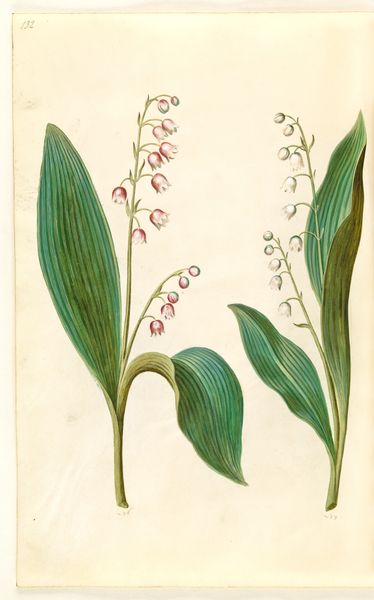
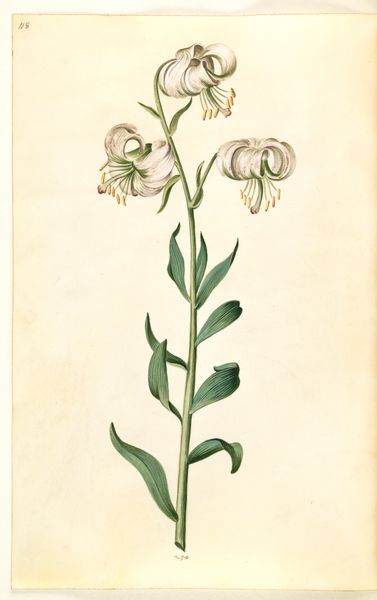
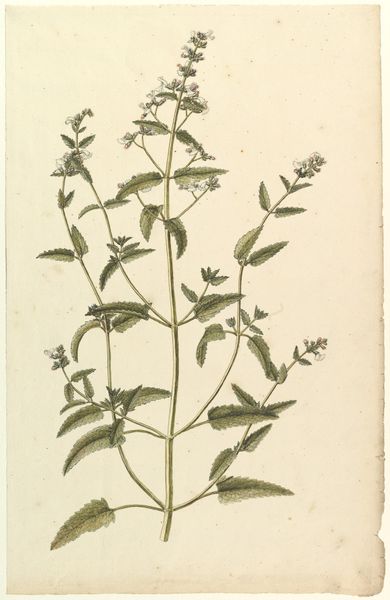
Polygonatum multiflorum (stor konval); Polygonatum odoratum (kantet konval) 1649 - 1659
0:00
0:00


drawing, gouache, watercolor
#
drawing
#
water colours
#
gouache
#
watercolor
#
watercolour illustration
Dimensions: 505 mm (height) x 385 mm (width) (bladmaal)
Editor: This is a botanical study by Hans Simon Holtzbecker from the mid-17th century, rendered in watercolour and gouache. It features two sprigs of what looks like Polygonatum, also known as Solomon’s Seal. What do you notice first? Curator: I see a fascinating convergence of science and art. Holtzbecker's detailed depiction serves both as a precise botanical record and as an object of beauty. Notice how he carefully renders not just the visible plant but also the root system; the roots being symbolic of origins, family trees, foundations. Editor: That's a great point. I was mainly focusing on the drooping, bell-shaped flowers, but you’re right. The inclusion of the roots changes how I see it. Do you think this was intended as a scientific illustration, or was there perhaps another layer of meaning intended? Curator: The two are intertwined, aren't they? In the 17th century, botanical illustration was often imbued with symbolic weight. Think about the tradition of the *hortus conclusus*, the enclosed garden, often a symbol for the Virgin Mary, purity, refuge. Might this image carry connotations of medicinal knowledge, or the secret language of flowers that would resonate with a particular audience? Holtzbecker, as court painter, perhaps created an object of status that displayed erudition in the fields of science and the Arts? Editor: So, perhaps it’s less about documenting plants and more about connecting knowledge and symbolism? Curator: Precisely! The specific selection and arrangement could convey specific ideas rooted in period sensibilities. Editor: This really enriches how I see this artwork! It’s more than just a picture of a plant, it reflects the way people understood the natural world and the intersection of knowledge, meaning and power in the 17th century. Curator: Indeed, understanding this deeper historical context transforms the work. Seeing the artwork's potential to trigger dialogue enriches the whole museum experience!
Comments
No comments
Be the first to comment and join the conversation on the ultimate creative platform.
 Collect
 React
React Comment
More like this