c. 16th century
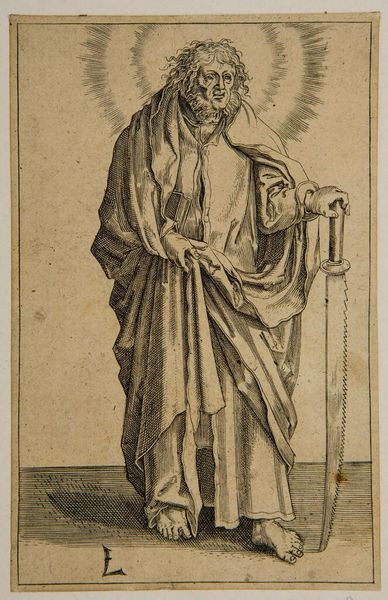
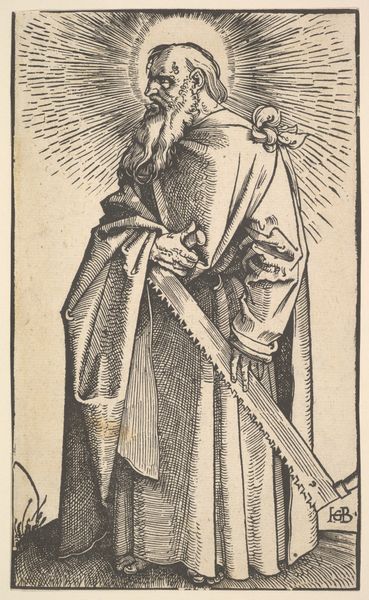
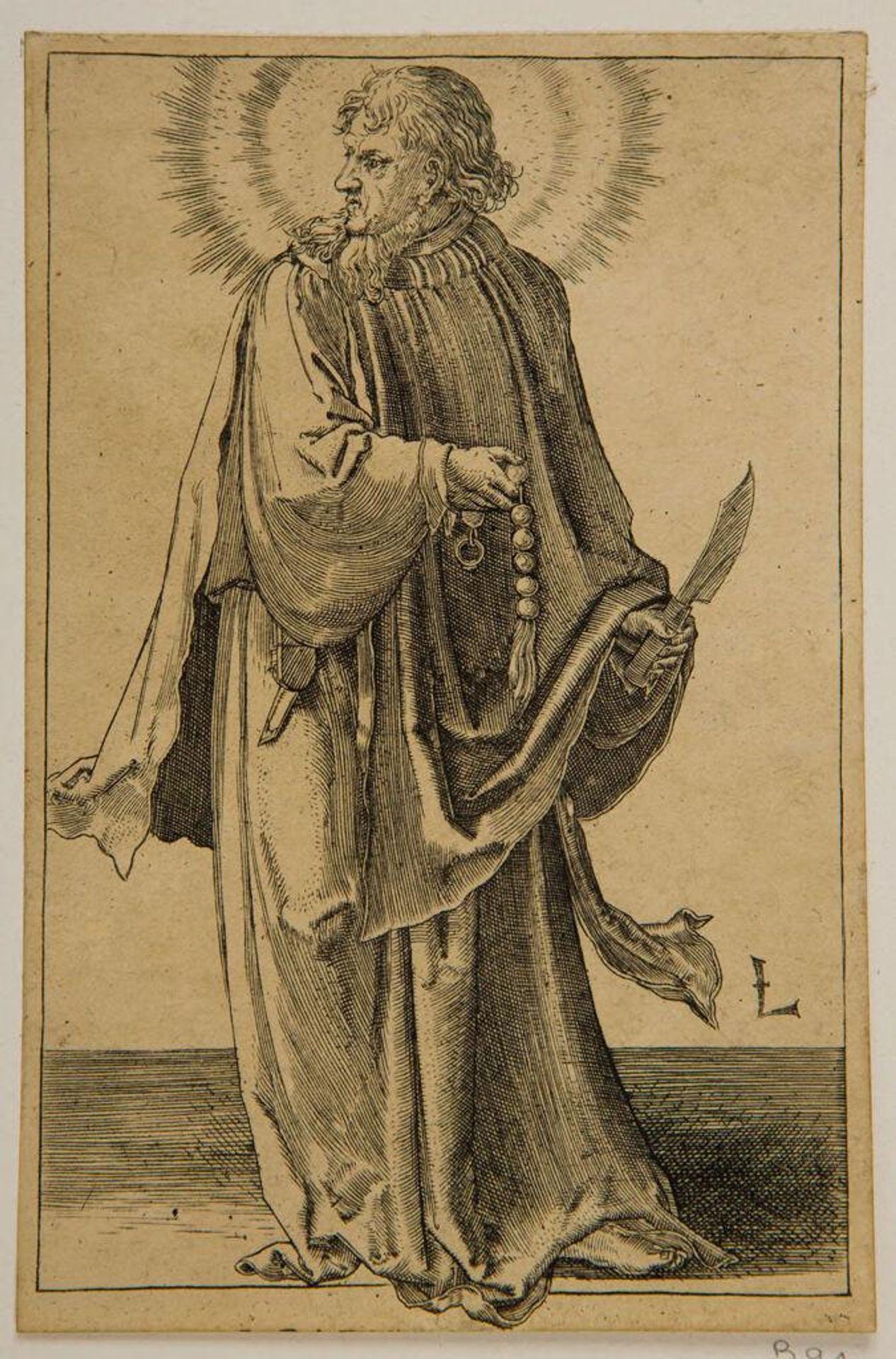
Saint Bartholomew


Listen to curator's interpretation
Curatorial notes
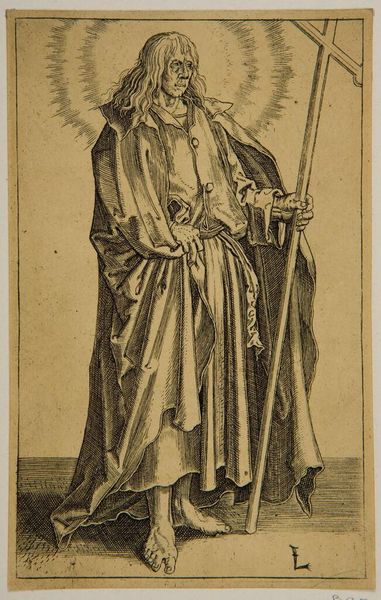
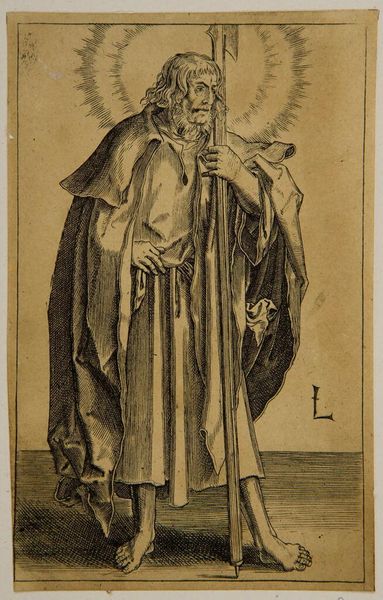
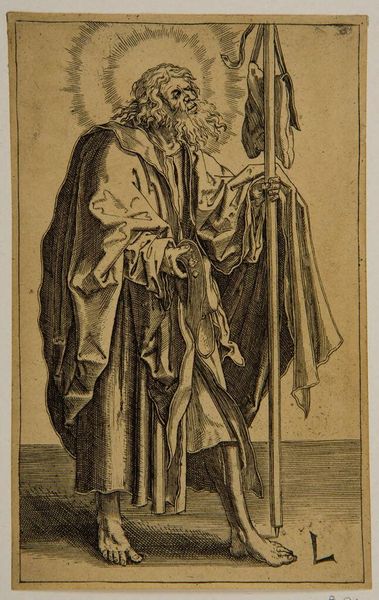
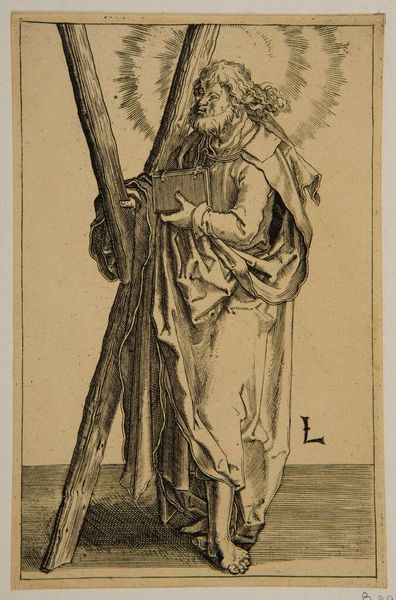
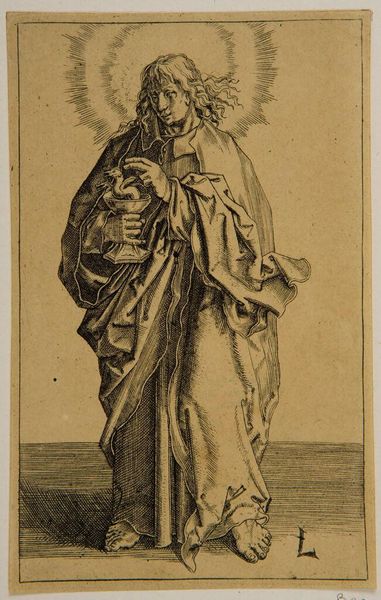
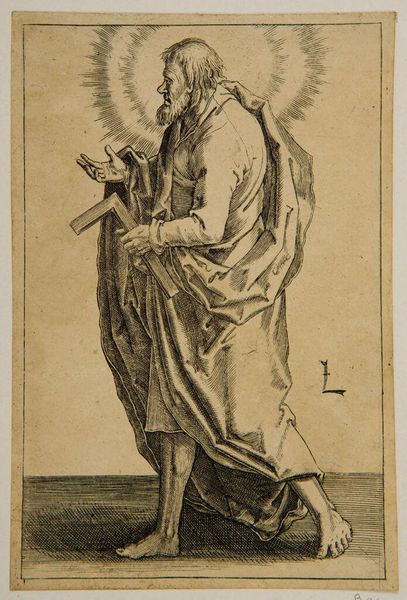
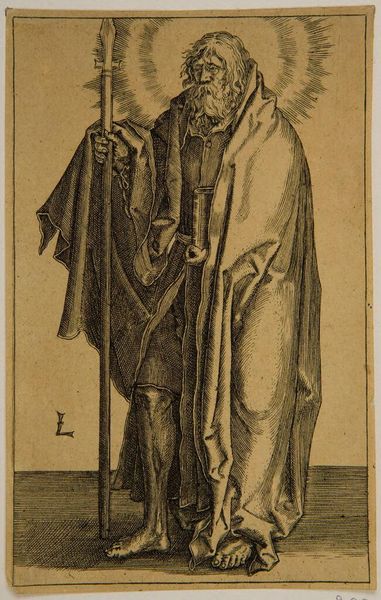
Curator: This is an engraving of Saint Bartholomew, made by an anonymous artist. The saint has a halo and holds a knife, his traditional attribute. Editor: There’s such stark contrast between the radiating halo and the brutal knife. It makes me wonder about the violence inherent in some religious narratives. Curator: The knife signifies Bartholomew's martyrdom, as he was flayed alive. It is an iconic reminder of faith and suffering. Editor: But that’s exactly what I mean—the flaying, the suffering, have often been used to justify oppression. How do we reconcile the image of holiness with such cruelty? Curator: The image becomes a symbol of resilience, an emblem for those who endure persecution. Editor: I suppose it depends on who is interpreting that symbol. It has potential for both healing and harm, doesn't it? Curator: Indeed. The enduring power of symbols always resides in their capacity for diverse readings across time. Editor: It’s a potent reminder of the dangers of single interpretations in cultural history, especially when we consider identity, race, and gender.