after 1645
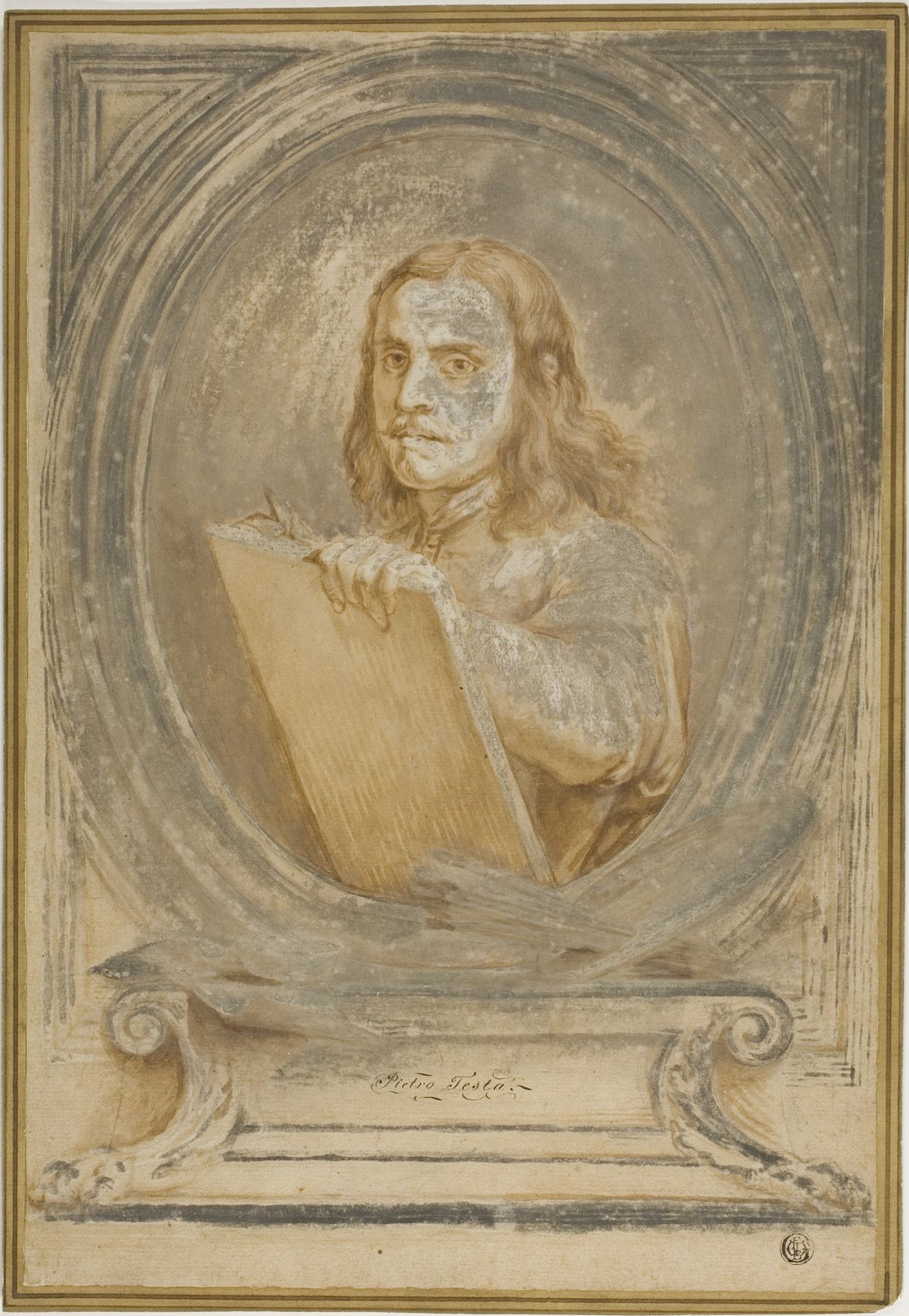
Portrait of Pietro Testa


Listen to curator's interpretation
Curatorial notes
Pietro Testa made this self-portrait in pen and brown ink with gray wash, heightened with white, on buff paper. This Roman Baroque drawing prompts us to consider the artist’s position within the artistic academies of seventeenth-century Italy. Here, Testa presents himself as both a craftsman and intellectual, a demonstration of his mastery and understanding of classical themes. The oval frame and base give the impression of a sculptural relief, a common motif in classical art, while the artist's gaze directed at the viewer suggests a confidence and self-awareness that challenges the traditional hierarchy of artistic genres. The academies played a crucial role in shaping artistic careers, dictating taste and providing patronage networks. So we might ask, does this self-portrait reflect Testa's aspirations for recognition or a more subversive critique of the academy’s conventions? To answer this we might look at the writings of the time, like the biographies of artists and the records of the Roman art academy, to better understand the artist's self-fashioning within his particular social and institutional context.