

1808
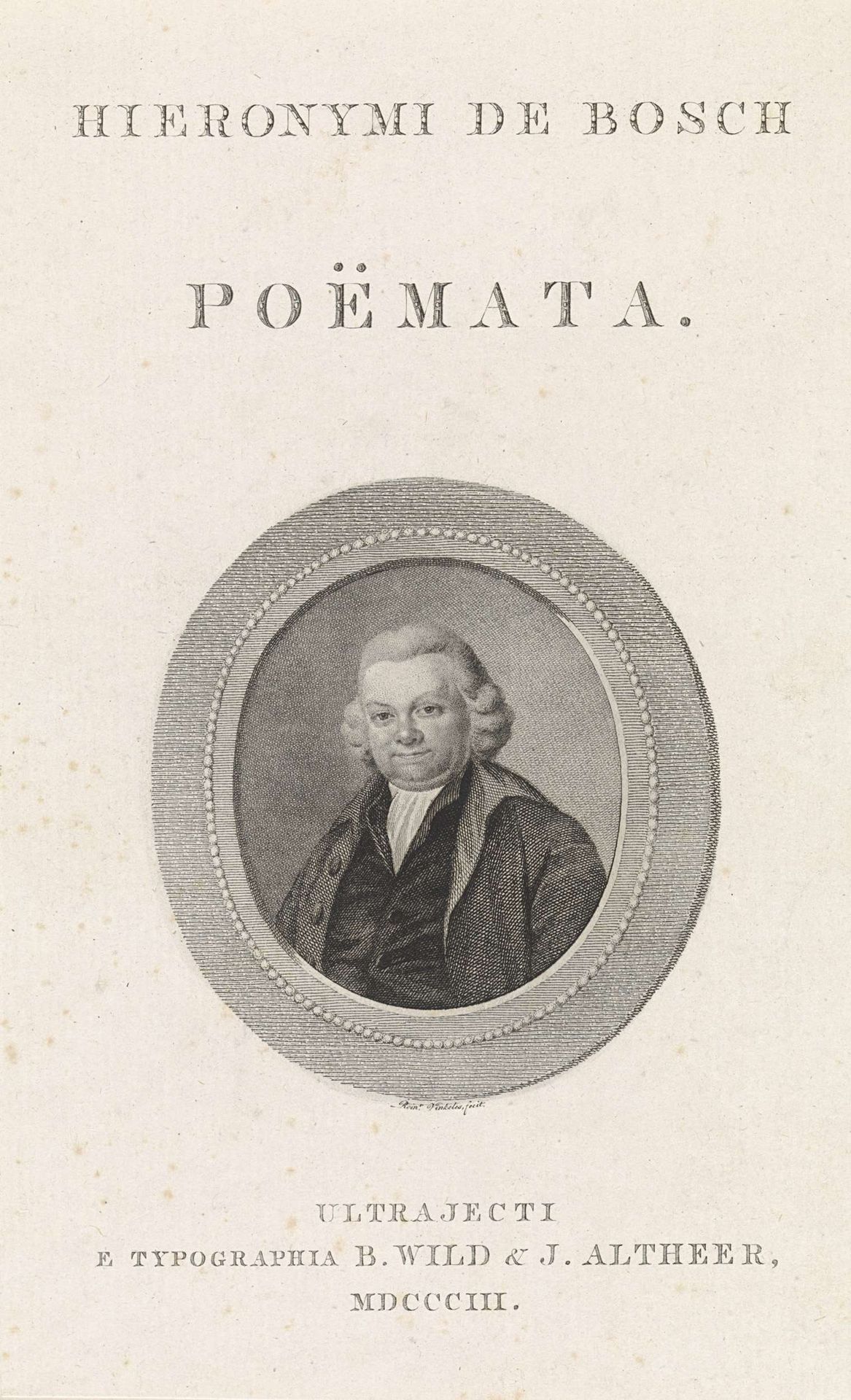
Portret van Jeronimo de Bosch

Reinier Vinkeles
1741 - 1816Location
RijksmuseumListen to curator's interpretation
Curatorial notes
Curator: At first glance, this piece exudes a sort of restrained dignity. The circular frame lends a classical formality. Editor: Indeed. This is a print from 1808 by Reinier Vinkeles, titled "Portret van Jeronimo de Bosch." It is housed here at the Rijksmuseum. Given the period, Vinkeles has situated his portrait comfortably within a Neoclassical visual lexicon. The tight symmetry of the composition certainly reinforces the Neoclassical style. Curator: I notice the delicate lines used in the engraving. There’s a softness to the modeling of the face, achieved through intricate cross-hatching. It’s fascinating how tonal range emerges from the sheer density and directionality of those marks. Editor: The social context is interesting here. Jeronimo de Bosch was a prominent figure; his "Poëmata," indicated on the page above the portrait, showcases his societal stature as a person worthy of this type of public visual declaration. This print speaks to the political and cultural aspirations of the elite in that era, to revive ideals of classical learning and civic virtue. Curator: The frame's beaded texture adds another layer. Note how it contrasts with the smoothness within. Also, the way light is implied. It catches on Bosch's powdered wig, drawing our attention there immediately. A definite focal point, constructed visually. Editor: Right. It is important to think about how this image functioned as a marker of status and intellect within 19th-century Dutch society. Consider the implications of printed portraits for circulating and consolidating power. Curator: Analyzing just the intrinsic aspects, there's undeniable elegance. The artist has managed to translate the textures of fabric and skin using the tools of engraving, offering an example of visual transformation at its finest. Editor: True. It offers us today an image carefully positioned, in the late 18th and early 19th centuries, as a display of artistic patronage and intellectual pursuit within very specific social spheres. Curator: That's insightful, particularly regarding how social class could play out even on a printed page. Editor: And you've given me reason to go deeper into the textures. An exchange that offers all more than a first look can reveal!