

1907
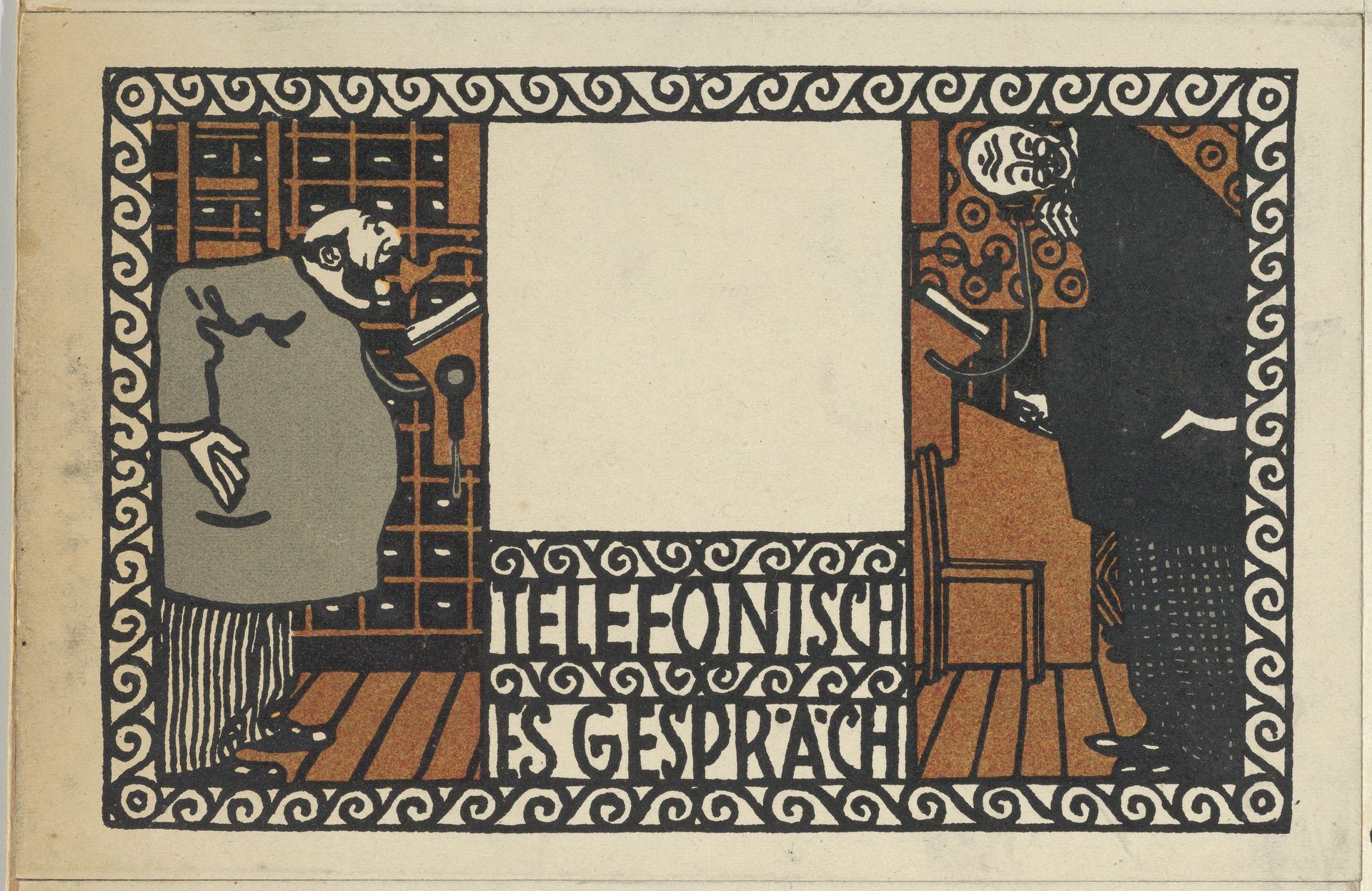
Telephone Conversation (Telefonisch Es Gespräch)

Listen to curator's interpretation
Curatorial notes
Editor: This is Moriz Jung’s “Telephone Conversation (Telefonisch Es Gespräch)" from 1907, a print in the Art Nouveau style. The starkness of the linocut is very striking. How do you approach interpreting a piece like this, especially considering the date? Curator: The materiality of this linocut is key. Consider the labor involved: the deliberate carving away, the production of multiple impressions, each a copy yet also an original. And what is being depicted? The telephone, a new technology of mass communication that collapses space and time. How does this change relationships of production and consumption? Editor: That's fascinating! It almost feels like he's commenting on the mechanization of communication, even back then. Do you think the geometric style ties into that? Curator: Precisely! The simplification of form, the reduction to essential lines – these mimic the streamlining that industrialization imposes on all aspects of life, even on conversation itself. Note the geometric pattern around the edge – it is a visual frame, a kind of factory wall that segregates one conversation from another. And the use of negative space forces us to contemplate absence as much as presence. Editor: It’s so interesting to consider this piece in the context of its time. I hadn't thought about the implications of mass production in relation to early communication technology! Curator: Thinking about art through the lens of materials and production reveals so much. What once seemed a simple image becomes a commentary on labor, technology, and their impact on our social fabric. This image underscores that the medium is, indeed, the message.