print, paper, photography
# print
#
paper
#
photography
Dimensions: height 201 mm, width 160 mm, thickness 30 mm
Copyright: Rijks Museum: Open Domain
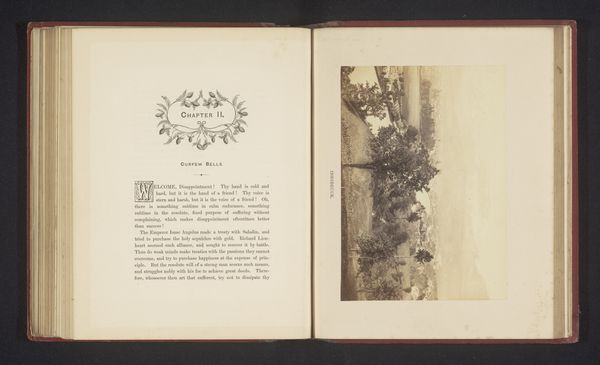
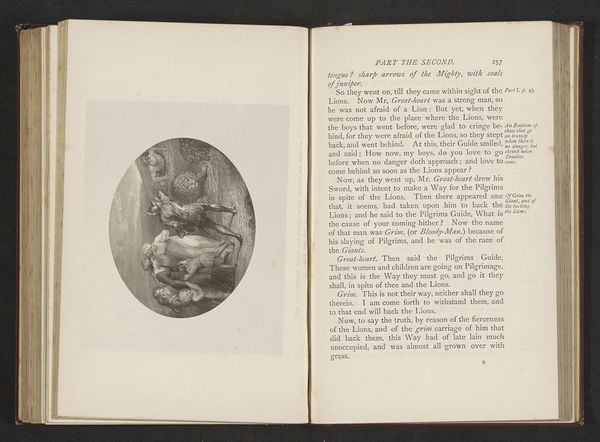
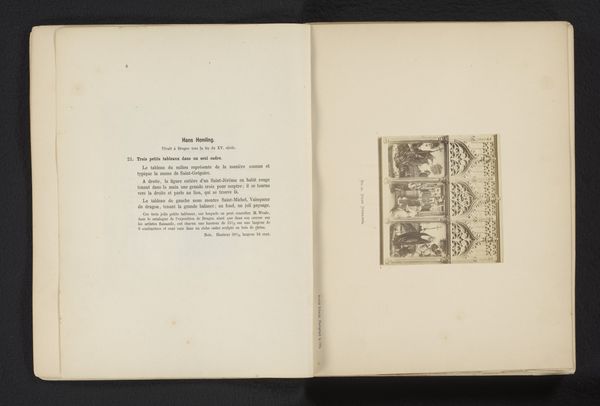
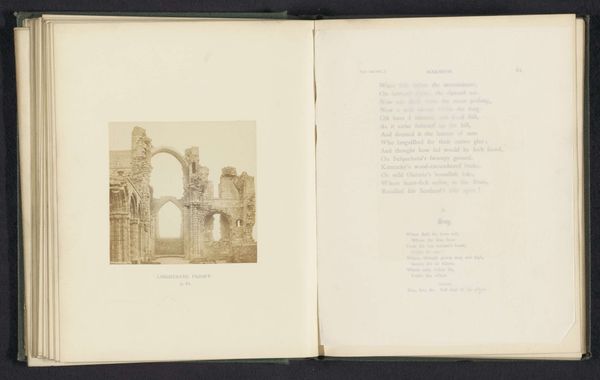
Curator: "The Lady of the Lake," from 1865—it’s a haunting photograph reproduced as a print in this edition of Walter Scott’s poem, held here at the Rijksmuseum. What’s your first reaction? Editor: Well, melancholy for one thing. That sepia tone... the architectural ruin. There is this somber light that almost drains the ruin of colour; time and entropy seems to have set a strong presence. Curator: The ruin is actually Scott's tomb at Dryburgh Abbey, rendered beautifully. Notice how the photographer’s lens creates symmetry in the framing of the Gothic arches and surrounding verdant scenery. Editor: Right, there's this juxtaposition of nature's encroachment and humanity's lasting architectural structures—a symbolic representation of art and nature, and life's fleeting nature, wouldn't you say? Curator: Precisely! It underscores themes of romanticism woven into Scott's poetry, right? This interplay, rendered using photographic technology of the period, adds this delicate aesthetic dimension. The tonality of the paper complements and strengthens the melancholy mood you mentioned. Editor: You're right, seeing photography used to represent themes rooted in verse brings about another interesting layer. I find this melding of textual and visual artistry a unique approach that allows it to communicate a deep aesthetic experience beyond simply telling a story or presenting pretty picture Curator: Definitely; the book's composition transforms textual history and romantic-era ideals into a tactile object; from content to material makes it quite remarkable! Editor: Absolutely, such artistry in book-making, really, allows to appreciate on how medium allows story beyond just written letters on white page and offers even more compelling depths. Curator: Yes. It’s pieces like these, I think, where past intersects with contemporary vision, allowing a unique insight. Editor: Very well said, here's to unique vision, whatever comes from our past that continues influence today.
Comments
No comments
Be the first to comment and join the conversation on the ultimate creative platform.
 Collect
 React
React Comment
More like this