About this artwork
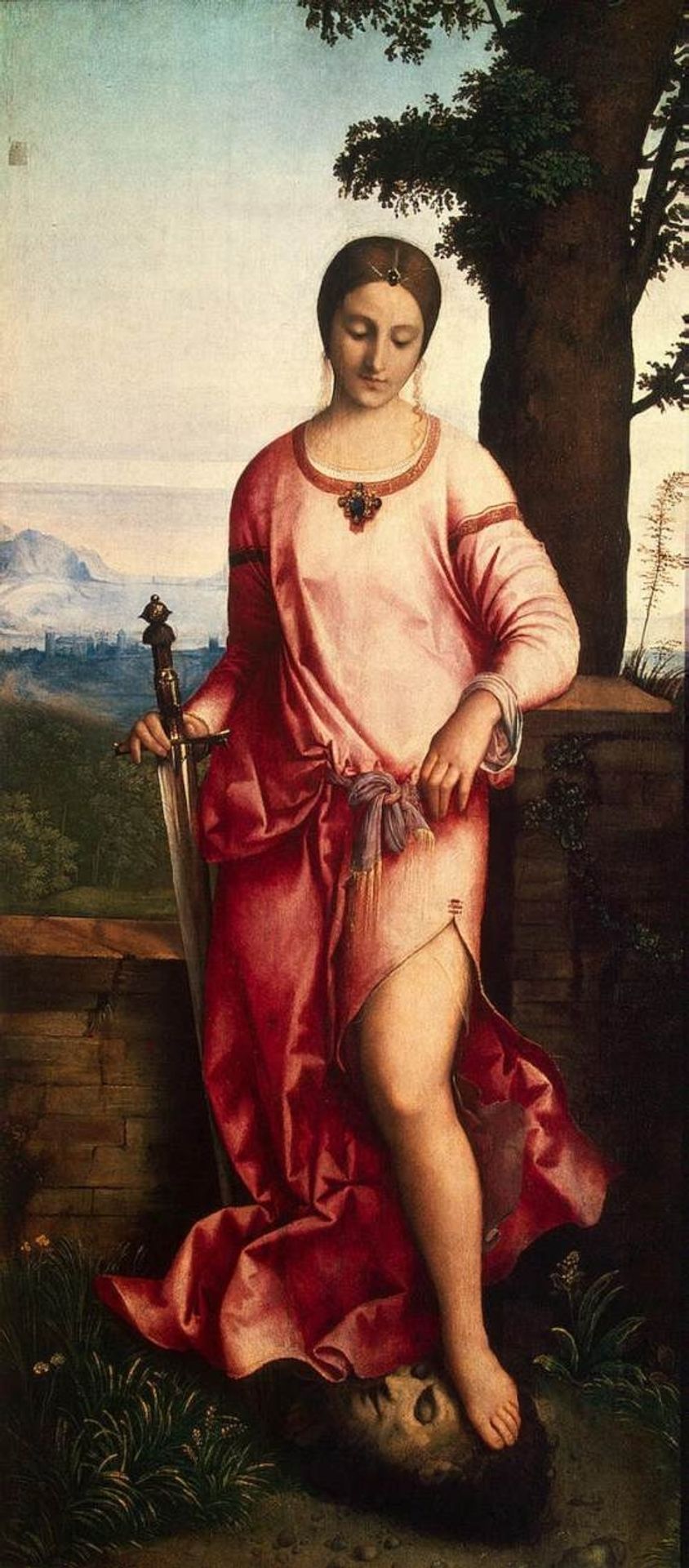
Giorgione rendered this 'Judith' in oil on canvas sometime around 1504, portraying the biblical heroine with her foot firmly planted on the severed head of Holofernes. The sword in her hand, a symbol of her triumph, harkens back to classical depictions of female virtue and strength. Consider the symbolic weight of the foot on the head. This motif of dominance and victory echoes across cultures and centuries, from ancient Roman sculptures of emperors trampling their enemies to Renaissance depictions of saints subduing demons. The act embodies a primal assertion of power, triggering deep-seated psychological responses. Yet, the image is more than mere triumph. Judith's serene expression complicates the narrative, suggesting not only victory, but also resignation. This emotional complexity, this oscillation between triumph and lament, is what allows the image to resonate powerfully, engaging viewers on a profound, subconscious level. The symbolic power of the foot has resurfaced, evolved, and taken on new meanings in different historical contexts.
Judith
1504


Artwork details
- Medium
- painting, oil-paint
- Dimensions
- 144 x 66 cm
- Location
- Hermitage Museum, Saint Petersburg, Russia
- Copyright
- Public domain
Tags
Comments
Share your thoughts
About this artwork
Giorgione rendered this 'Judith' in oil on canvas sometime around 1504, portraying the biblical heroine with her foot firmly planted on the severed head of Holofernes. The sword in her hand, a symbol of her triumph, harkens back to classical depictions of female virtue and strength. Consider the symbolic weight of the foot on the head. This motif of dominance and victory echoes across cultures and centuries, from ancient Roman sculptures of emperors trampling their enemies to Renaissance depictions of saints subduing demons. The act embodies a primal assertion of power, triggering deep-seated psychological responses. Yet, the image is more than mere triumph. Judith's serene expression complicates the narrative, suggesting not only victory, but also resignation. This emotional complexity, this oscillation between triumph and lament, is what allows the image to resonate powerfully, engaging viewers on a profound, subconscious level. The symbolic power of the foot has resurfaced, evolved, and taken on new meanings in different historical contexts.
Comments
Share your thoughts