About this artwork
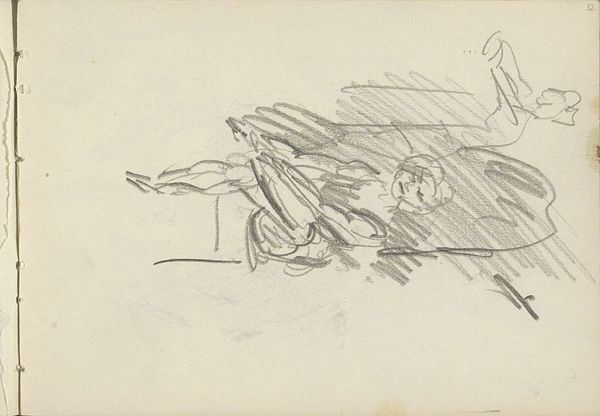
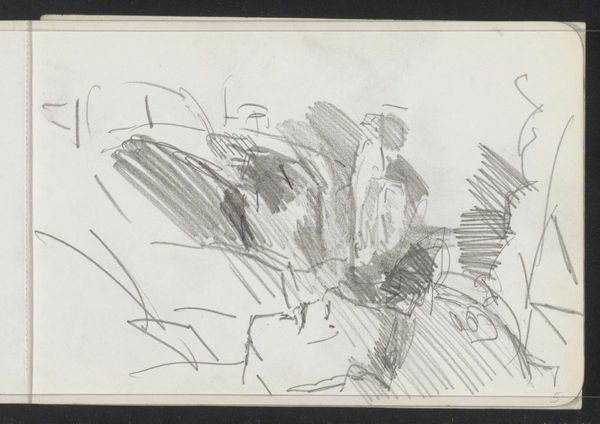
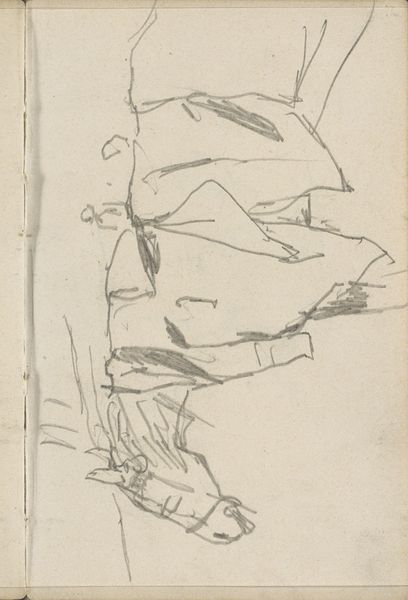
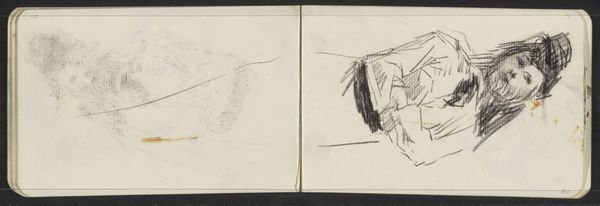
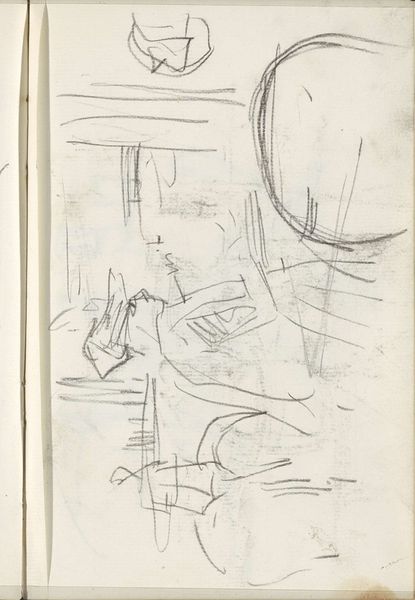
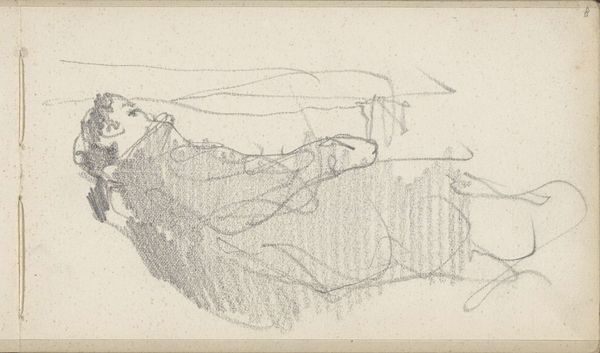
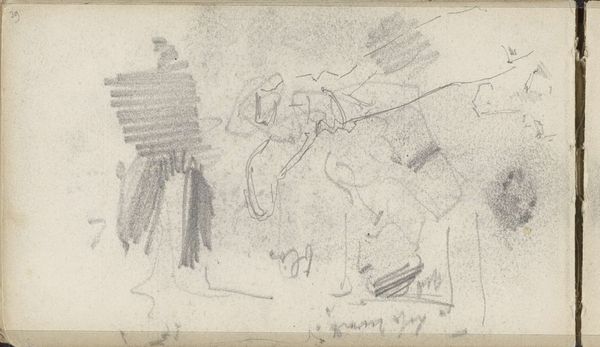
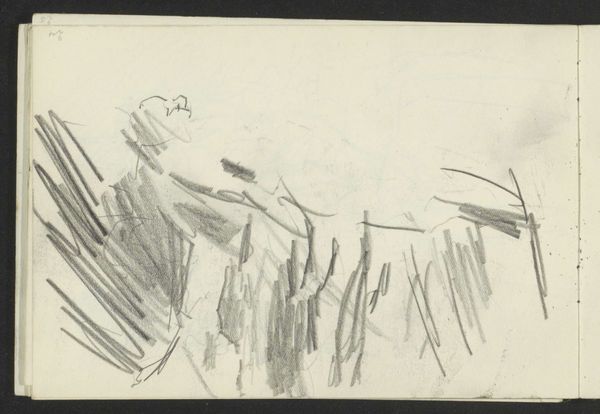
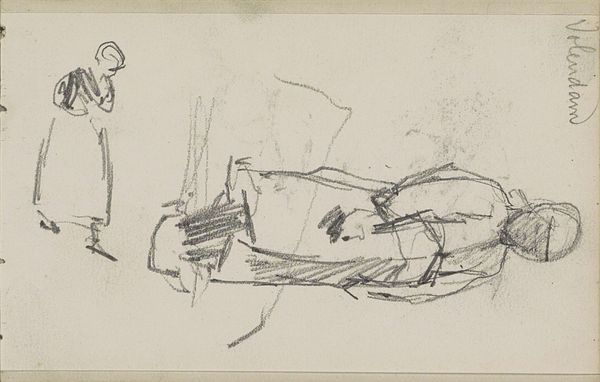
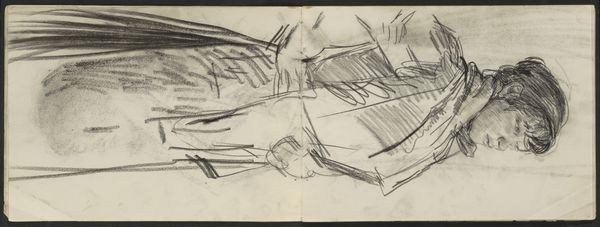
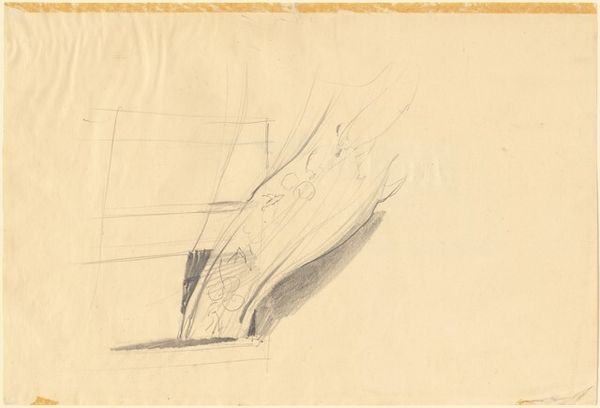
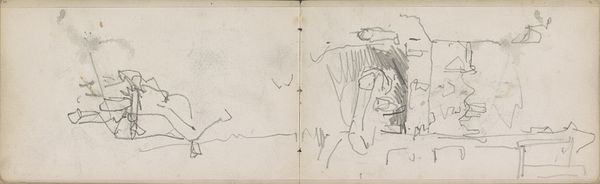
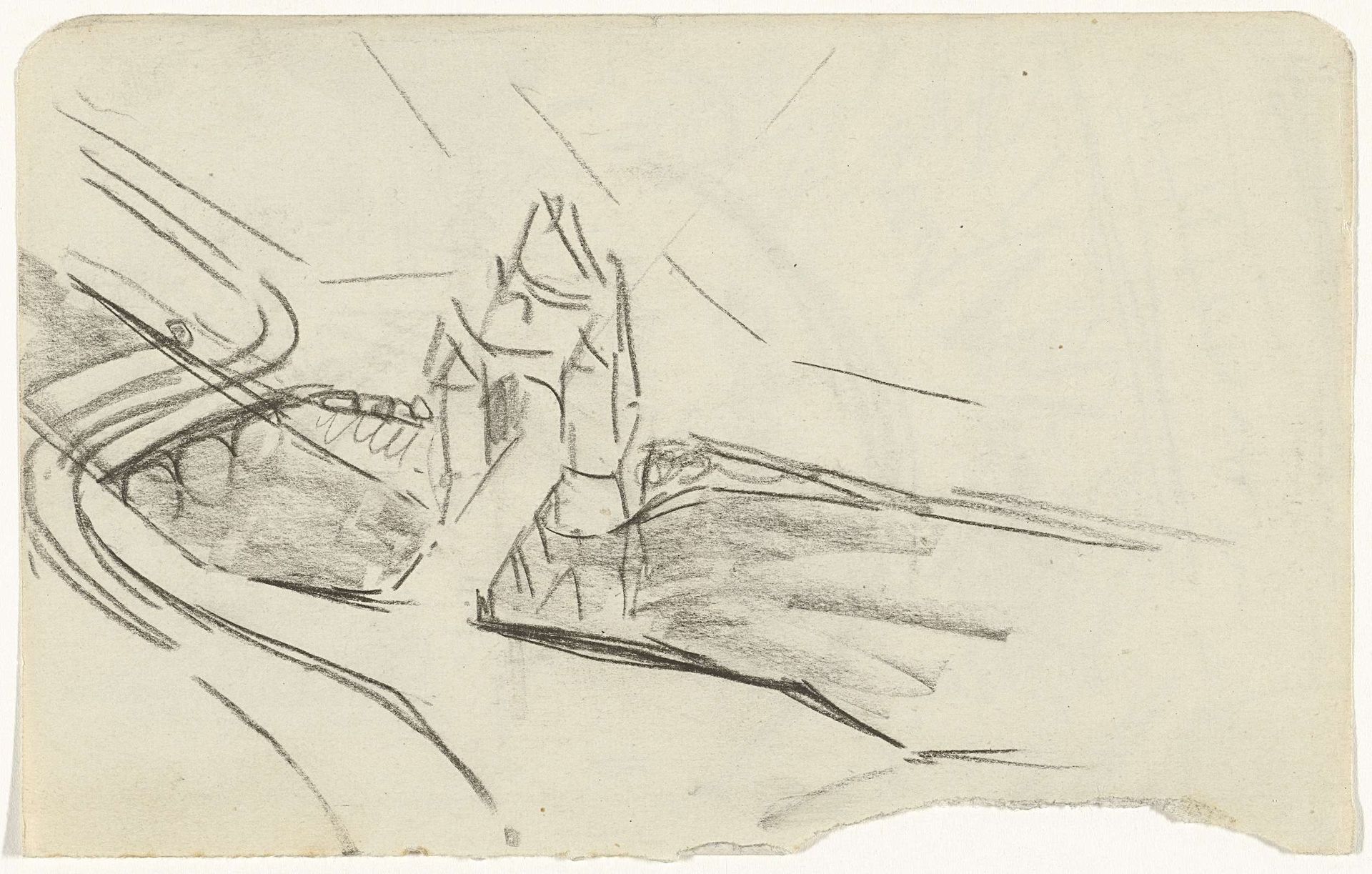
This drawing, "De Amsterdamse Poort te Haarlem, in vogelvlucht," was created by Gerrit Willem Dijsselhof. Its charcoal lines capture the Amsterdam Gate in Haarlem from a bird's-eye view. The rapid sketch emphasizes form and spatial relationships, marked by sharp, angular lines that define the gate’s structure against a stark background. Dijsselhof destabilizes traditional landscape depictions by employing a high vantage point, flattening the composition. This approach reduces depth and emphasizes the geometric shapes of the gate and its surroundings. We see a modernist sensibility in the abstraction of form, moving away from literal representation towards a structural expression. The sketch is not merely a depiction of the gate but an exploration of how line and form can construct space and perception. Observe the deliberate use of empty space. It accentuates the sketched lines and gives a sense of openness. This creates a dynamic interplay between what is depicted and what is left unsaid, allowing the structure of the gate to emerge through a careful arrangement of lines and voids. This drawing functions as an invitation to consider the architectural and aesthetic interplay.
De Amsterdamse Poort te Haarlem, in vogelvlucht 1876 - 1924

Gerrit Willem Dijsselhof
1866 - 1924Location
RijksmuseumArtwork details
- Medium
- drawing, pencil
- Dimensions
- height 102 mm, width 161 mm
- Location
- Rijksmuseum
- Copyright
- Rijks Museum: Open Domain
Tags
drawing
dutch-golden-age
landscape
pencil
cityscape
realism
Comments
No comments
About this artwork
This drawing, "De Amsterdamse Poort te Haarlem, in vogelvlucht," was created by Gerrit Willem Dijsselhof. Its charcoal lines capture the Amsterdam Gate in Haarlem from a bird's-eye view. The rapid sketch emphasizes form and spatial relationships, marked by sharp, angular lines that define the gate’s structure against a stark background. Dijsselhof destabilizes traditional landscape depictions by employing a high vantage point, flattening the composition. This approach reduces depth and emphasizes the geometric shapes of the gate and its surroundings. We see a modernist sensibility in the abstraction of form, moving away from literal representation towards a structural expression. The sketch is not merely a depiction of the gate but an exploration of how line and form can construct space and perception. Observe the deliberate use of empty space. It accentuates the sketched lines and gives a sense of openness. This creates a dynamic interplay between what is depicted and what is left unsaid, allowing the structure of the gate to emerge through a careful arrangement of lines and voids. This drawing functions as an invitation to consider the architectural and aesthetic interplay.
Comments
No comments