1777 - 1778
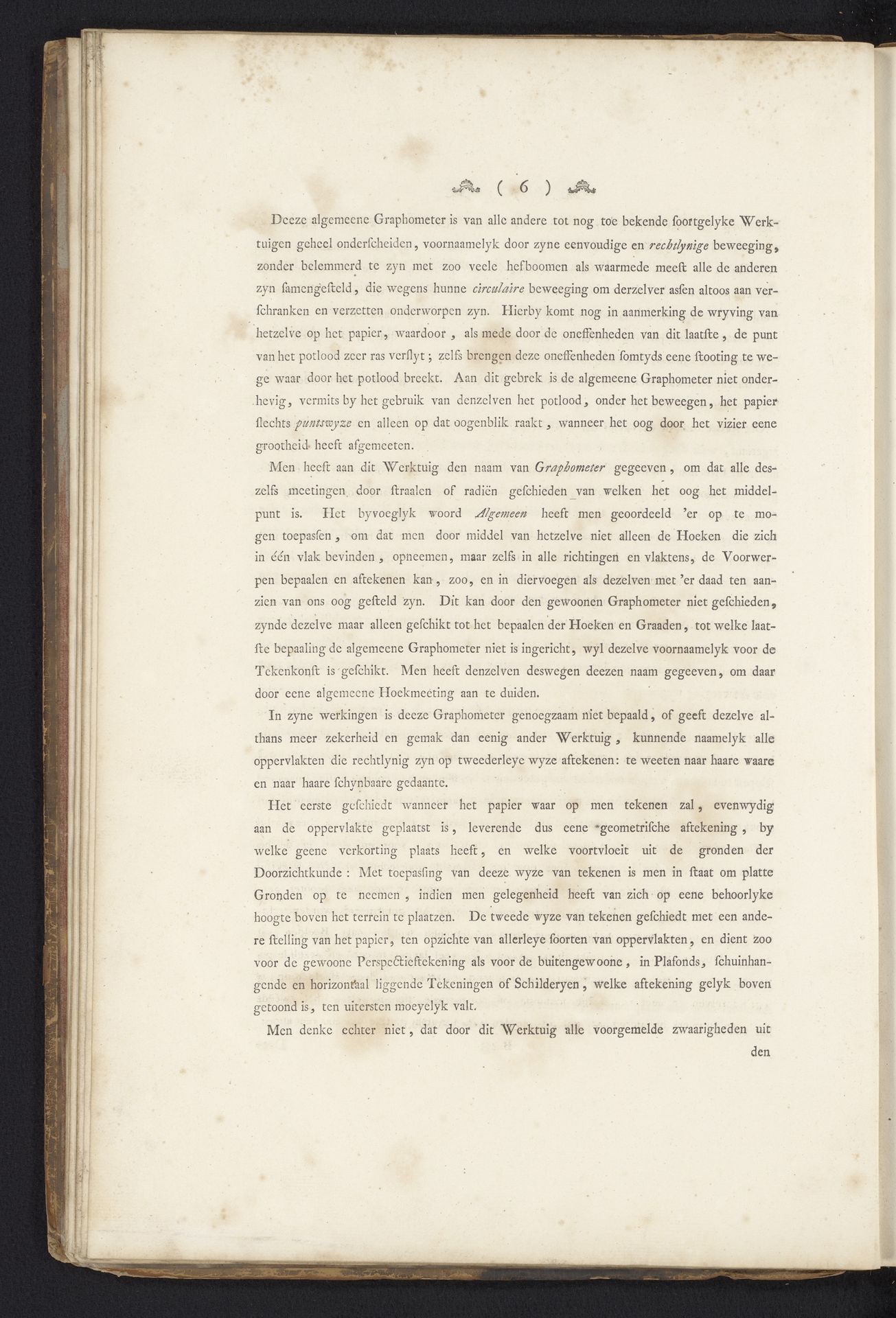
Beschrijving van het nut van de grafometer, pagina 6 van 10

Listen to curator's interpretation
Curatorial notes
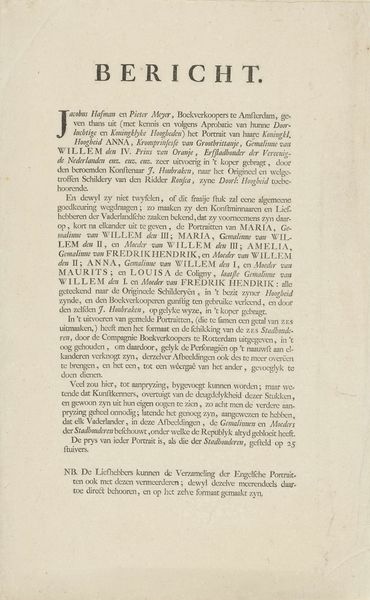
This page from Antoine George Eckhardt's book, likely created around the late 18th century, depicts a "graphometer," an instrument for surveying. The text, dense with technical detail, describes its function and advantages. But let's delve deeper than mere description. Words themselves can be symbols, and here, the meticulous language and geometric precision reflect a broader cultural obsession with order and reason, mirroring the Enlightenment's quest to map and measure the world. We see this impulse echo across time, from the ancient Roman surveyors, whose precise grids still shape our landscapes, to modern cartographers using satellites to achieve ever-greater accuracy. This drive to quantify and control our environment speaks to a deep-seated human desire to master the unknown, a quest that, while seemingly rational, is often fueled by subconscious anxieties about chaos and uncertainty. Eckhardt's graphometer, then, becomes more than a tool; it represents humanity's enduring struggle to impose order on the world, a cycle of measurement and mastery that continues to evolve.