About this artwork
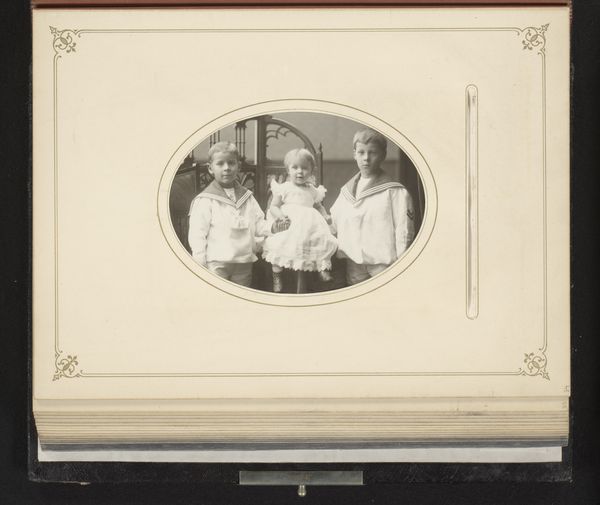
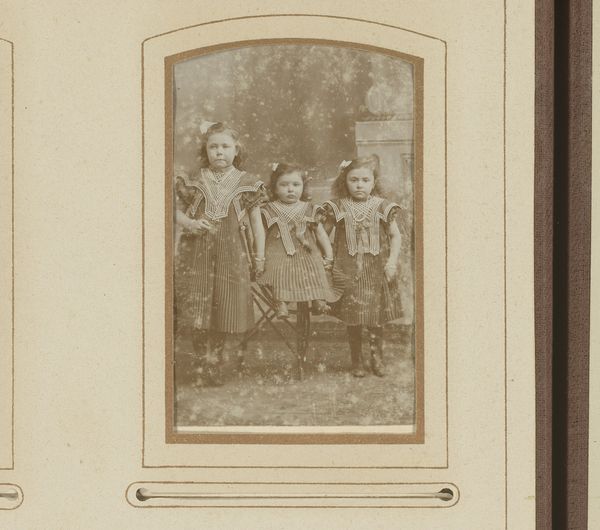
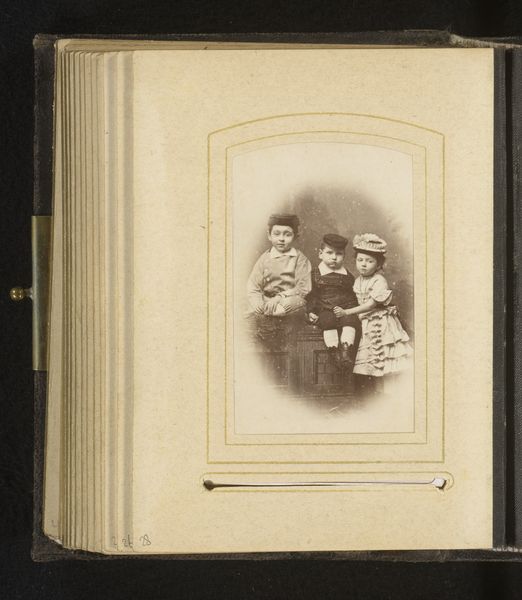
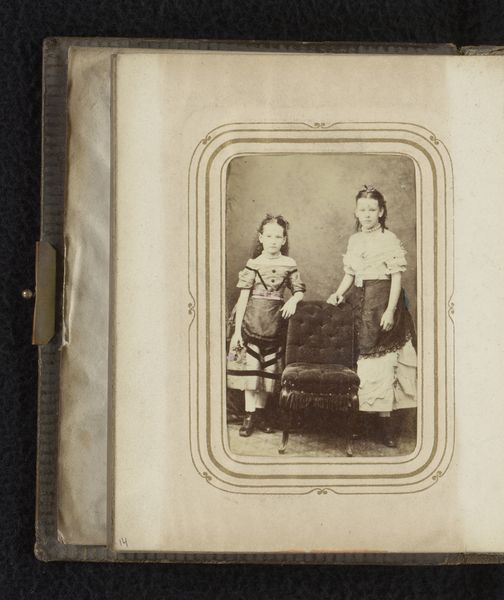
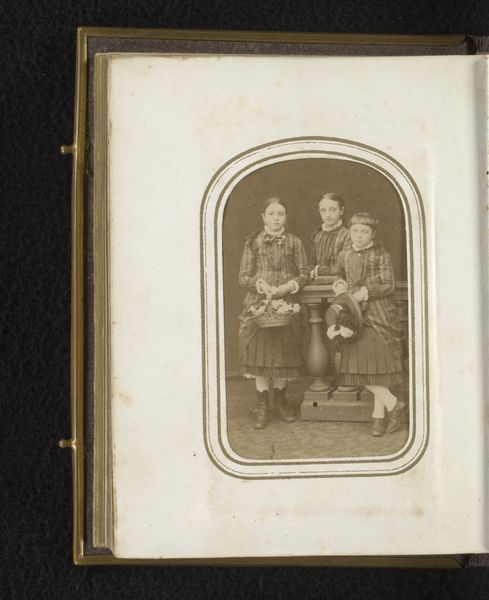
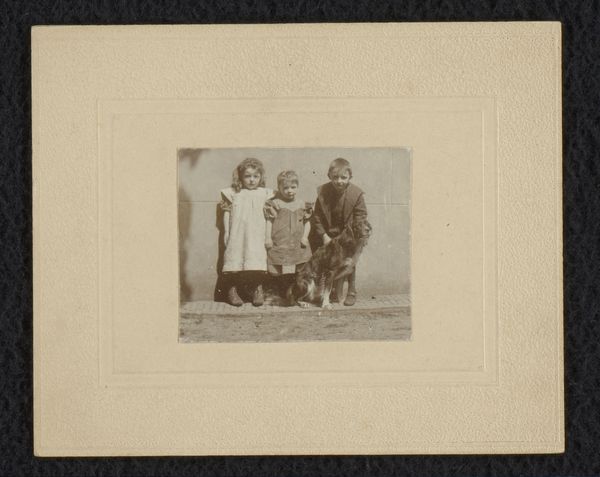
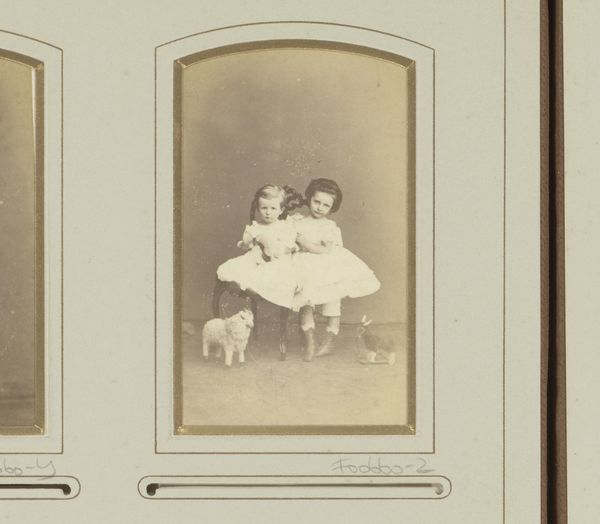
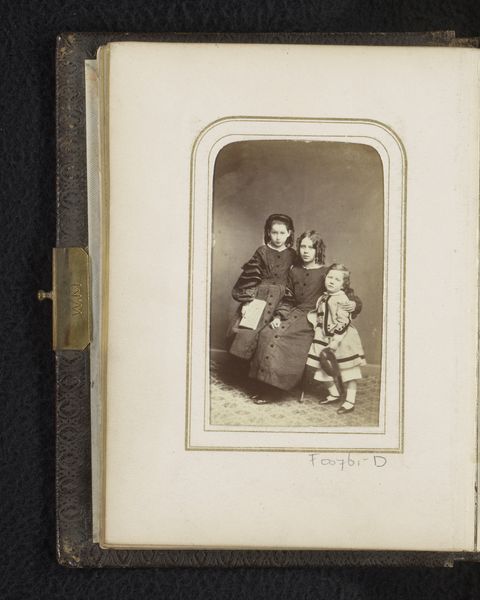
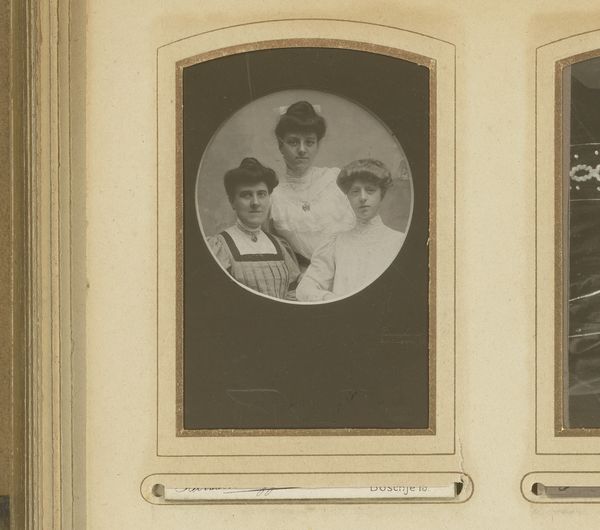
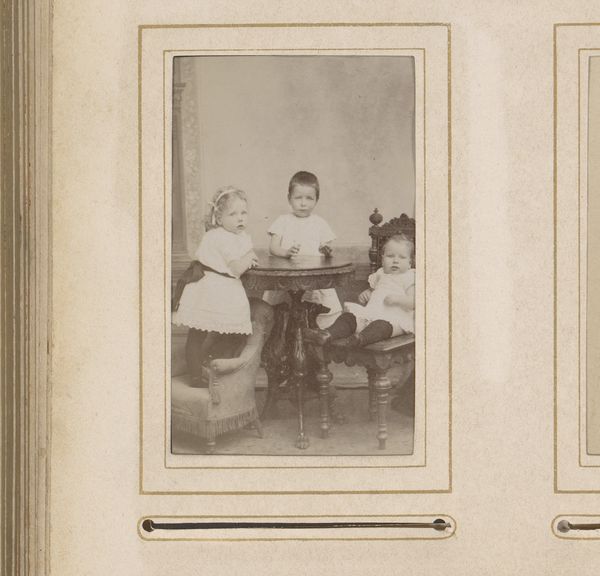
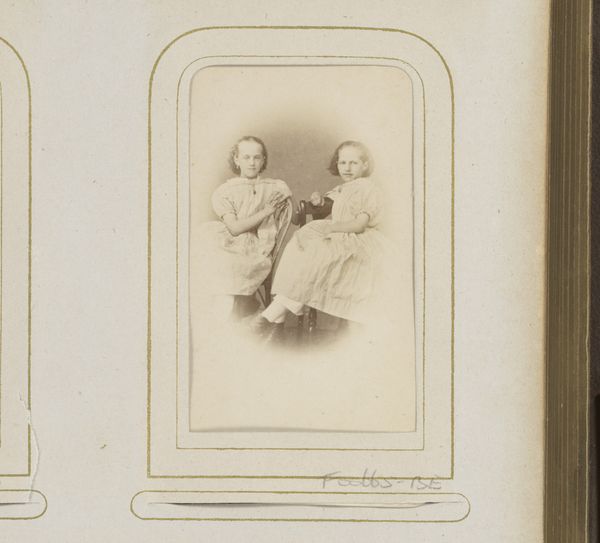
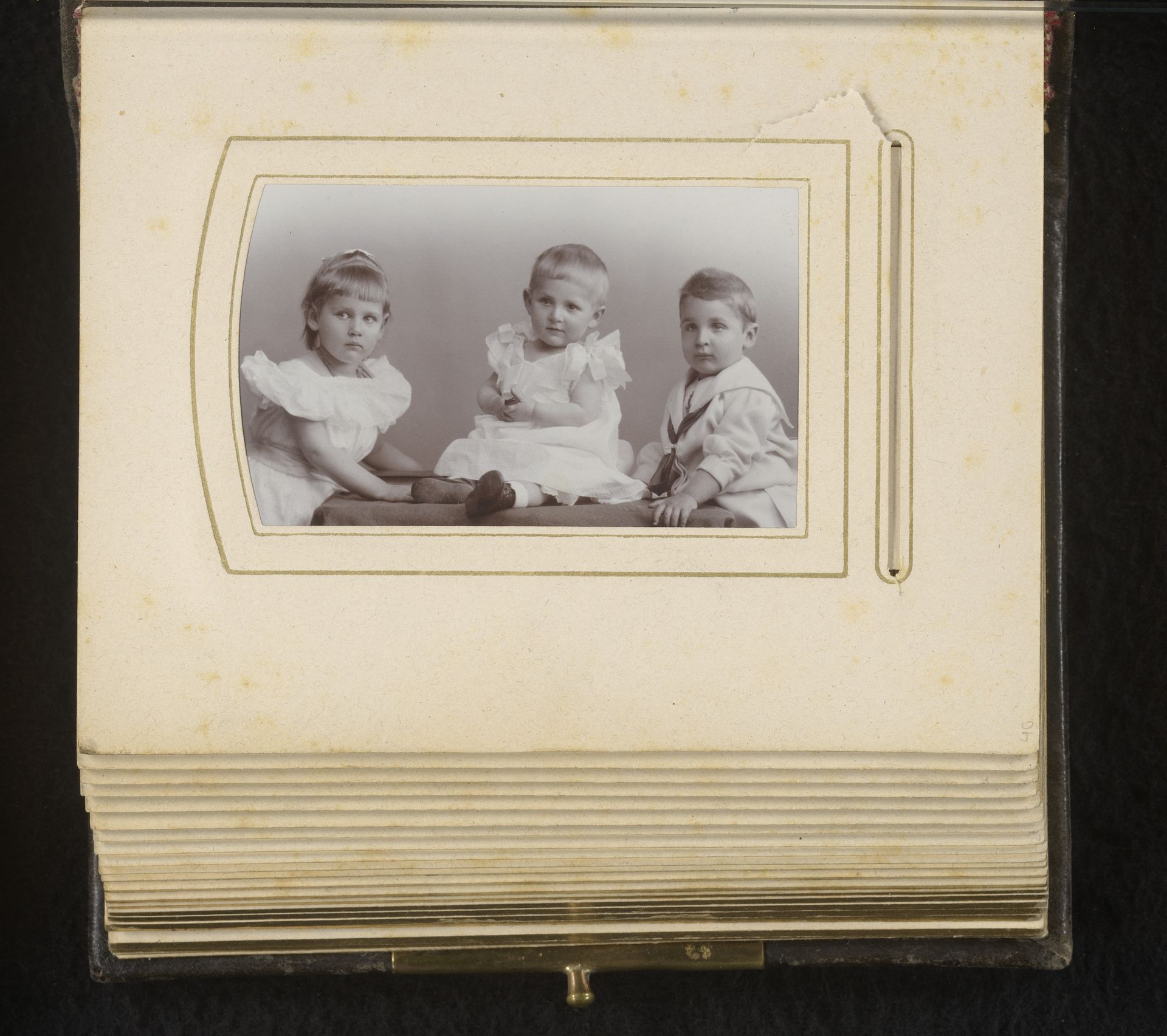
Editor: Here we have "Portret van drie kinderen" by Julius Cornelius Schaarwächter, taken sometime between 1872 and 1885. It’s a gelatin silver print, a very charming group portrait. What strikes me is the rather serious demeanor of the children, very formal. What do you see in this piece? Curator: Indeed, the formality is telling. Think about what photography represented then: a capture of legacy, of lineage. Even the children's clothing carries a certain symbolic weight—the pristine white fabric, the almost ceremonial presentation. They embody a preserved innocence, yet their somber expressions hint at an awareness, perhaps even a premonition, of societal expectations. The photo itself, enshrined in its album page, acts as a kind of reliquary. Editor: Reliquary, that's interesting. Do you think the specific poses or arrangement have a symbolic function as well? Curator: Absolutely. The central child, positioned slightly forward, might be interpreted as the primary inheritor, the focal point of the family's future. The flanking siblings, while equally precious, take on a supportive role visually. Consider how carefully constructed this image would have been, directing even small children to fulfill a representational purpose. This arrangement itself tells a silent story about their place within the family structure. How do these children speak to us today, given that we’re so far removed from this time period? Editor: It’s like a coded language, where every element – clothing, gaze, position – conveys status and expectations. For me, that coded language adds depth to the charm I felt at first. Thank you, this perspective gives me much to reflect upon. Curator: And for me, the exercise is to connect the visual language of the past to our evolving interpretations of family, memory and representation. The photograph evolves along with its audience.

Artwork details
- Medium
- photography, gelatin-silver-print
- Dimensions
- height 103 mm, width 63 mm
- Copyright
- Rijks Museum: Open Domain
Tags
Comments
Share your thoughts
About this artwork
Editor: Here we have "Portret van drie kinderen" by Julius Cornelius Schaarwächter, taken sometime between 1872 and 1885. It’s a gelatin silver print, a very charming group portrait. What strikes me is the rather serious demeanor of the children, very formal. What do you see in this piece? Curator: Indeed, the formality is telling. Think about what photography represented then: a capture of legacy, of lineage. Even the children's clothing carries a certain symbolic weight—the pristine white fabric, the almost ceremonial presentation. They embody a preserved innocence, yet their somber expressions hint at an awareness, perhaps even a premonition, of societal expectations. The photo itself, enshrined in its album page, acts as a kind of reliquary. Editor: Reliquary, that's interesting. Do you think the specific poses or arrangement have a symbolic function as well? Curator: Absolutely. The central child, positioned slightly forward, might be interpreted as the primary inheritor, the focal point of the family's future. The flanking siblings, while equally precious, take on a supportive role visually. Consider how carefully constructed this image would have been, directing even small children to fulfill a representational purpose. This arrangement itself tells a silent story about their place within the family structure. How do these children speak to us today, given that we’re so far removed from this time period? Editor: It’s like a coded language, where every element – clothing, gaze, position – conveys status and expectations. For me, that coded language adds depth to the charm I felt at first. Thank you, this perspective gives me much to reflect upon. Curator: And for me, the exercise is to connect the visual language of the past to our evolving interpretations of family, memory and representation. The photograph evolves along with its audience.
Comments
Share your thoughts