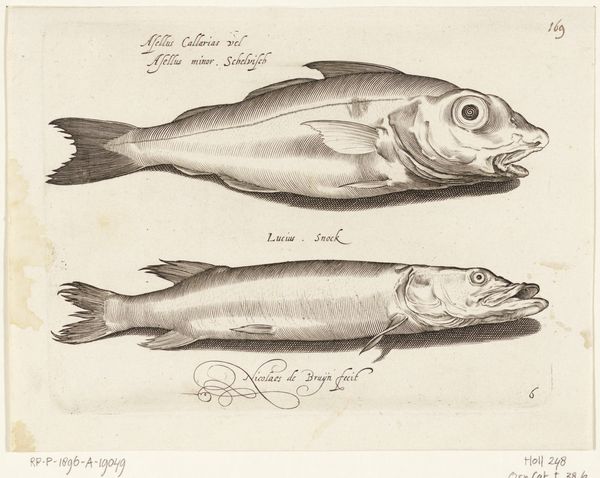
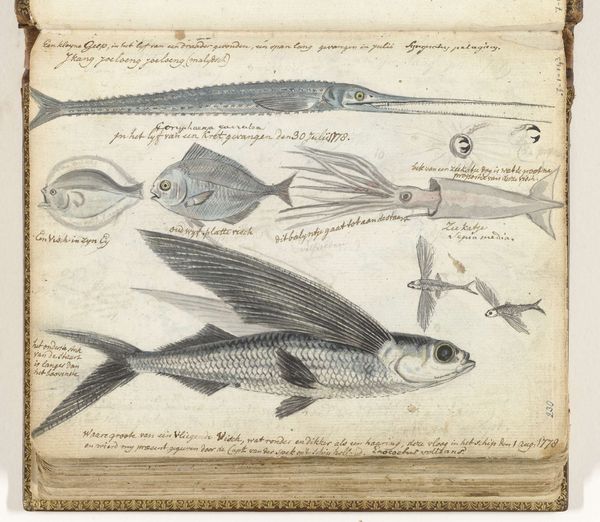
drawing, print, engraving
#
drawing
#
fish
#
baroque
# print
#
old engraving style
#
figuration
#
engraving
Dimensions: plate: 6 9/16 x 9 1/8 in. (16.6 x 23.1 cm)
Copyright: Public Domain
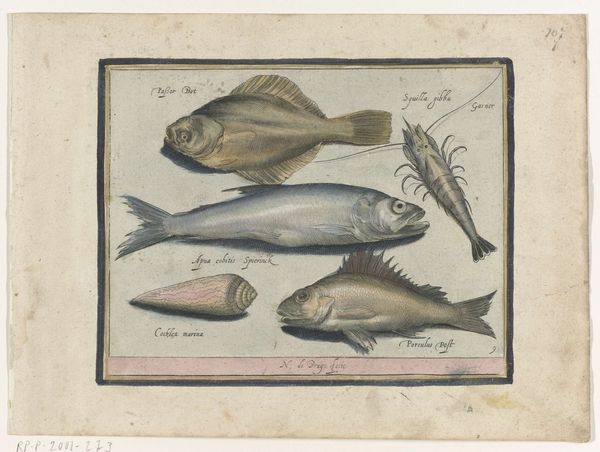
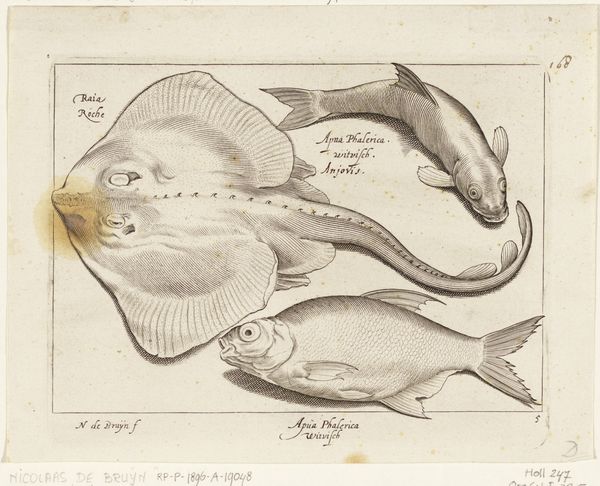
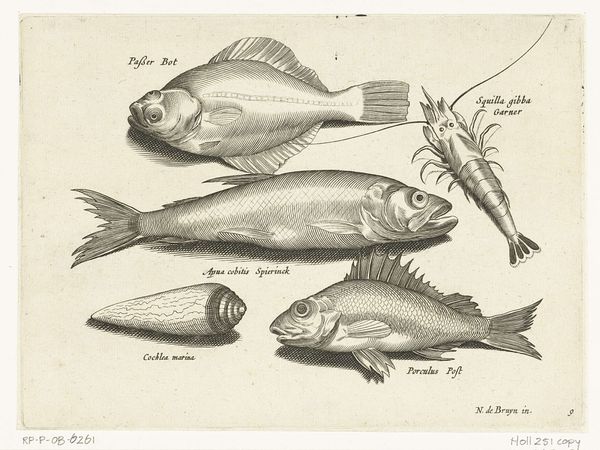
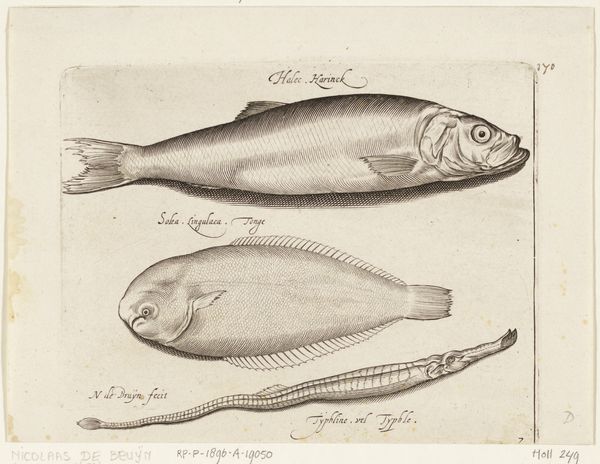
Editor: So, here we have "Pisces: Hogarth's Quadrille Fish," an engraving by William Hogarth from around 1729-1731, residing at the Met. It's a curious image. It feels almost…diagrammatic, yet stylized. There's something both scientific and comical about the fish. What can you tell me about this piece? Curator: Well, Hogarth's seemingly simple image speaks volumes about the socio-political climate and the role of visual culture in early 18th century England. We're not just looking at fish here, but a commentary. Consider the context: England was rapidly becoming a mercantile power. How might these seemingly docile, patterned fish play into that economic expansion and burgeoning consumer culture? Editor: Are you suggesting these aren't just innocent fish drawings, but maybe some form of social commentary? Curator: Precisely. Hogarth was deeply concerned with issues of morality and social conduct. The print’s title, “Quadrille Fish,” alludes to a popular card game associated with gambling and frivolous behavior amongst the wealthy elite. Think of it this way: How did imagery – specifically prints readily available to the public – shape public opinion and critique social ills during that period? Editor: So he's using the sign of Pisces, traditionally linked with harmony, to actually poke fun at something? The gambling perhaps, or maybe even wider social behaviors? Curator: Indeed. Hogarth skillfully used readily understood symbolism - here Zodiac signs and even fashionable card games - to make pointed observations. His prints became powerful tools for shaping public discourse, offering both entertainment and social critique, and were central to the construction of what we consider British identity at the time. Where would visual satire and social commentary be without readily accessible prints and images for all? Editor: That's fascinating! I hadn’t considered the power of printmaking as a form of political and social critique. It changes the way I look at the piece entirely. Curator: Exactly. It prompts us to consider the function of art not just as aesthetics, but also a product shaped by and actively shaping society itself.
Comments
No comments
Be the first to comment and join the conversation on the ultimate creative platform.
 Collect
 React
React Comment
More like this