

1720 - 1792
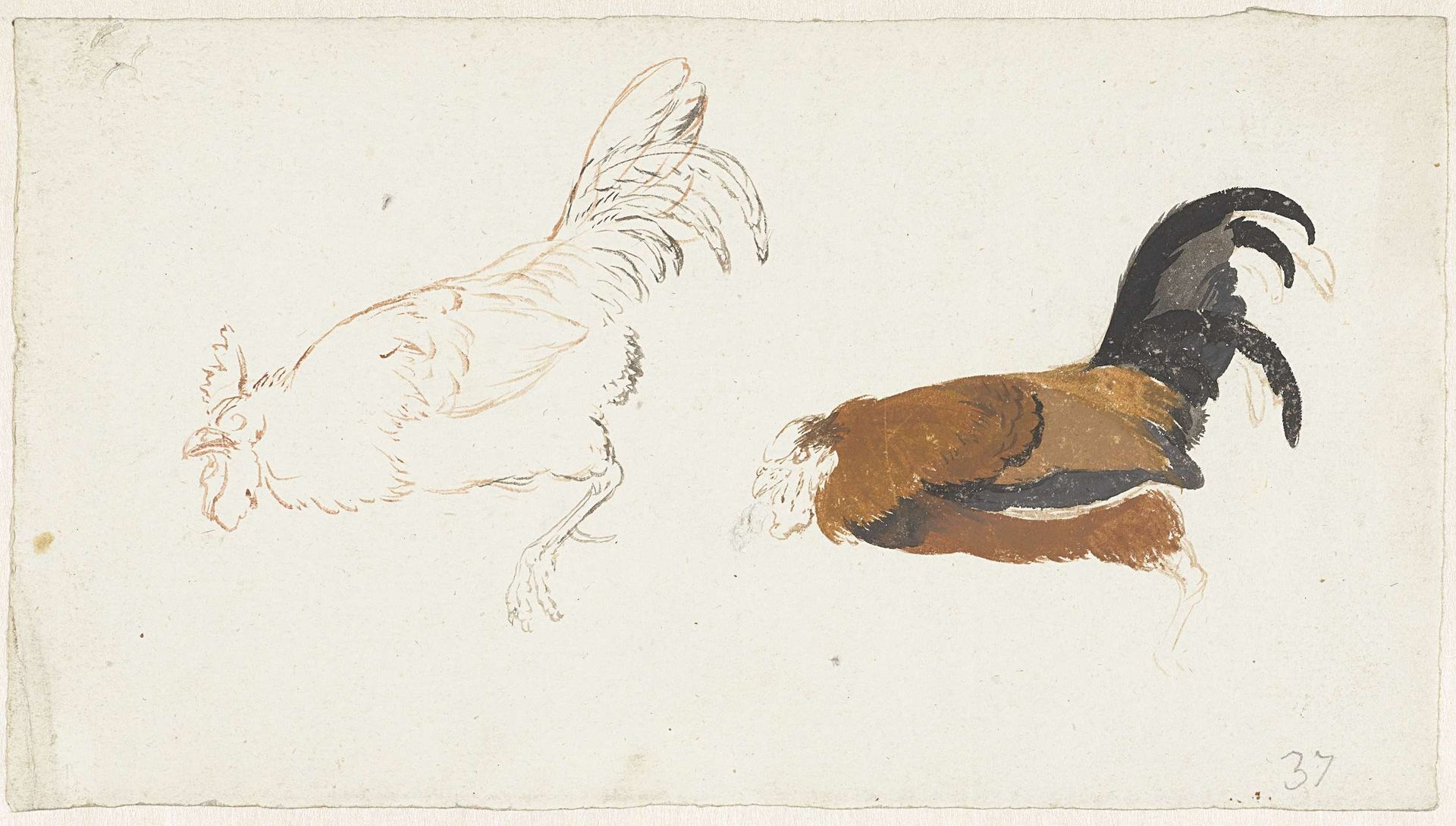
Twee studies van een dode haan

Aert Schouman
1710 - 1792Location
RijksmuseumListen to curator's interpretation
Curatorial notes
Editor: Here we have Aert Schouman's "Two Studies of a Dead Rooster," likely made sometime in the mid to late 18th century, rendered in watercolor and drawing. It's striking how one rooster is just an outline while the other is painted in detail. What strikes you about this piece? Curator: It’s easy to gloss over these studies as mere animal depictions, but situating them within the broader context of the 18th century, things get more complicated. Think about it: what did the rooster symbolize? Virility? Domination? In a society grappling with increasingly rigid social hierarchies and the dawn of enlightenment ideals, how might this image reflect or subvert those power structures? Editor: So, it’s less about the rooster itself, and more about what the rooster *represents* in that period? Curator: Exactly. Schouman likely intended these studies for use in larger compositions. But what interests me is how he’s presenting, or rather, deconstructing the animal. We see one essentially devoid of its vibrant colors. Stripped bare, isn't it just vulnerable? How might this portrayal speak to emerging Enlightenment concerns about human treatment of the animal kingdom? Editor: That's an interesting point I hadn't considered! Now that I'm thinking about it, are the two studies presenting a contrast between life and death, or maybe even power and vulnerability? Curator: Precisely. We can't ignore the socio-political implications, how these representations of nature reflect and potentially challenge the structures of the artist's time. The dead rooster becomes more than just a barnyard animal, doesn’t it? Editor: It really does! I'll never look at a still life the same way. Curator: That’s the aim. Art isn't made in a vacuum; understanding its historical context unveils layers of meaning. Editor: Absolutely, I'm walking away with a completely new perspective. Thank you!