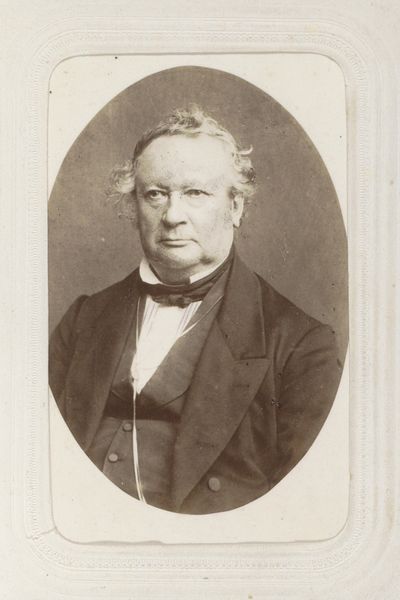
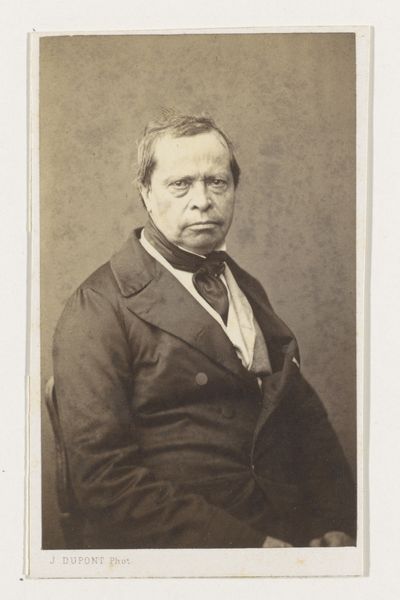
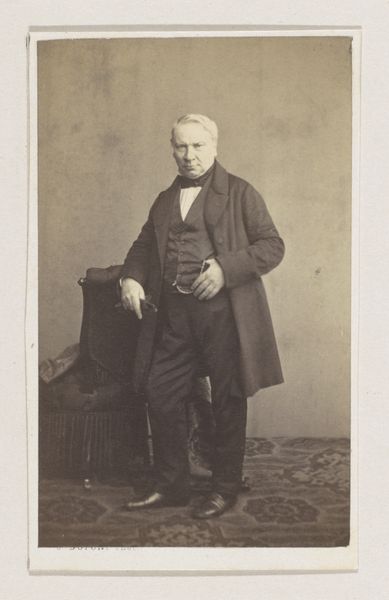
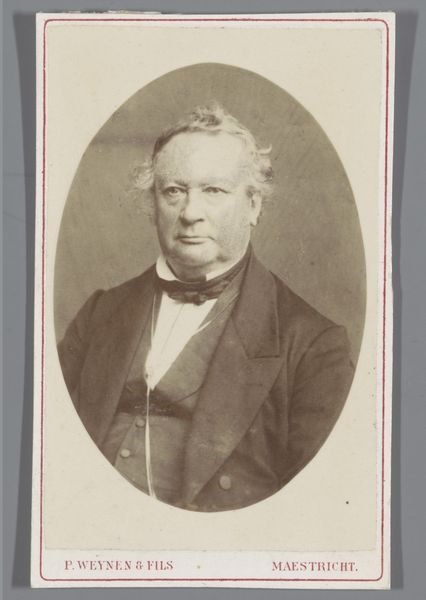
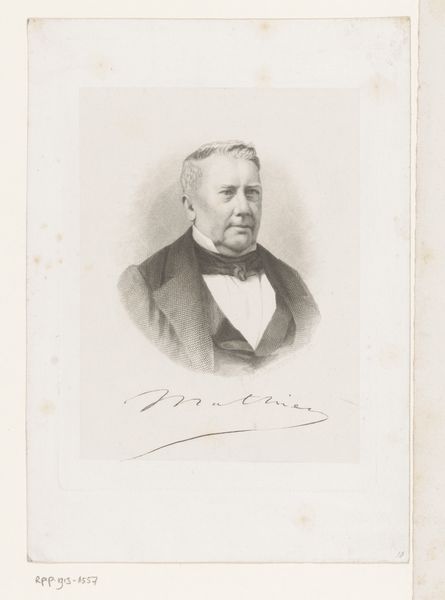
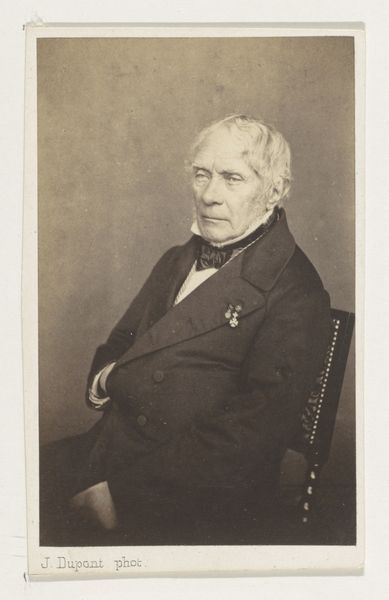
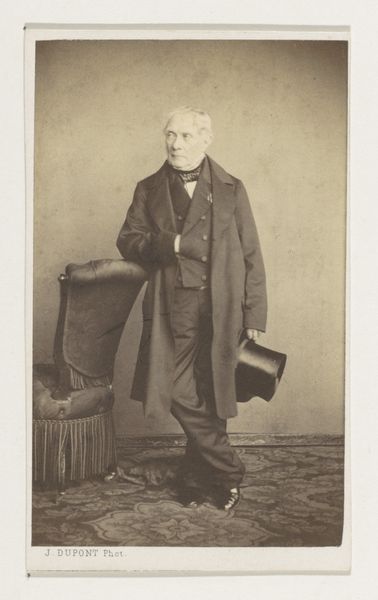
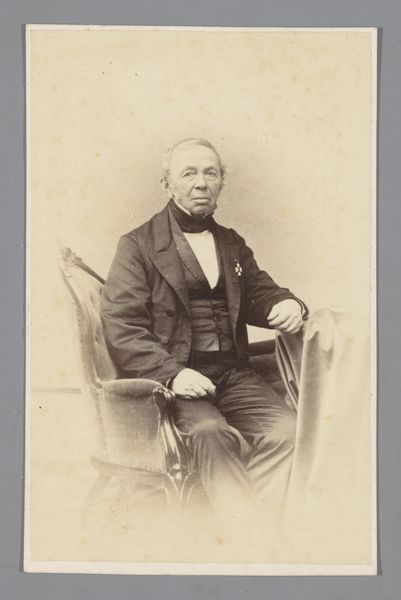
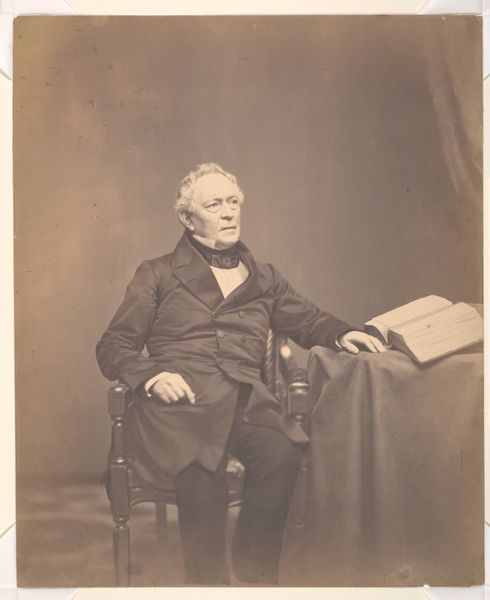
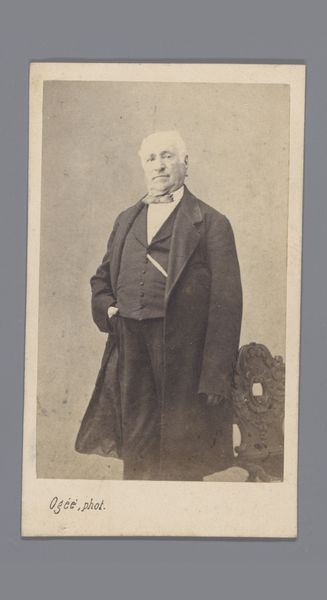
Portret van de medailleur en ciseleur Joannes Petrus Antonius Verschuylen, halffiguur 1861
0:00
0:00

Dimensions: height 101 mm, width 62 mm
Copyright: Rijks Museum: Open Domain
Editor: This is Joseph Dupont's photograph, a gelatin-silver print, from 1861 entitled "Portret van de medailleur en ciseleur Joannes Petrus Antonius Verschuylen, halffiguur" – or "Portrait of the medallist and chaser Joannes Petrus Antonius Verschuylen, half-length". It's quite imposing, and the lighting is so dramatic. What do you see in this piece, especially considering it’s a photograph and not a painting? Curator: The symbolism embedded in portraiture of this era is fascinating. The very act of commissioning a photograph signified a desire for lasting recognition. Here, Verschuylen, a medallist, is carefully presented. His gaze, direct and unwavering, establishes authority. But look closer: what societal expectations and markers of success are represented here? Editor: Well, his formal wear suggests respectability and his chain could hint at his profession and wealth. Curator: Precisely. The chain isn’t merely decorative; it acts as a visual marker, connecting him to his craft, to the tradition of artistry itself. Consider the contrast between the soft focus around the edges and the sharp detail in his face. Dupont uses this effect to tell us where our focus should lie, guiding our interpretation of the subject’s character. Does this alter your interpretation? Editor: Yes, it feels very deliberate now. It’s not just a picture; it's a constructed image, filled with meaning! Thank you for making me look beyond the surface! Curator: And thank you for posing such insightful questions! It reminds us that even the most straightforward image carries layers of cultural and historical weight.
Comments
No comments
Be the first to comment and join the conversation on the ultimate creative platform.
 Collect
 React
React Comment
More like this