About this artwork
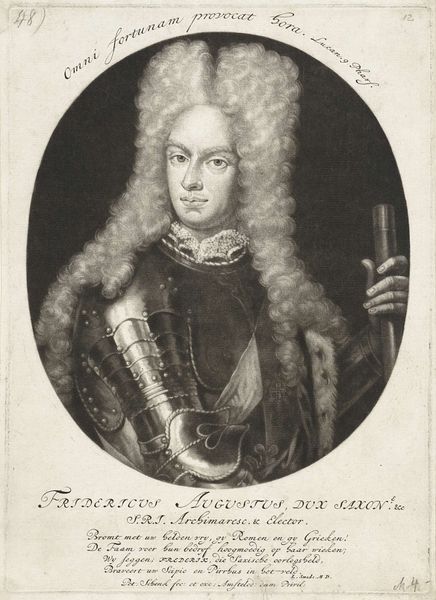
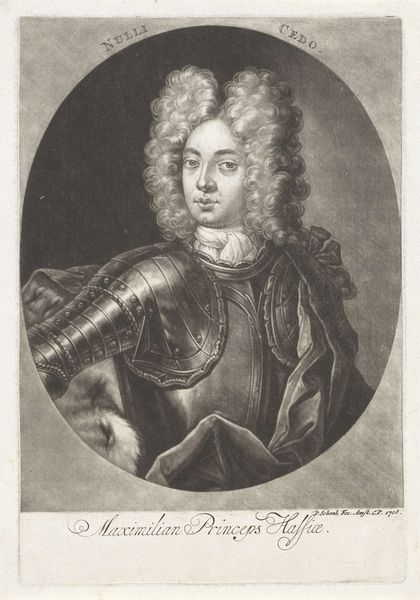
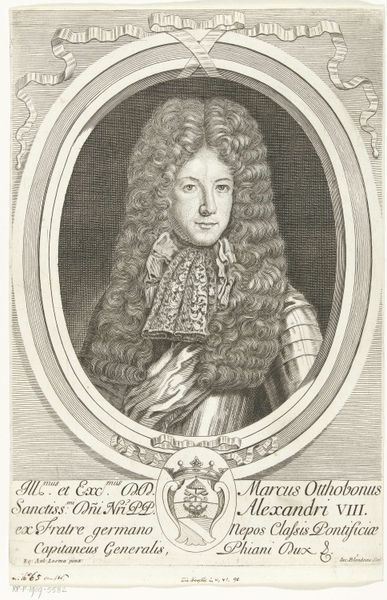
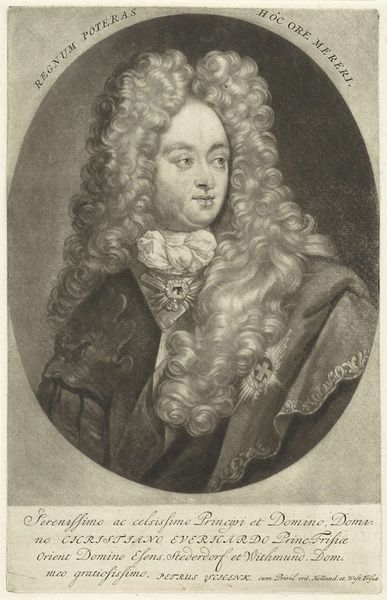
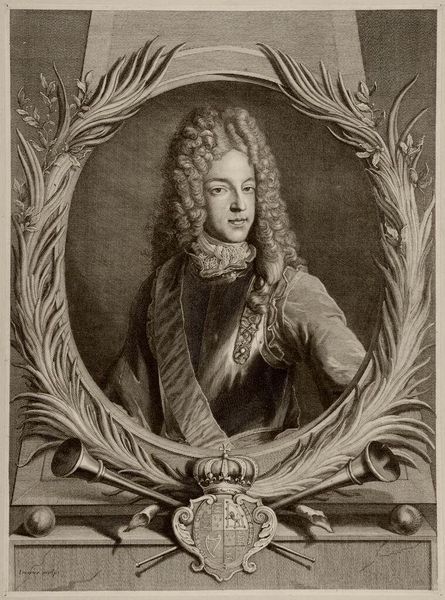
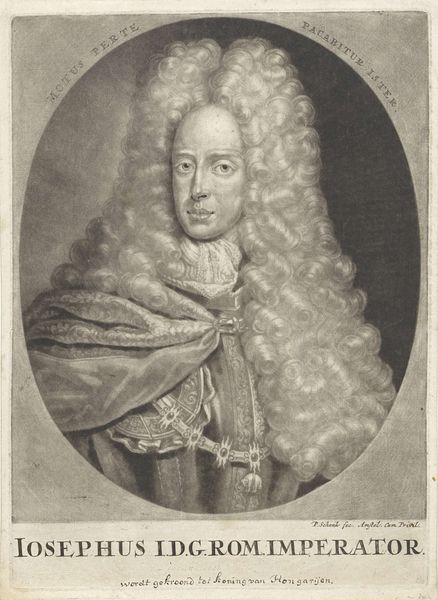
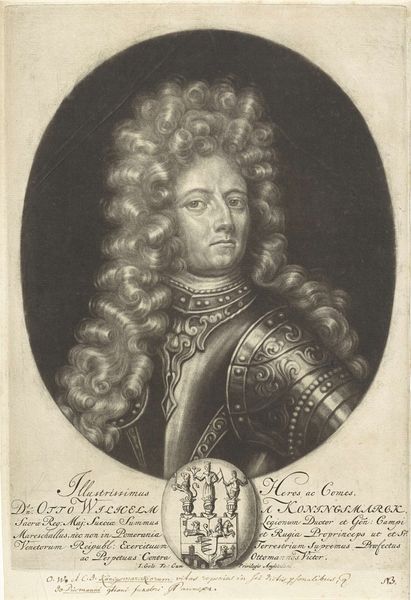
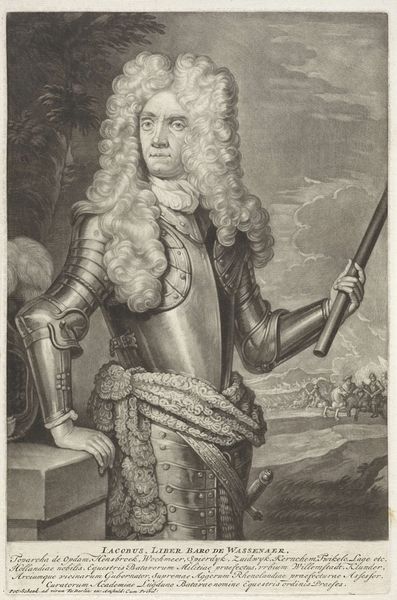
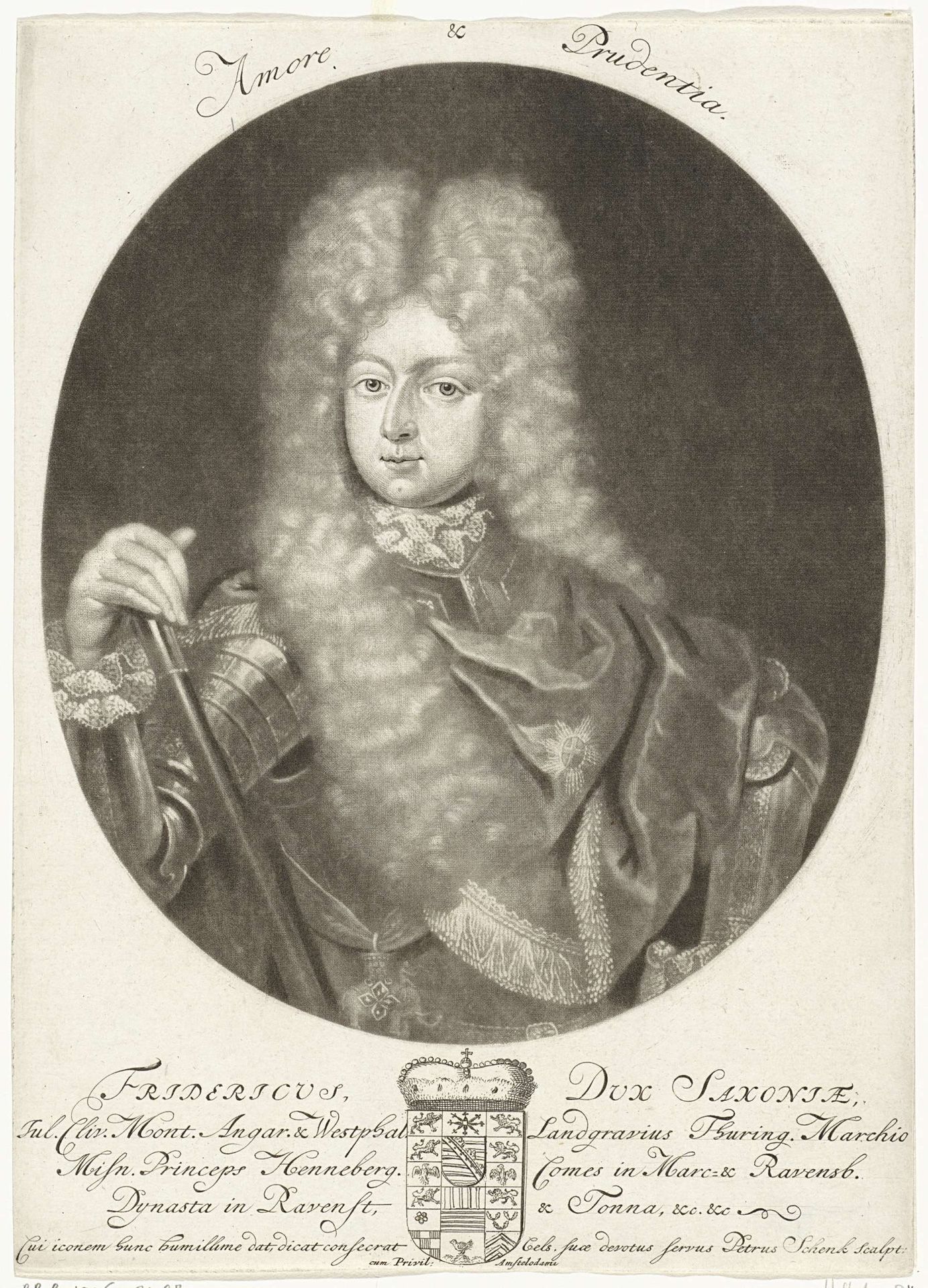
Pieter Schenk’s portrait of Frederik II, Duke of Saxe-Gotha-Altenburg, was made using etching and engraving techniques. The print reflects the baroque era's emphasis on status and the performance of power. Consider the visual language used here. Frederik is adorned in armor, but his pose and elaborate wig soften the militaristic impression. The words ‘Amore’ and ‘Prudentia’ are inscribed at the top, framing the Duke not just as a leader, but as an embodiment of love and wisdom. Schenk, born in Germany but active in Amsterdam, catered to a market eager to consume images of nobility. This portrait wasn't just a likeness; it was a carefully constructed representation of dynastic power, printed and circulated to project an image of authority. How does this blend of personal and political identity play out in our contemporary moment, where images are so easily disseminated and manipulated?
Portret van Frederik II, hertog van Saksen-Gotha-Altenburg
1670 - 1713

Pieter Schenk
1660 - 1711Location
RijksmuseumArtwork details
- Medium
- print, engraving
- Dimensions
- height 248 mm, width 179 mm
- Location
- Rijksmuseum
- Copyright
- Rijks Museum: Open Domain
Tags
portrait
baroque
old engraving style
history-painting
engraving
Comments
Be the first to share your thoughts about this work.
About this artwork
Pieter Schenk’s portrait of Frederik II, Duke of Saxe-Gotha-Altenburg, was made using etching and engraving techniques. The print reflects the baroque era's emphasis on status and the performance of power. Consider the visual language used here. Frederik is adorned in armor, but his pose and elaborate wig soften the militaristic impression. The words ‘Amore’ and ‘Prudentia’ are inscribed at the top, framing the Duke not just as a leader, but as an embodiment of love and wisdom. Schenk, born in Germany but active in Amsterdam, catered to a market eager to consume images of nobility. This portrait wasn't just a likeness; it was a carefully constructed representation of dynastic power, printed and circulated to project an image of authority. How does this blend of personal and political identity play out in our contemporary moment, where images are so easily disseminated and manipulated?
Comments
Be the first to share your thoughts about this work.