

1839
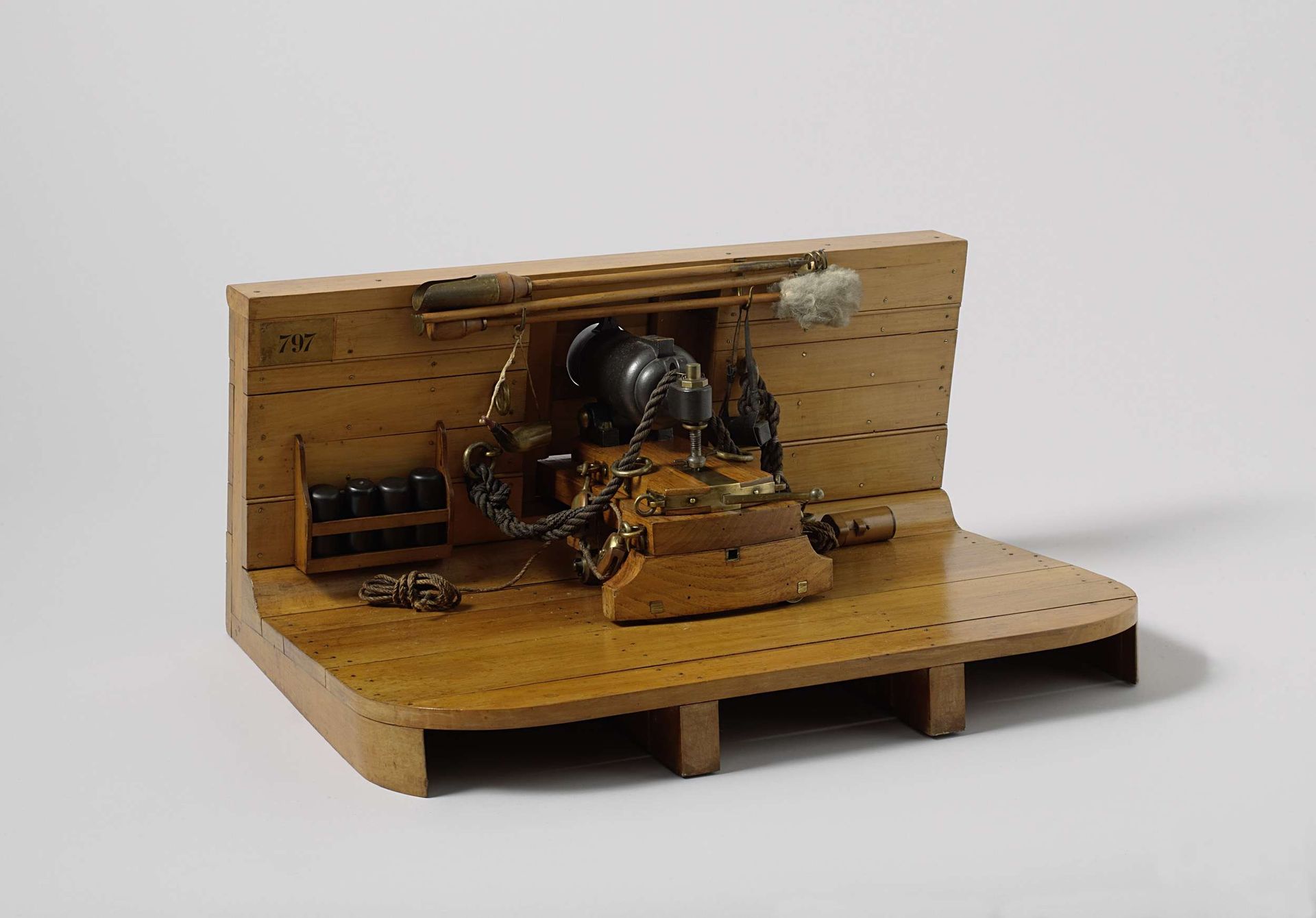
Model of a 12-Pounder Carronade on Deck

Listen to curator's interpretation
Curatorial notes
Editor: This is an incredibly detailed model of a 12-Pounder Carronade on Deck, made in 1839 by Rijkswerf Vlissingen. The materials are primarily wood and metal. I’m struck by the craftsmanship; you can almost imagine the labour that went into making something so precise, even at this small scale. What catches your eye in this piece? Curator: I'm immediately drawn to the materiality itself, the conscious selection and combination of wood and metal. Think about the social context. This model was created in a specific era – the 19th century, deeply connected to industrial expansion and naval power. Editor: Right, the materials reflect that connection to both industry and the military. Curator: Precisely. The process of crafting this piece would involve skilled labour – carpenters, metalworkers, all contributing to a representation of military might. What do you notice about the wood itself? Editor: The wood looks carefully worked and polished, clearly displaying skilled craftsmanship, although likely machine-tooled too? I guess this shows an acceptance of, and transition to new production techniques during that era? Curator: Exactly. This isn't just about depicting a carronade; it’s about showcasing the technical capabilities and the systems of labor in place at that time. Consider the social implications: who benefits from this industry, and what is the human cost? Editor: I hadn't thought about it that way. It’s like this model embodies the whole complex relationship between artistry, industry, and power in that period. Curator: And think about the function. A model like this isn't purely decorative; it’s also about instruction, demonstration, perhaps even sales. It links artistic creation with broader economic and political agendas. Editor: So, by focusing on the materials and production, we can understand the larger social and industrial context in which this model was made. Thanks, that really shifted my perspective. Curator: Indeed. Examining the "how" and "why" of its creation opens a rich avenue of understanding, well beyond a simple object.