1579
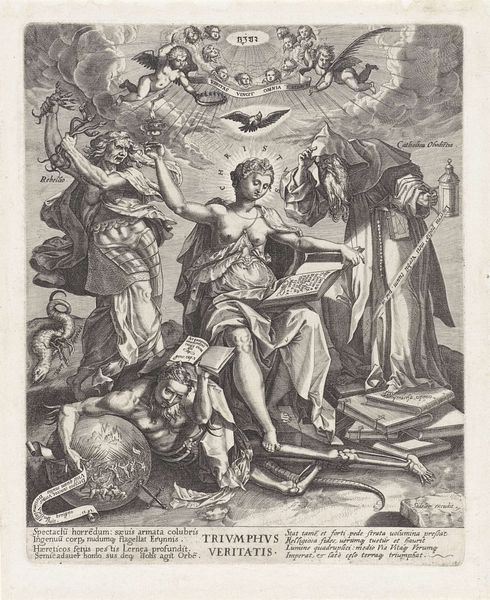
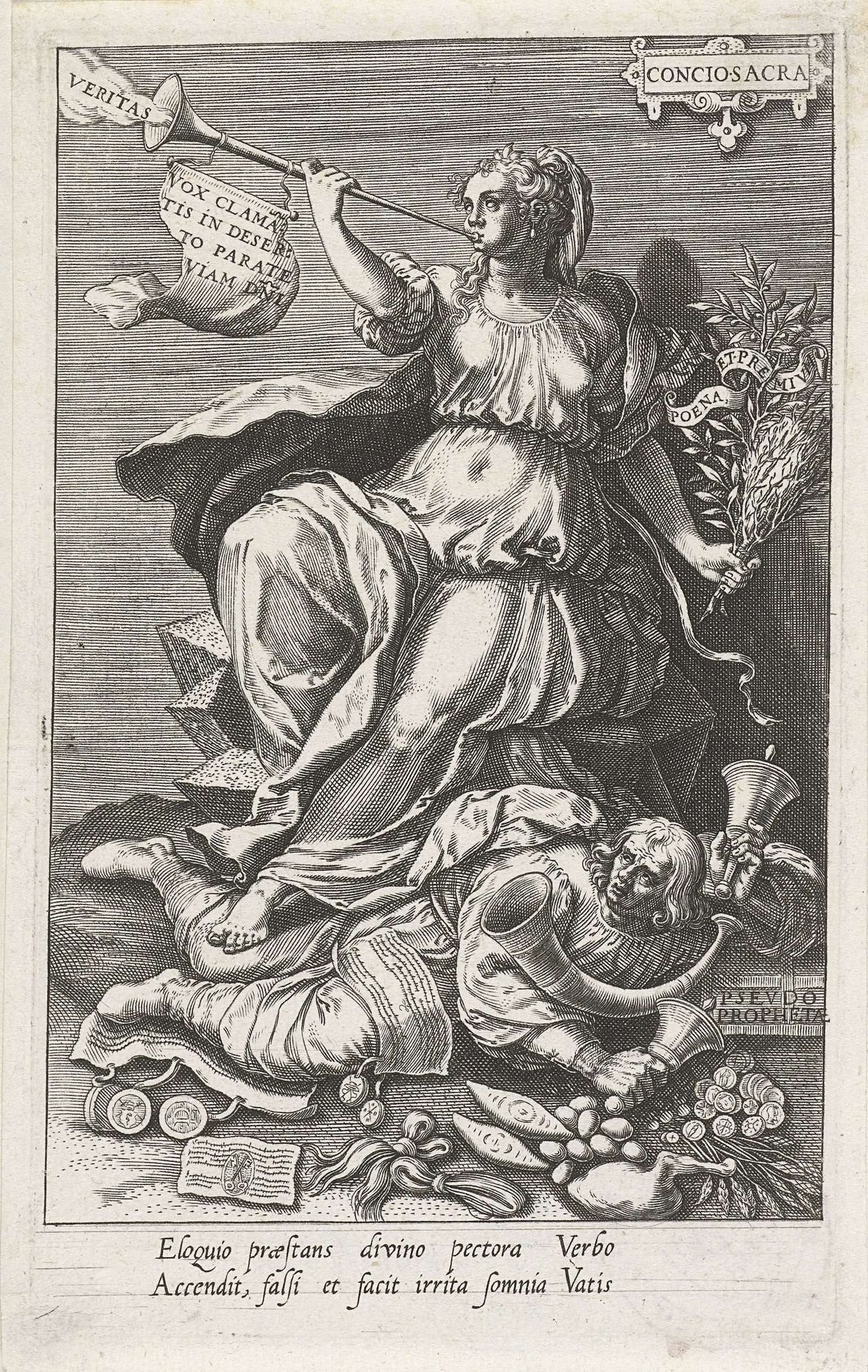
Geweten (Conciosacra) overwint Valse profeten (Pseudo prophetae)

Johann Sadeler I
1550 - 1601Location
RijksmuseumListen to curator's interpretation
Curatorial notes
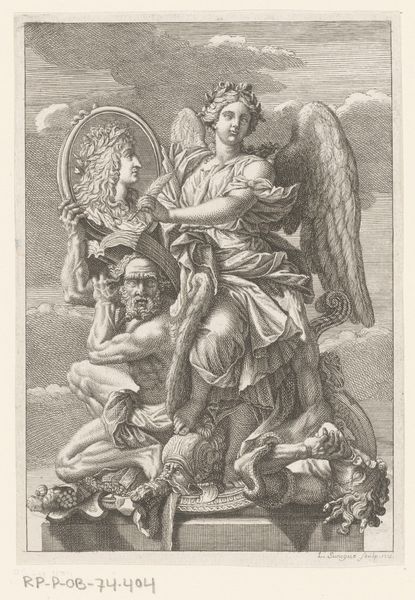
Johann Sadeler I created this engraving called ‘Geweten (Conciosacra) overwint Valse profeten (Pseudo prophetae)’ with an etching needle in the late 16th century. The picture shows a female allegorical figure sitting triumphantly on top of a 'false prophet'. Sadeler was from the Southern Netherlands, but worked in Germany during a time of great religious conflict. His image creates meaning through the use of classical allegory, a visual code very popular at this time. Here, the figure of truth or conscience triumphs over false prophecy. The trumpet connects her to the divine and the light of ‘Veritas’ or truth, while the defeated prophet and his imagery are much more earth-bound, in the dark. This image would have meaning for different religious parties in different ways, as it suggests that institutions themselves can be corrupted by false prophets. The Rijksmuseum’s archive provides an interesting insight into the varying interpretations of similar images during this time of religious division.