About this artwork
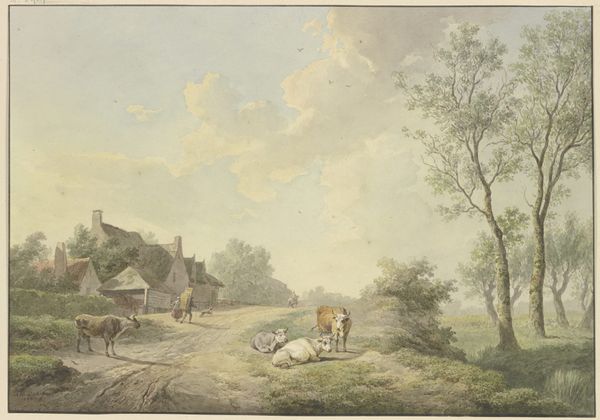
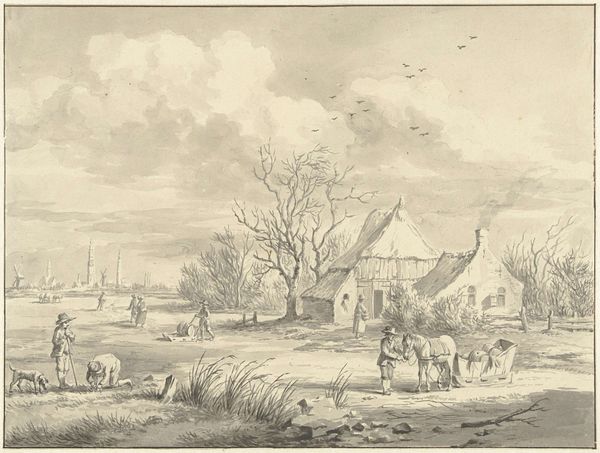
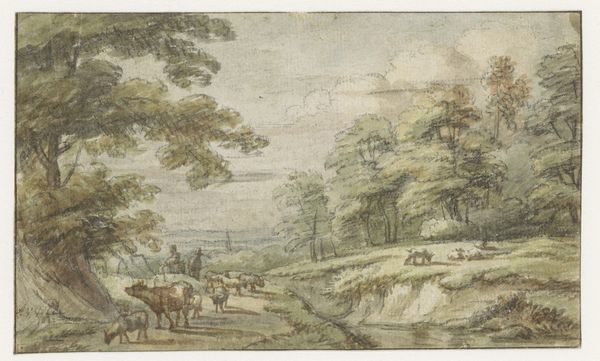
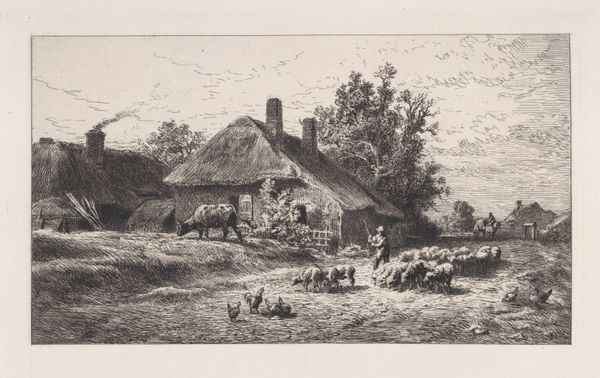
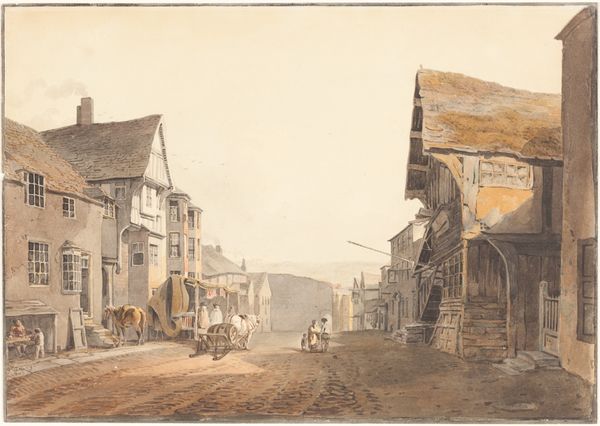
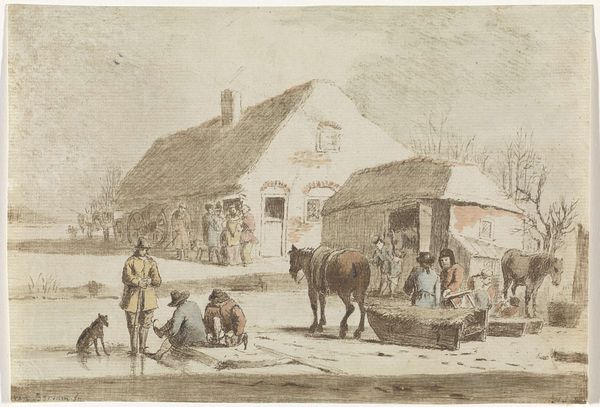
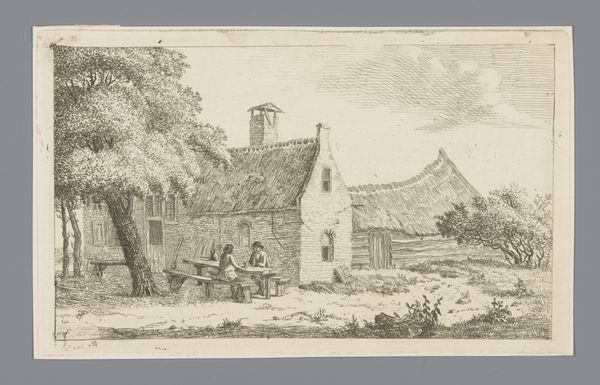
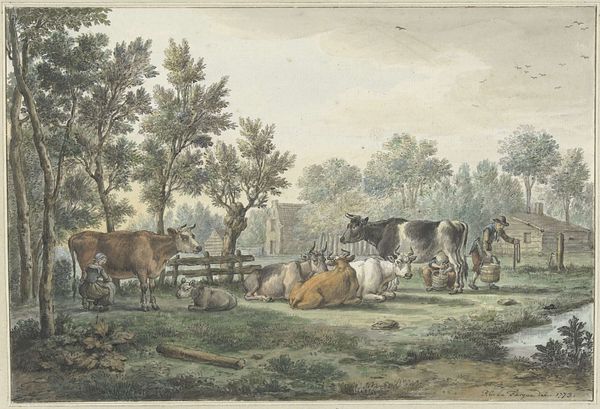
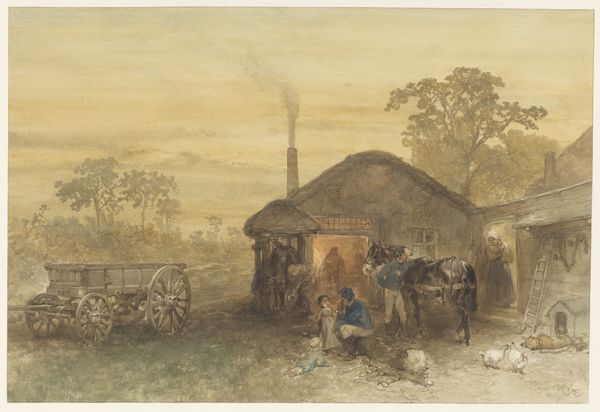
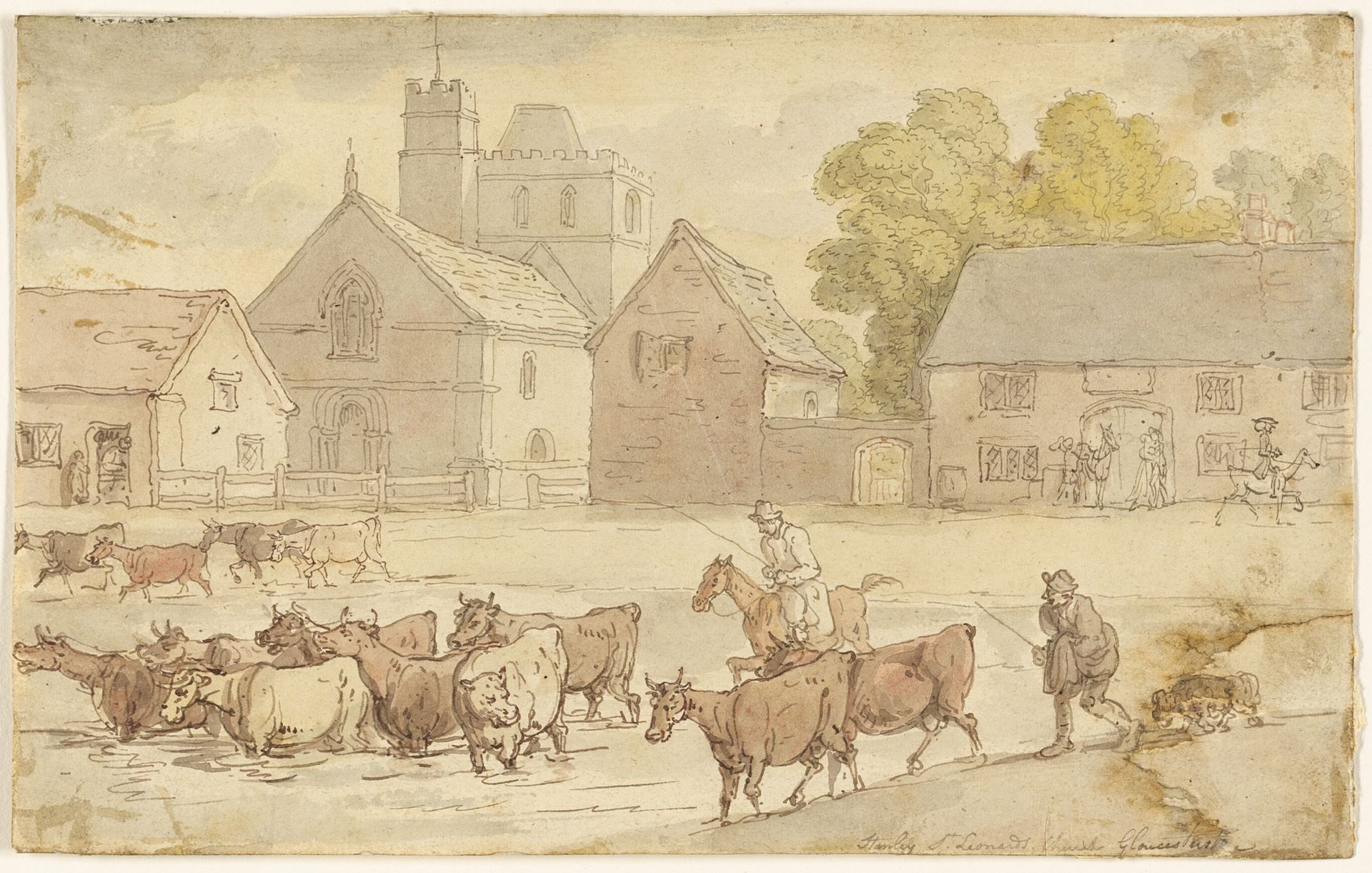
Thomas Rowlandson rendered Stanley St. Leonard Church in Gloucestershire with pen and watercolor. This seemingly simple depiction of rural life is steeped in layers of meaning. The church, with its stoic presence, dominates the backdrop. It represents not just religious devotion but also the social order of the time, the unchanging backdrop to the comings and goings of daily life. The cattle, led across the foreground, are more than mere livestock. Since ancient times, cattle have been linked to prosperity and abundance. Consider the motif of the procession, how it echoes in triumphal arches of Rome, religious iconography, and even modern-day parades. It is an eternal expression of communal movement and purpose, a motif deeply embedded in our collective memory. Rowlandson, perhaps unconsciously, taps into this primal symbolism. The image’s emotional resonance is powerful, engaging our subconscious on a profound level. These symbols evolve, resurface, and take on new meanings, their cyclical progression revealing the enduring power of cultural memory.
Stanley St. Leonard Church, Gloucestershire
n.d.


Artwork details
- Medium
- drawing, print, plein-air, paper, ink
- Dimensions
- 140 × 223 mm
- Location
- The Art Institute of Chicago
- Copyright
- Public Domain
Tags
architectural sketch
landscape illustration sketch
drawing
plein-air
landscape
paper
personal sketchbook
ink
watercolor
Comments
Be the first to share your thoughts about this work.
About this artwork
Thomas Rowlandson rendered Stanley St. Leonard Church in Gloucestershire with pen and watercolor. This seemingly simple depiction of rural life is steeped in layers of meaning. The church, with its stoic presence, dominates the backdrop. It represents not just religious devotion but also the social order of the time, the unchanging backdrop to the comings and goings of daily life. The cattle, led across the foreground, are more than mere livestock. Since ancient times, cattle have been linked to prosperity and abundance. Consider the motif of the procession, how it echoes in triumphal arches of Rome, religious iconography, and even modern-day parades. It is an eternal expression of communal movement and purpose, a motif deeply embedded in our collective memory. Rowlandson, perhaps unconsciously, taps into this primal symbolism. The image’s emotional resonance is powerful, engaging our subconscious on a profound level. These symbols evolve, resurface, and take on new meanings, their cyclical progression revealing the enduring power of cultural memory.
Comments
Be the first to share your thoughts about this work.