painting, plein-air, oil-paint, impasto
#
portrait
#
painting
#
plein-air
#
oil-paint
#
landscape
#
impressionist landscape
#
figuration
#
oil painting
#
impasto
#
ashcan-school
#
nature
#
realism
Copyright: Public domain
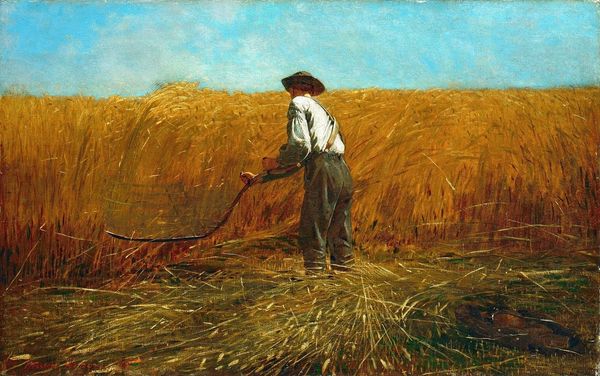
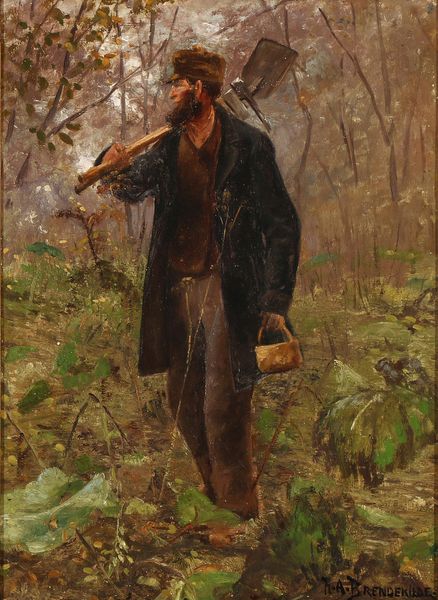
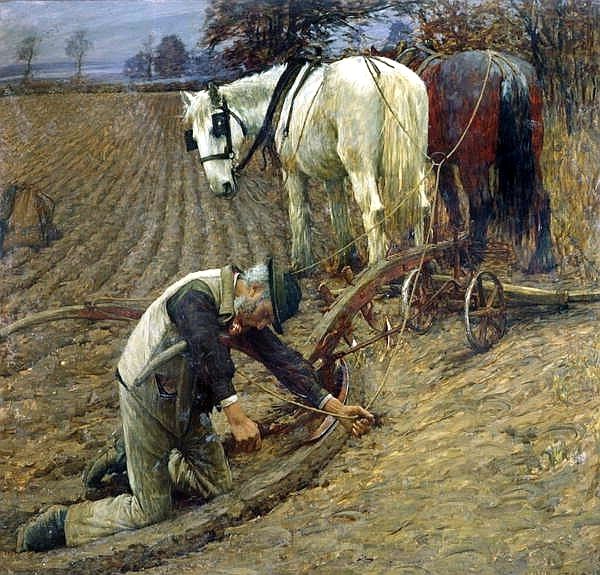
Eastman Johnson painted "Man in a Cornfield" during a period of significant social and economic change in America. Johnson, a White artist, often depicted rural life. Here, a lone figure stands amidst a field of corn. The man's posture, head bowed and eyes downcast, speaks to the weight of labor and perhaps the socio-economic hardships faced by many farmers during the late 19th century. The painting invites us to reflect on the intersection of identity and labor. The cornfield itself represents a landscape of both promise and toil, deeply connected to the history of agriculture and the people who worked the land. "Man in a Cornfield" doesn't just show us a scene; it evokes a sense of empathy, asking us to consider the lives and experiences of those who lived and worked in rural America.
Comments
No comments
Be the first to comment and join the conversation on the ultimate creative platform.
 Collect
 React
React Comment
More like this