1982
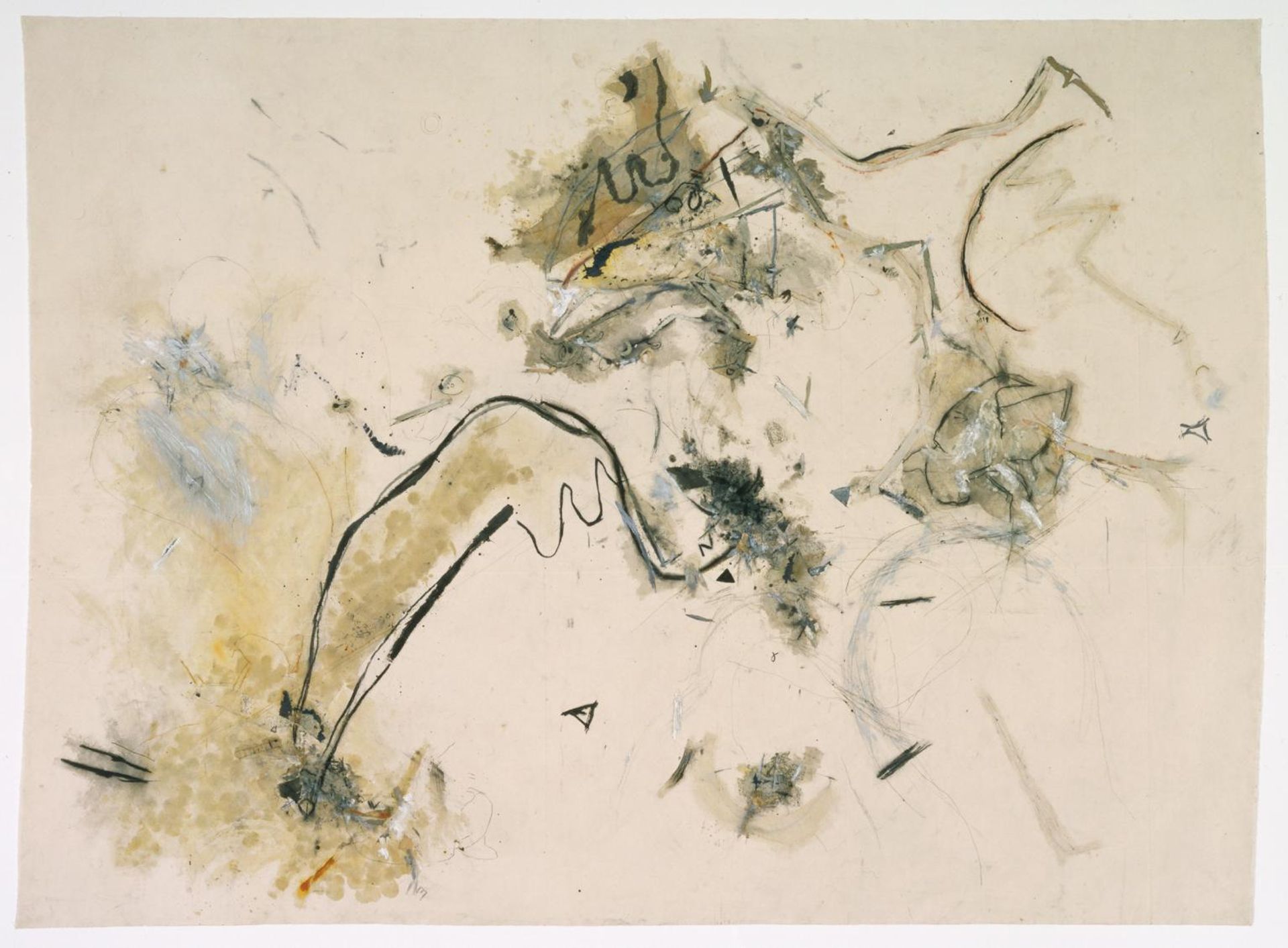
The Wing of the Wind of Madness

Listen to curator's interpretation
Curatorial notes
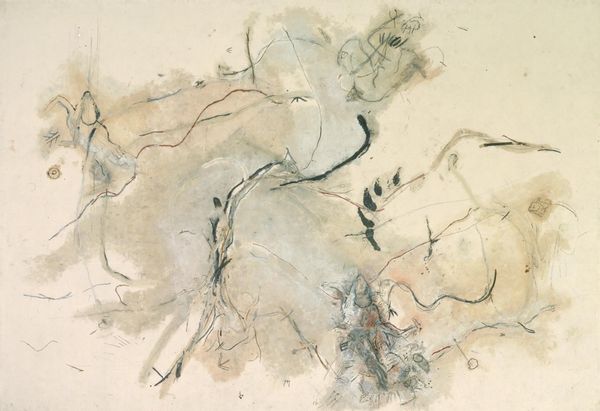
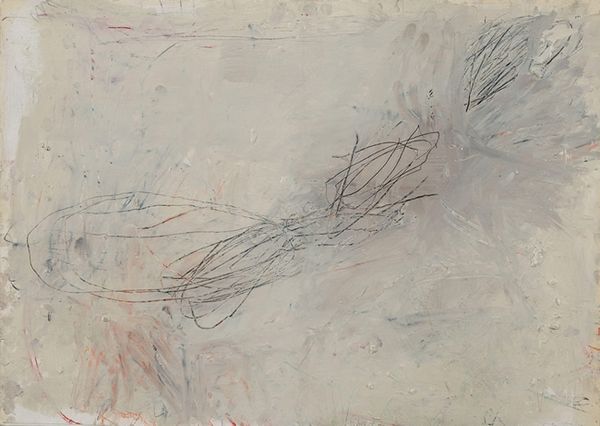
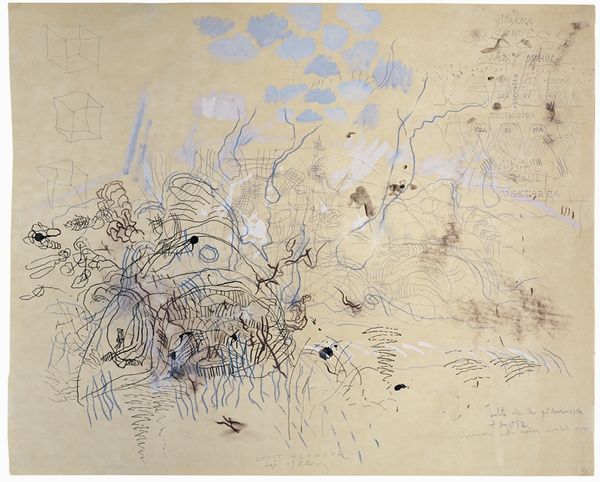
Curator: Avis Newman's "The Wing of the Wind of Madness," a large mixed media piece here at the Tate, feels almost like a map of an emotional landscape. What strikes you first about it? Editor: The sheer scale! It's like being pulled into a whirlwind, a chaotic dance of lines and muted tones. There’s something unsettling yet compelling about its rawness. Curator: Absolutely. The apparent chaos is deceptive. Note the recurring motifs – those angular shapes, the organic forms struggling to emerge. It is about finding patterns in turmoil, a quest for meaning in what seems senseless. Editor: It feels deeply personal, like a glimpse into someone's fragmented memories. The earth tones suggest decay, but the black lines, like frantic scribbles, hint at a desperate attempt to reconstruct something. Curator: Precisely, consider "wind" as breath and the "wing" as a protective, but potentially dangerous force. Newman is exploring the power of the unconscious. What about the "madness?" Does it liberate or destroy? Editor: Perhaps it's both. Destruction to make way for new creation, like a phoenix rising from ashes. Now, looking again, there's a strange beauty in its vulnerability. Curator: An apt observation. Editor: It's a piece that lingers, isn't it? Something to keep turning over in your mind.