c. 1610 - 1634
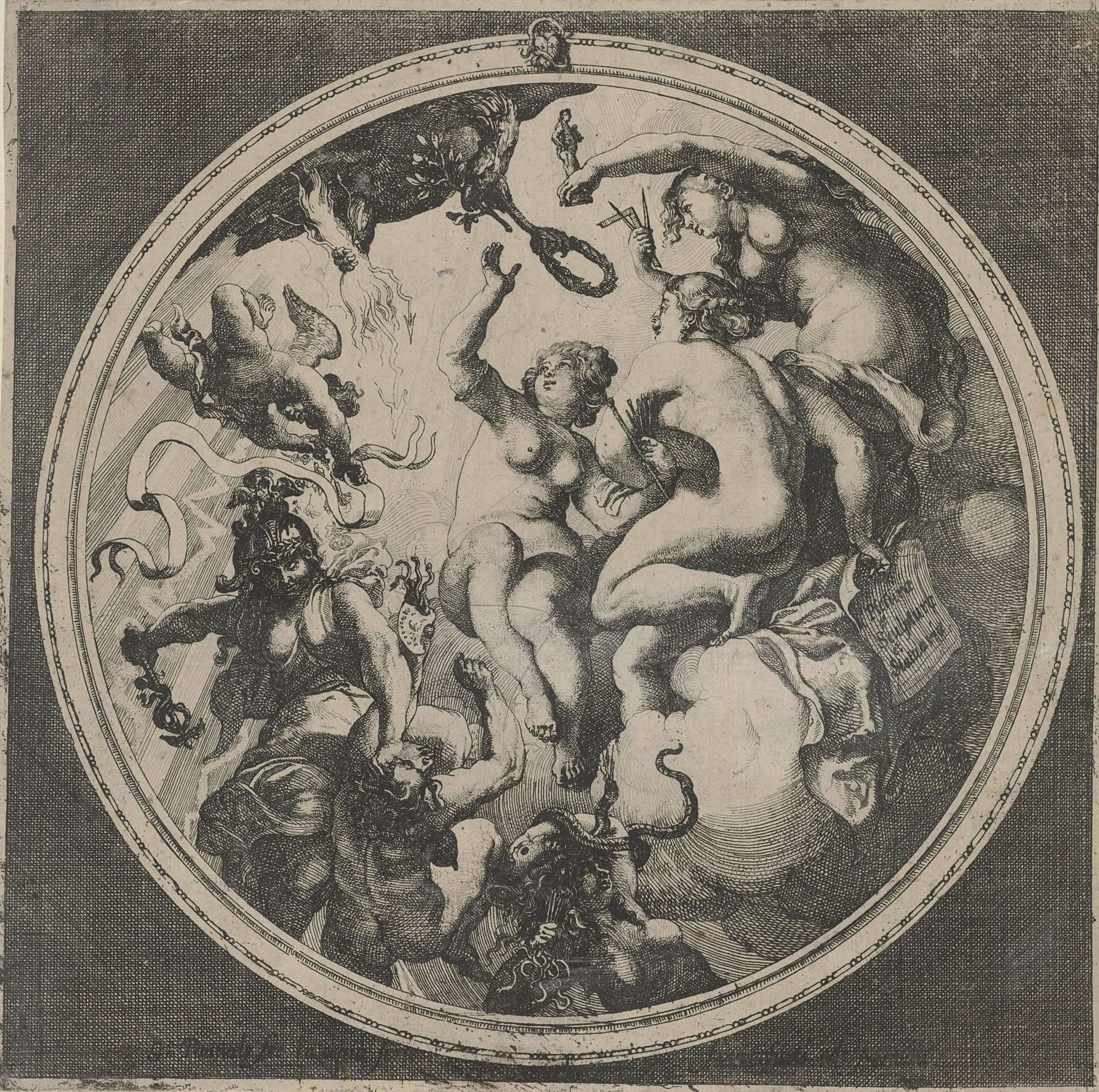
Personificaties van Schilderkunst, Graveerkunst en Beeldhouwkunst

Willem Panneels
1600 - 1632Location
RijksmuseumListen to curator's interpretation
Curatorial notes
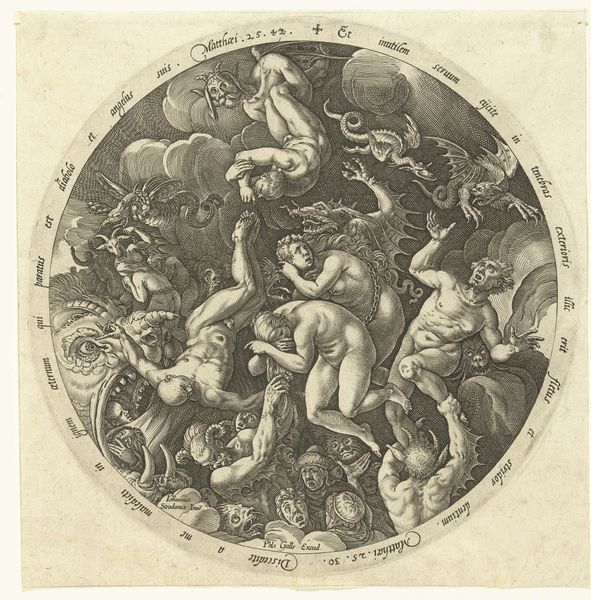
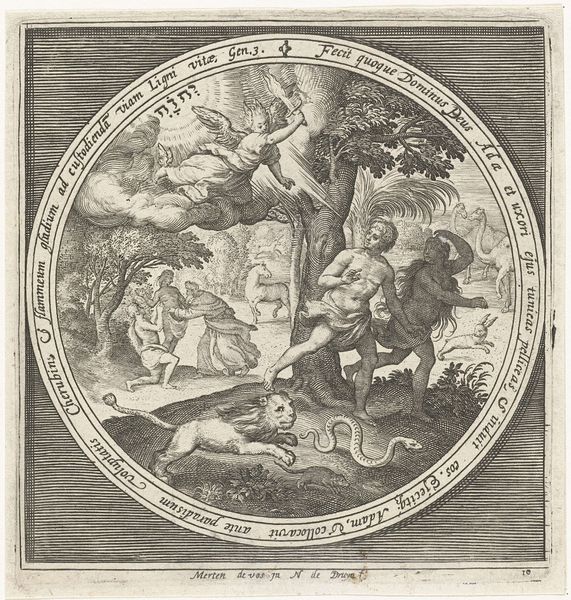
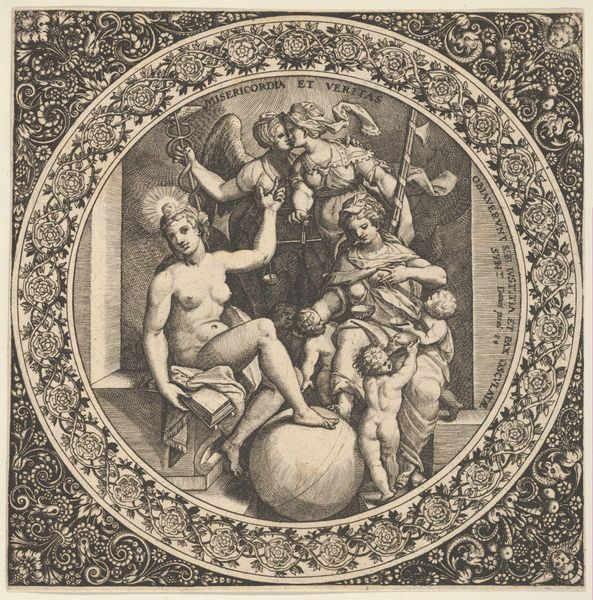
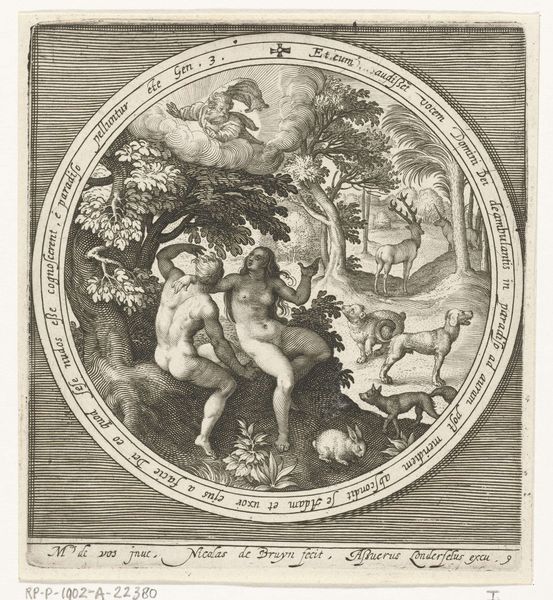
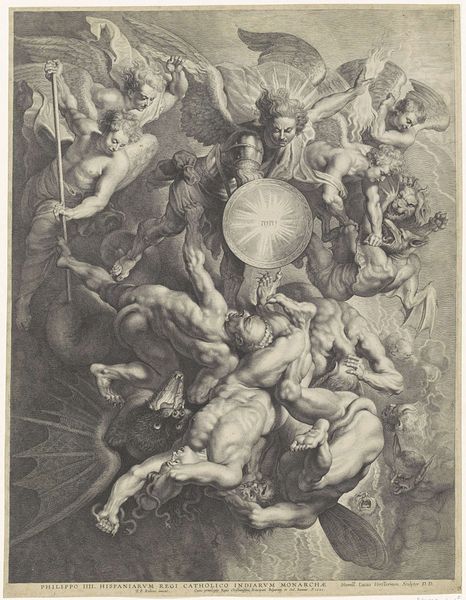
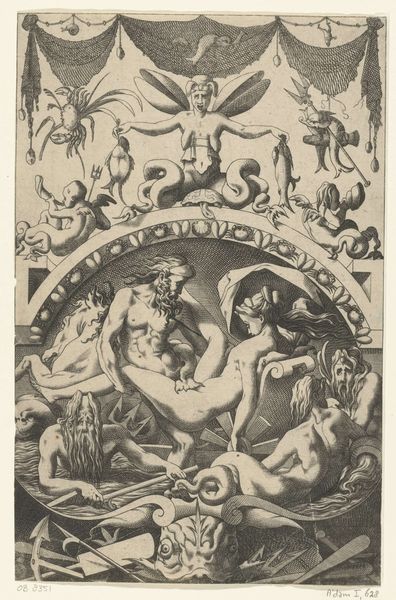
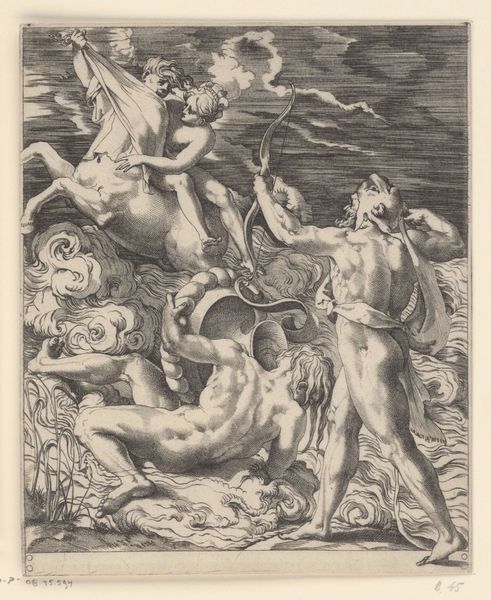
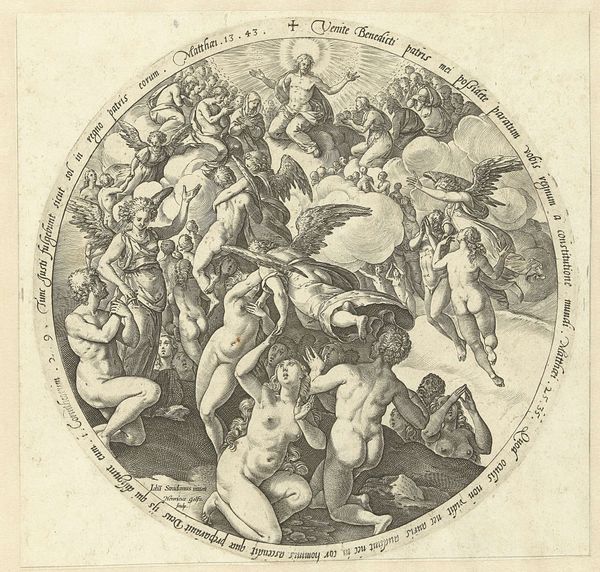
Curator: Here we have "Personifications of Painting, Engraving, and Sculpture," an engraving by Willem Panneels, created sometime between 1610 and 1634. It's a wonderfully dense, swirling composition. Editor: Dense is the word! My first impression is...organized chaos. The eye darts around, trying to find a resting point amidst all those figures tumbling through the clouds. Curator: It’s true, isn't it? It’s classic Baroque. The artist crams every corner with symbolic meaning. Look at the female figures, each representing a different art form. Painting holds a palette, sculpture rests near a carved block, and engraving… well, she seems to be holding aloft a laurel wreath. Editor: Ah, yes! The laurel. It speaks of achievement, triumph, the glory bestowed upon the artist. It's interesting how they’re all intertwined, floating together. There’s this idea of collaboration, of each art form supporting the others. The symbolism is pretty rich, though not immediately apparent, is it? Curator: Precisely. Below, there's a darker element with serpentine forms, hinting perhaps at the struggle and toil inherent in artistic creation. It is the wrestling between inspiration and reality! What are your thoughts on that tension? Editor: The tension resonates—artists versus the demons of self-doubt! It's that classic dichotomy: the ecstasy of creation intertwined with the agony of execution. The serpents are potent, suggesting temptation, perhaps the temptation to stray from true artistry, to compromise. This visual narrative also touches upon the ephemeral nature of beauty versus the darker underbelly that sustains it. It’s a baroque dance! Curator: And doesn’t that baroque dance encapsulate so much about the era itself? This desire to capture grandeur, but also to acknowledge the shadow side. You get such drama from a monochrome print here. Editor: It is. This tiny world teems with life and meaning, mirroring the grandeur of the human spirit and struggle against the elements. And like the laurel suggests, the human need for beauty! I hadn’t considered its commentary on this when first experiencing it!