Copyright: National Gallery
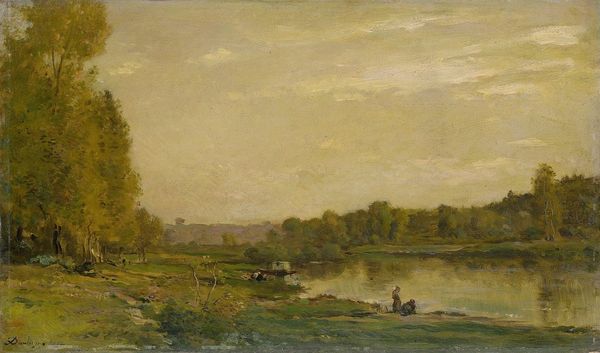
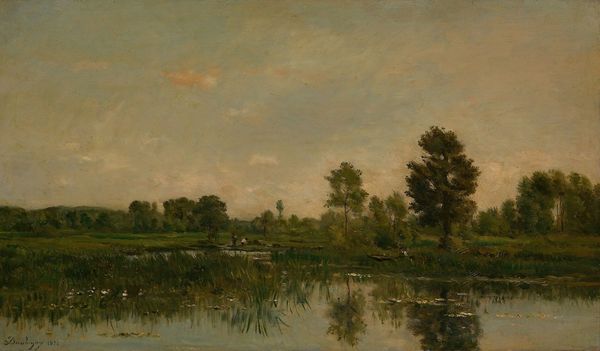
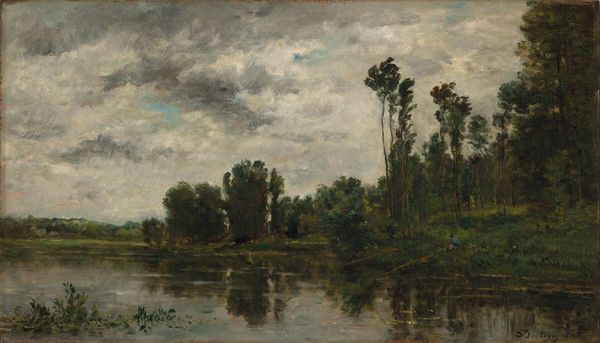
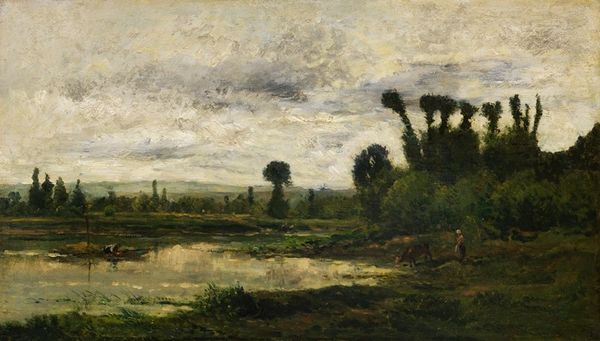
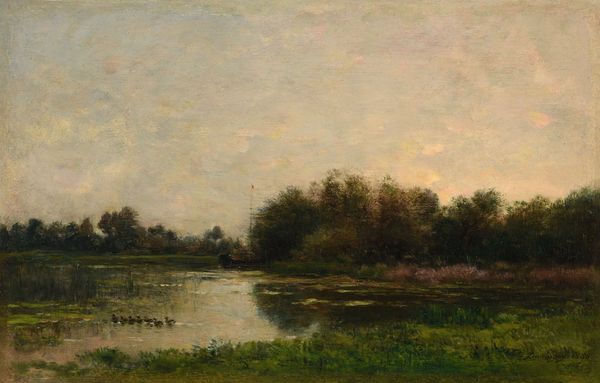
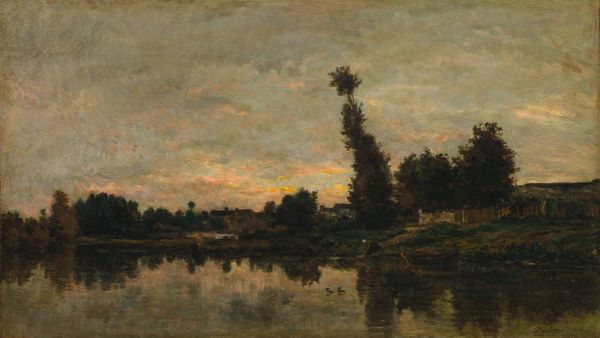
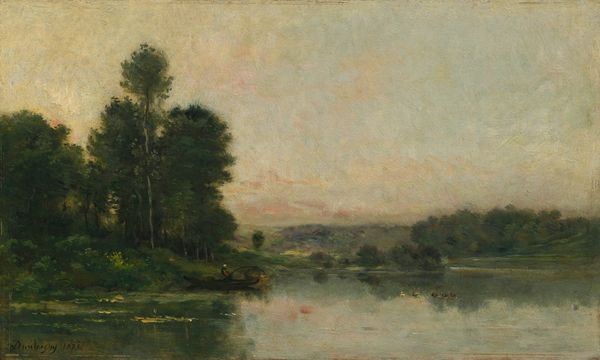
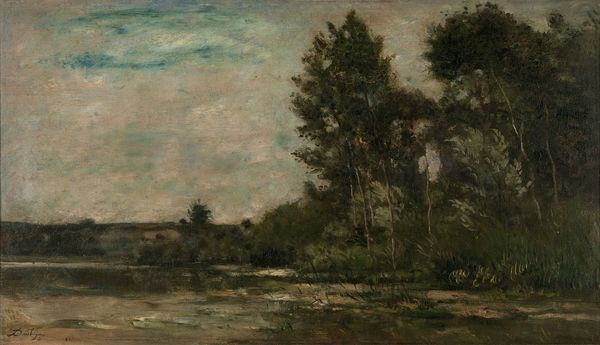
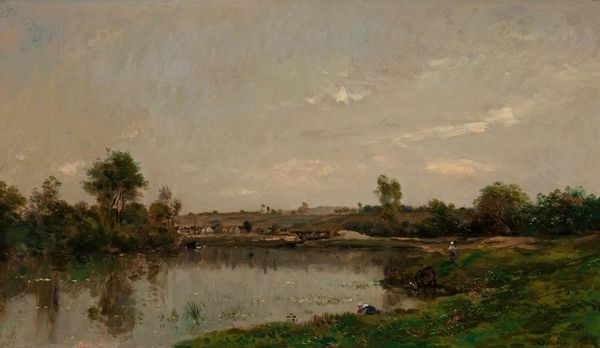
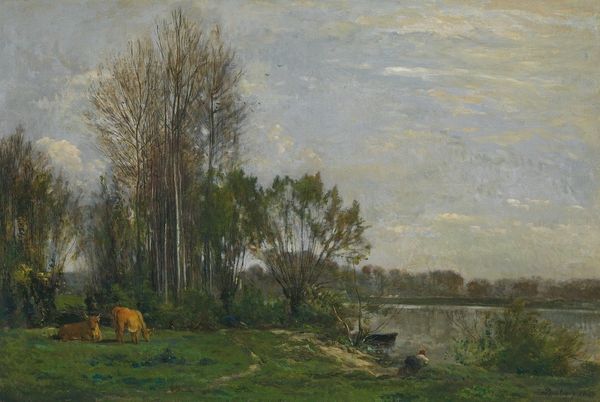
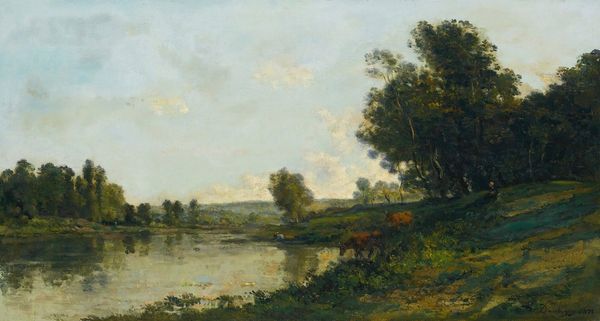
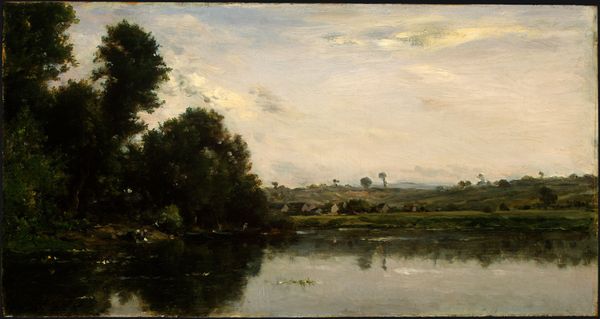
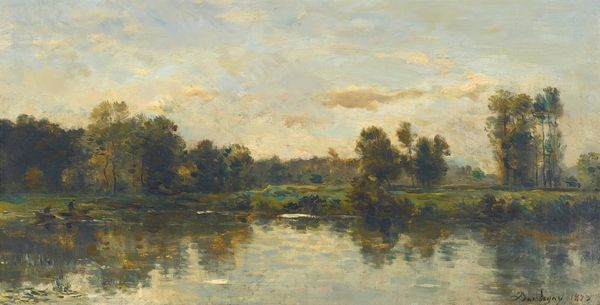
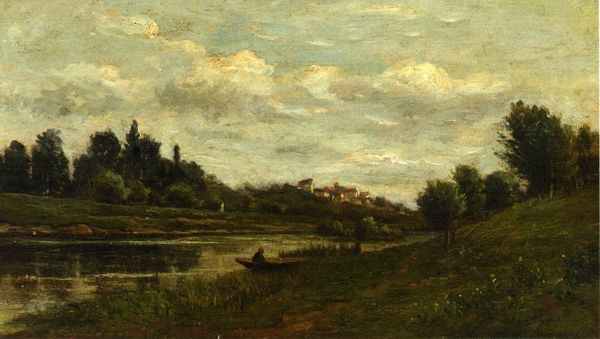
Charles François Daubigny captured this landscape on canvas, showing a view on the Oise. Daubigny was a key figure in the development of impressionism, deeply committed to painting ‘en plein air’ - directly from nature. Consider how the French landscape tradition was tied to notions of national identity and romantic ideals. Within this context, Daubigny’s paintings emphasize the everyday experiences of rural life and the working class. Look at the lower right corner. What is the gender of the figure working in the field? And what does this mean, in terms of the labor performed by women in 19th century France? Daubigny developed a studio boat called ‘Le Botin’, which allowed him to closely observe the river and paint from its surface. His commitment to realism, capturing the subtle changes in light and atmosphere, influenced artists like Monet and Pissarro. The Oise river, therefore, became not just a subject, but a studio and a space for innovation. Notice how Daubigny’s unique perspective transforms the traditional landscape genre.
Comments
No comments
Be the first to comment and join the conversation on the ultimate creative platform.
 React
React Comment