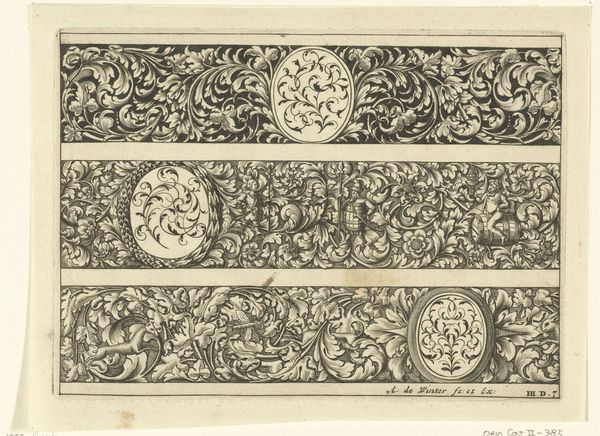
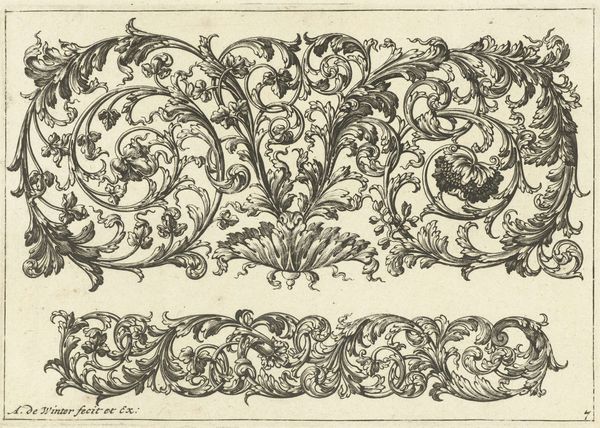
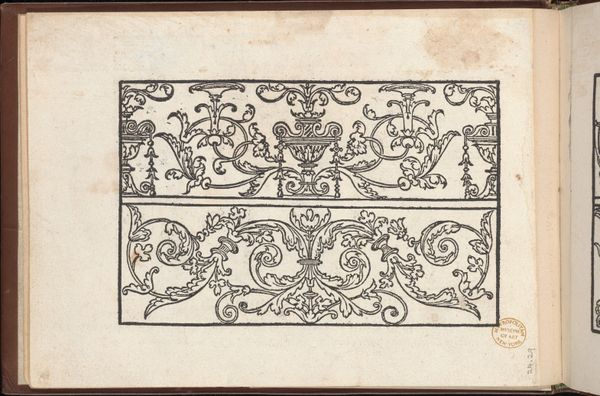
Illustrated Tariff of the Improved Papier-Mâché Picture Frames, also, Enriched Mouldings, made by machinery in twelve feet lengths, without join 1847 - 1850


drawing, graphic-art, print, engraving
drawing
graphic-art
decorative-art
engraving
Dimensions: 9 3/16 x 5 5/8 x 1/4 in. (23.3 x 14.3 x 0.6 cm)
Copyright: Public Domain
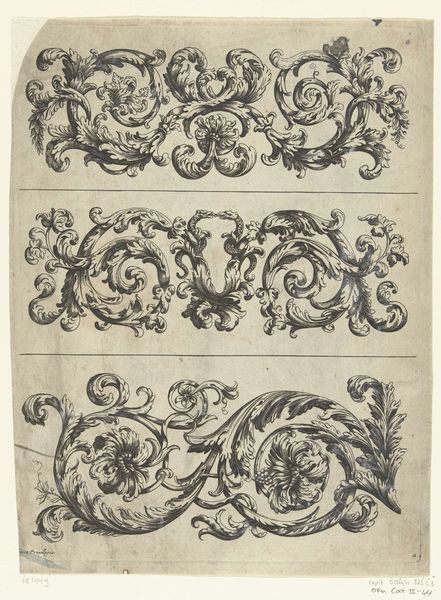
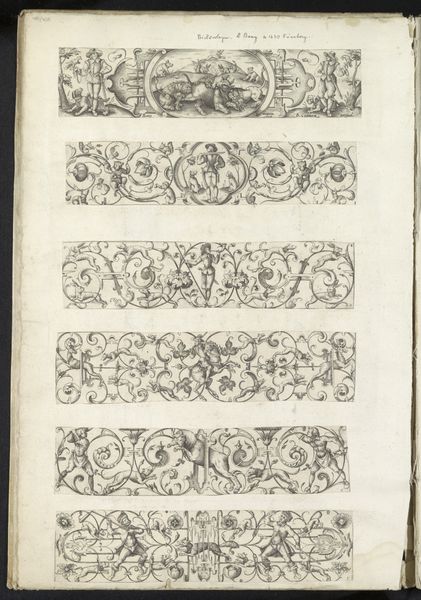
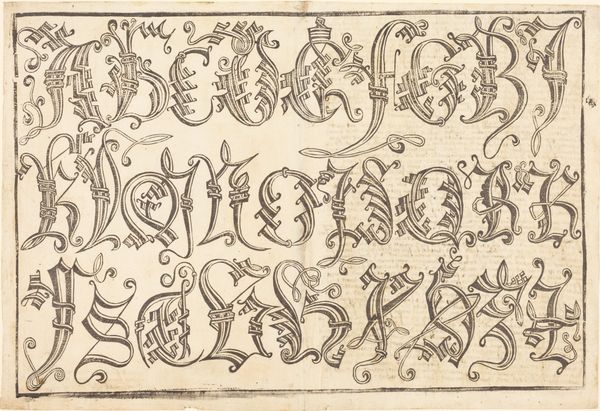
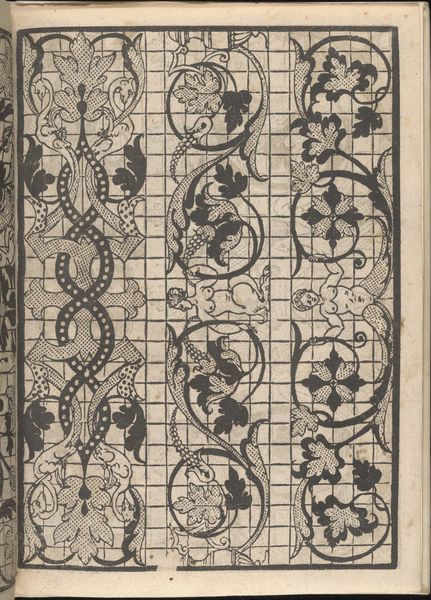
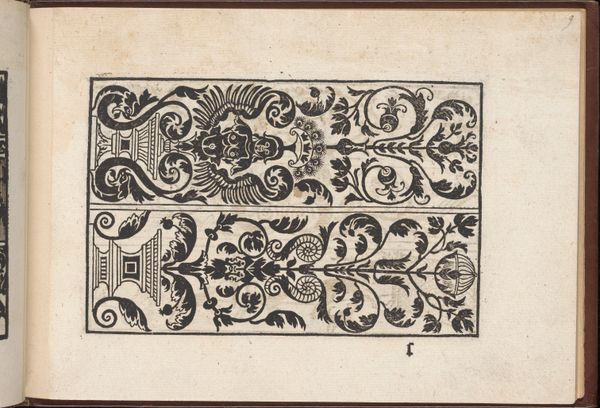
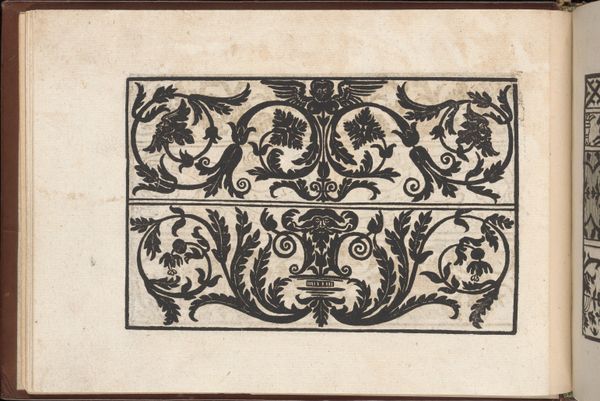
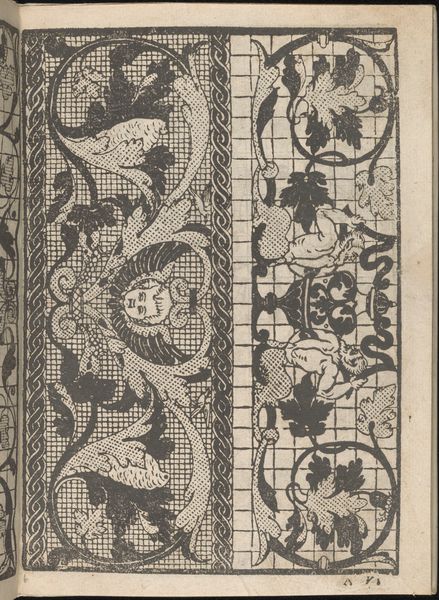
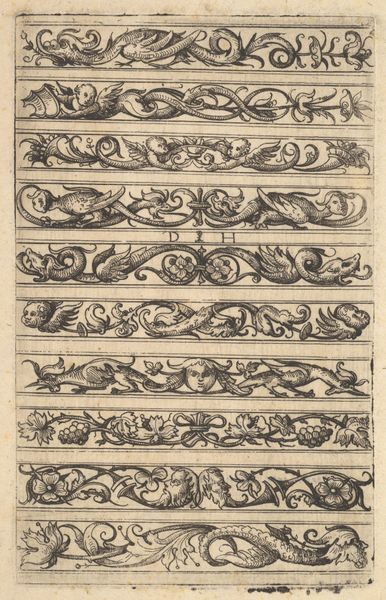
Curator: Here we have a page from an illustrated tariff, dating from around 1847 to 1850, by Charles Frederick Bielefeld. The complete title is "Illustrated Tariff of the Improved Papier-Mâché Picture Frames, also, Enriched Mouldings, made by machinery in twelve feet lengths, without join." Editor: My first thought is "layers." It’s densely packed with potential meaning… visually, of course, but even textually. The fonts and the layout feel incredibly purposeful, as if design were a key element here. Curator: Exactly! It serves a practical function, acting as a price list, yet simultaneously offers aesthetic inspiration, indicative of the period's fascination with decorative arts and their proliferation through new materials and manufacturing techniques. The floral motifs are really characteristic. We see classical acanthus leaves, but also these more romantic trailing vines…they speak to a particular desire for accessible elegance. Editor: And "accessible" is really the keyword. "Improved papier-mâché made by machinery" implies not just efficiency, but a conscious effort to democratize ornament. There is also a tension between what looks to be mass produced with industrial tech, while mimicking traditional craft. That contrast becomes the key here, does it not? What narratives of class or consumption were subtly reinforced with materials in this era? Curator: Yes, the mechanization of ornament undoubtedly altered its symbolic significance. While it enabled a wider audience to engage with classical or nature-inspired motifs, some cultural critics saw a reduction in artistic merit with this industrial reproduction of ornament, especially since designs evoke nature and "hand-made" appearance. The images are really trying to conjure high status in easily accessible formats. Editor: Right. So what once communicated status through unique artistry now gets flattened into mere “embellishment”, as the page states in the bottom corner: “fitted for the embellishment of modern architecture, as columns of every order and degree of embellishment”. Curator: And there’s an interesting sense of both innovation and preservation in play, a desire to integrate classical forms into a modern industrialized context and make it available to the masses. Papier-mâché itself is almost like an alchemical material here, transforming mundane paper pulp into architectural opulence. Editor: This tariff offers not only frames and mouldings but it provides the key, in the social life of objects, between imitation and the genuine article, revealing the complex relationships of taste and value during a time of rapid technological change. Curator: It seems the very act of attempting to emulate high art cheaply raises all sorts of fundamental and relevant issues for contemporary analysis.
Comments
No comments
Be the first to comment and join the conversation on the ultimate creative platform.
 React
React Comment