Landscape With A Bridge

Hryhorii Havrylenko
1927 - 1984Location
Private CollectionListen to curator's interpretation
Curatorial notes
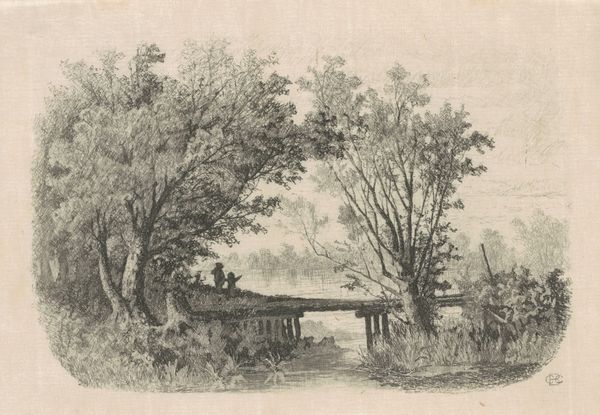
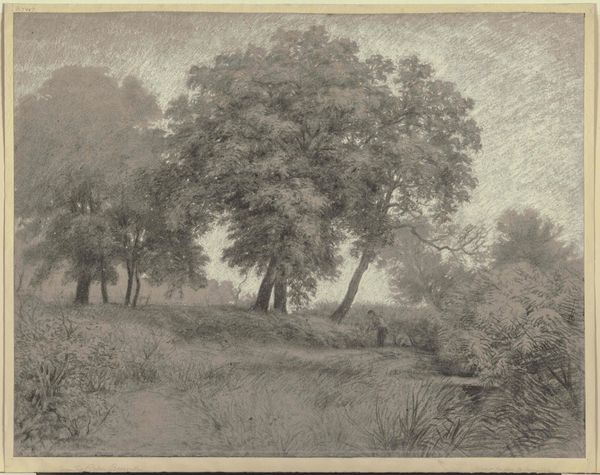
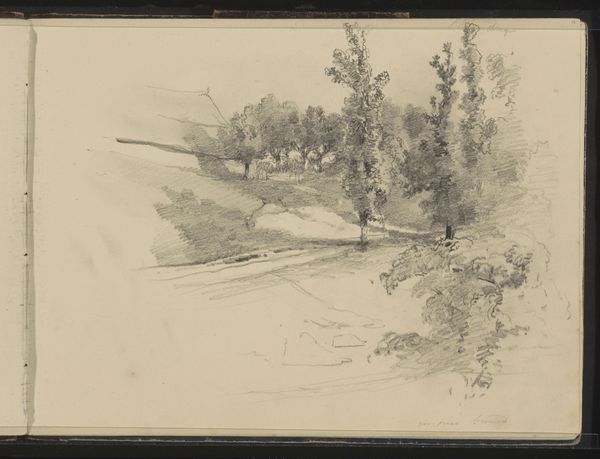
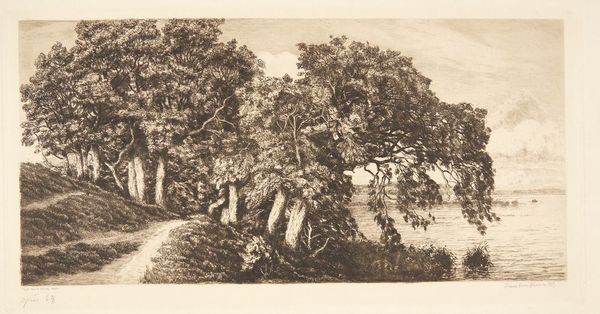
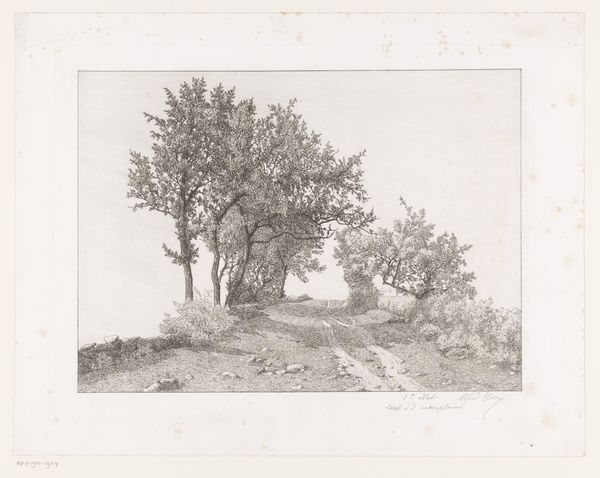
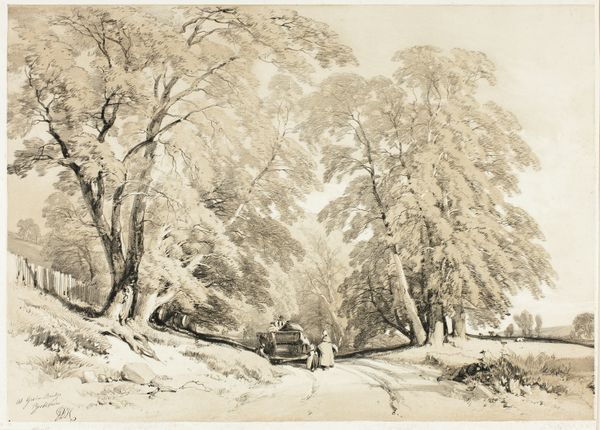
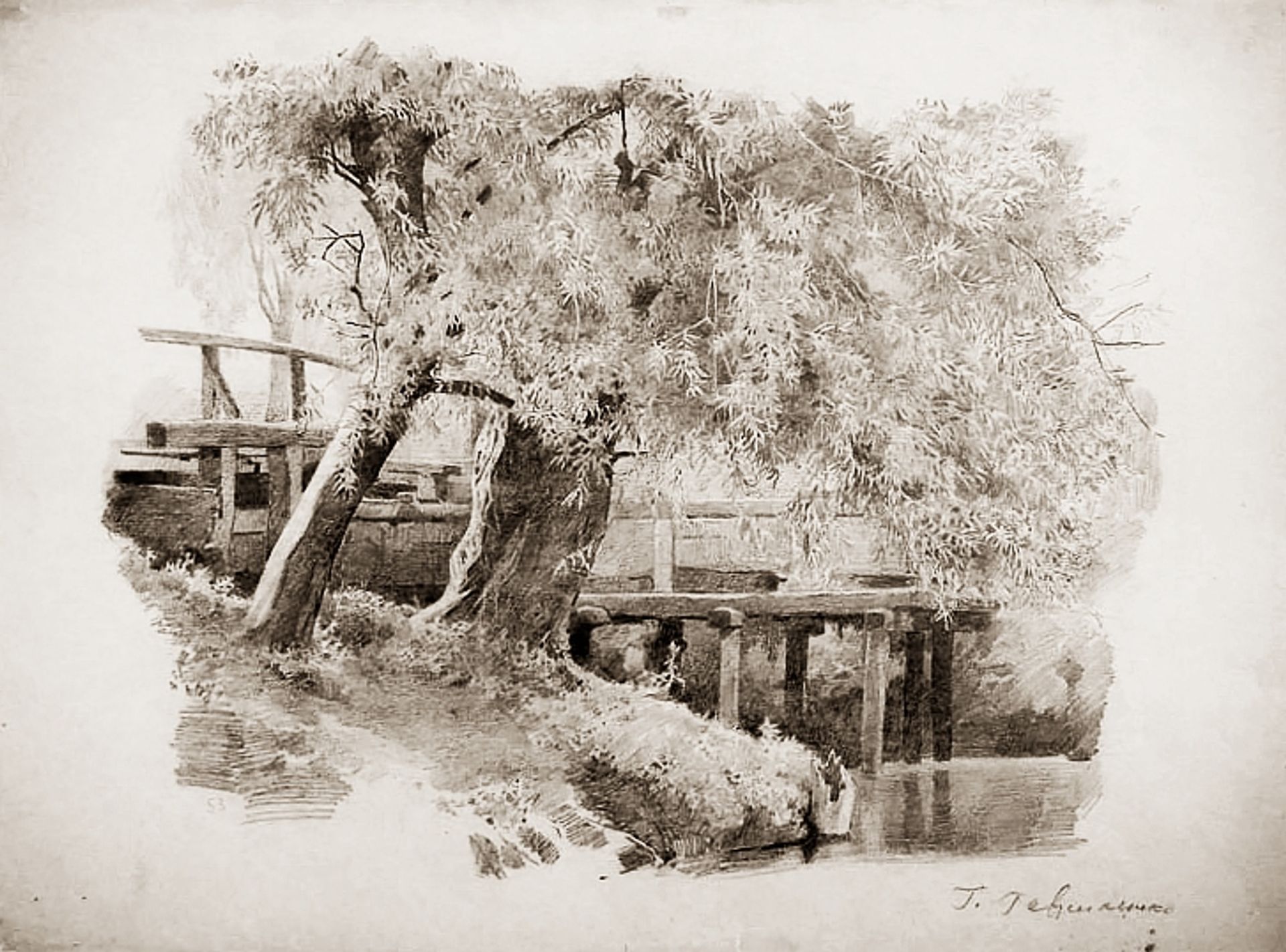
Curator: The first thing that strikes me is its dreamlike quality. The soft monochrome tones create this incredibly gentle mood. What are we looking at here? Editor: This is a work entitled "Landscape With A Bridge," rendered by Hryhorii Havrylenko using both charcoal and pencil. Though undated, its visual language feels evocative of 19th-century Romantic landscape traditions. Curator: That makes sense. The bridge itself seems less a functional object and more an element of a pictorial convention – almost like a stage prop within the drama of nature. And is it me, or does this tree absolutely dominate the scene? Editor: I agree. Trees carry a deep symbolic weight, especially in Romanticism, often embodying resilience and connection to the earth, standing as witnesses across generations. But here, considering the socio-political context of landscape art, shouldn't we also see this dominance as potentially oppressive, signaling the artist’s relationship with nature and the control exerted? Curator: An interesting observation. I was seeing it more as the tree literally shading the bridge—and the humans who might cross it—but your perspective about landscape, power, and historical tension is a very relevant one to keep in mind. The sharp lines on the bridge in juxtaposition to the more softly rendered foliage also gives it a curious feel. What could that geometric precision convey? Editor: Perhaps the imposition of constructed space onto a naturally unfolding setting? Consider this against the backdrop of industrialization during the Romantic era – this geometric structure, literally a bridge, almost seems at odds with the organic flow surrounding it. Curator: That brings a completely new layer to my understanding of it. Initially, the scene evoked such a calming presence, a nostalgia for untouched landscapes. But it's also worth mentioning how the repetition of the verticals -- tree trunks, bridge supports -- offers some satisfying aesthetic resolution for the eye. Editor: Indeed. And recognizing these symbolic dimensions really changes the tone, doesn't it? We start seeing this picture not just as an image but also as a reflection of larger, quite complex cultural narratives at play.