lithograph, print
#
narrative-art
#
lithograph
# print
#
asian-art
#
genre-painting
Dimensions: height 388 mm, width 459 mm
Copyright: Rijks Museum: Open Domain
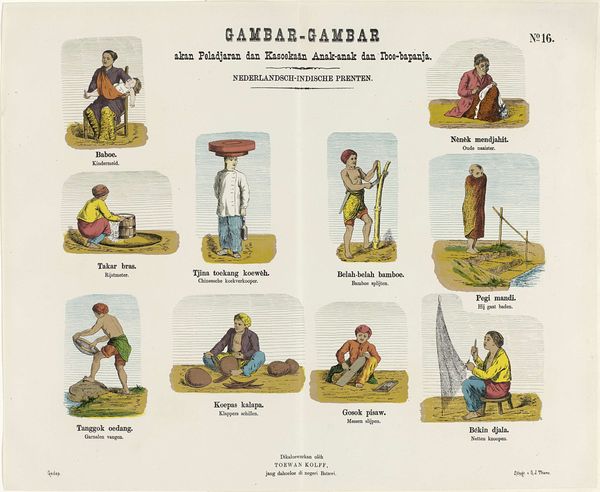
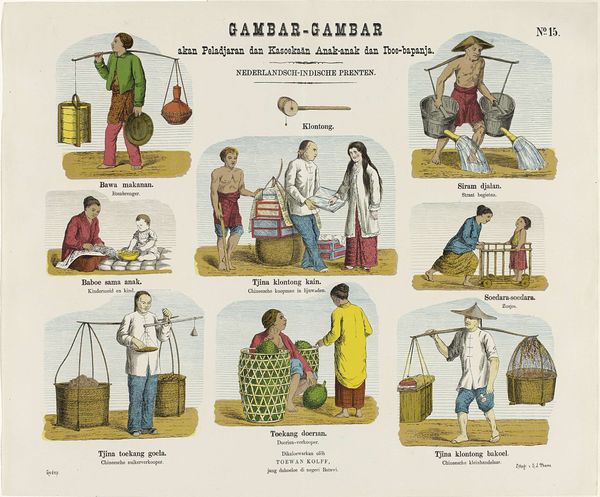
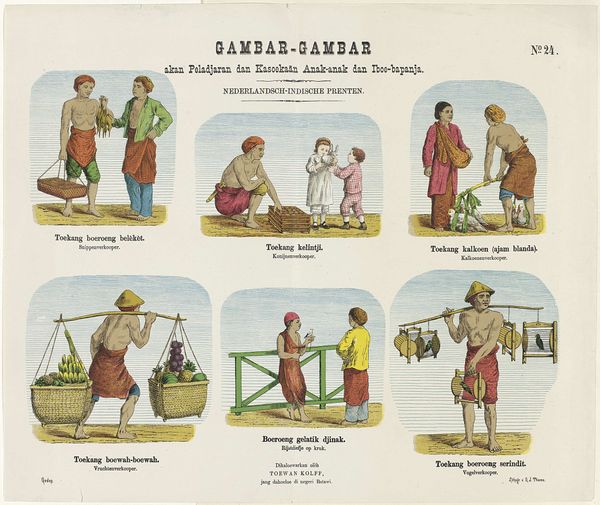
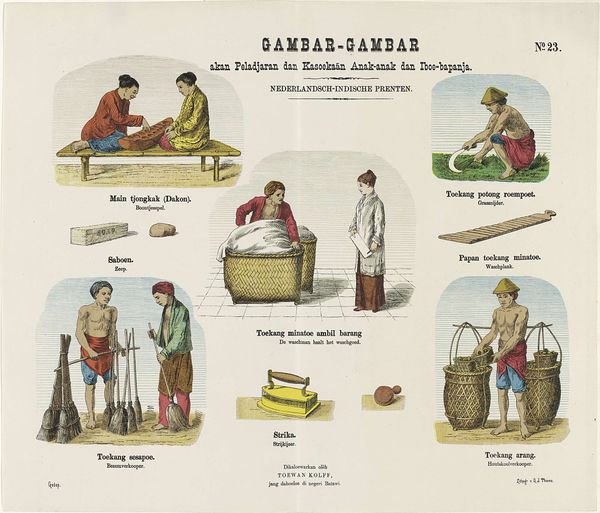
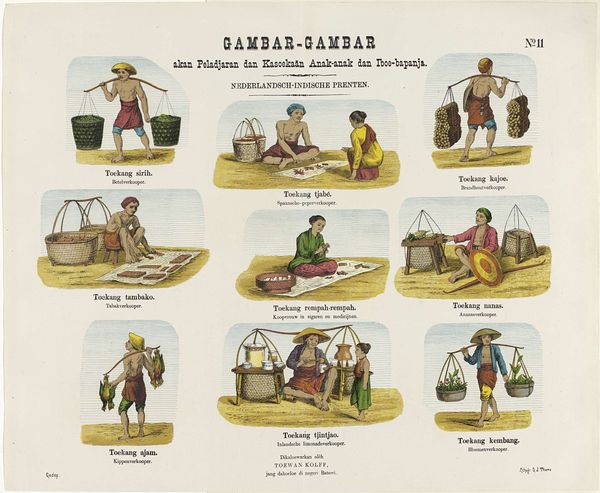
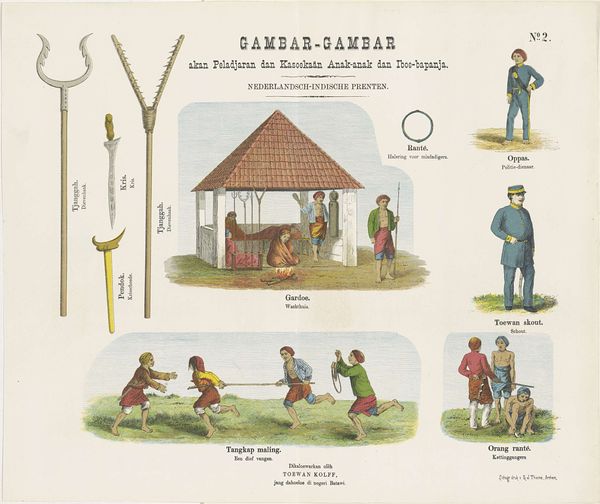
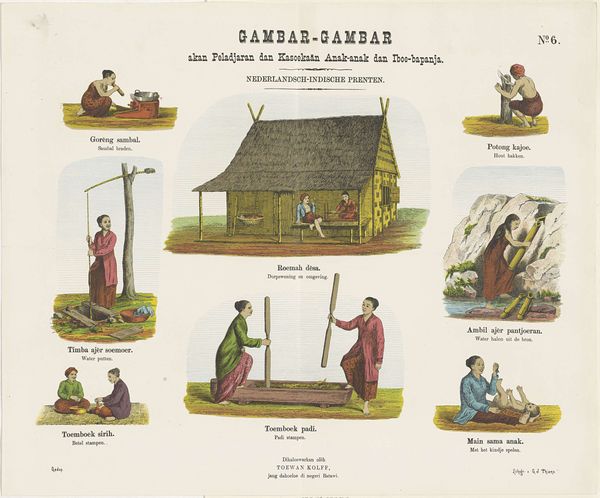
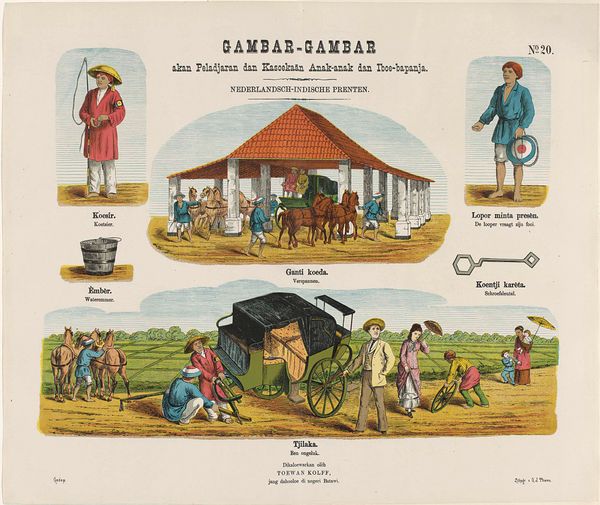
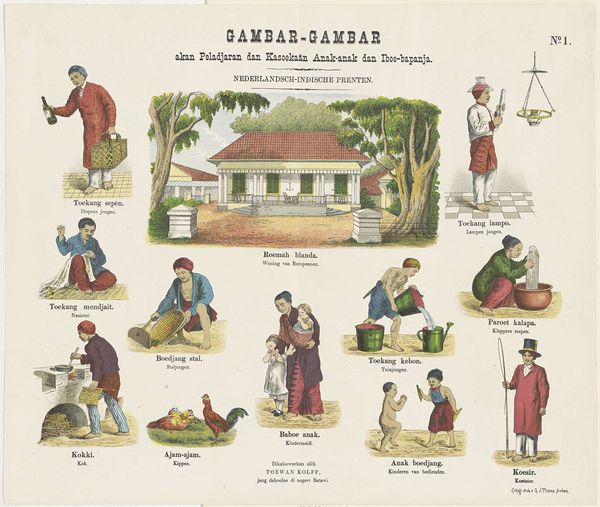
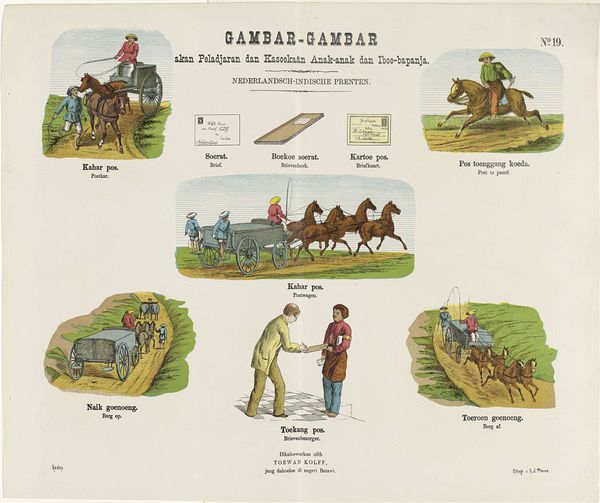
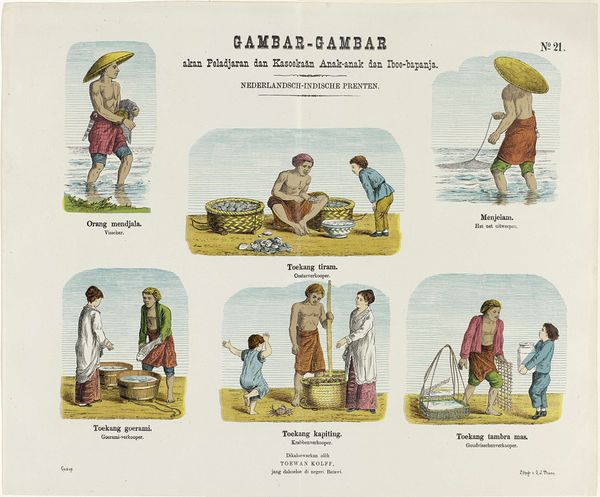
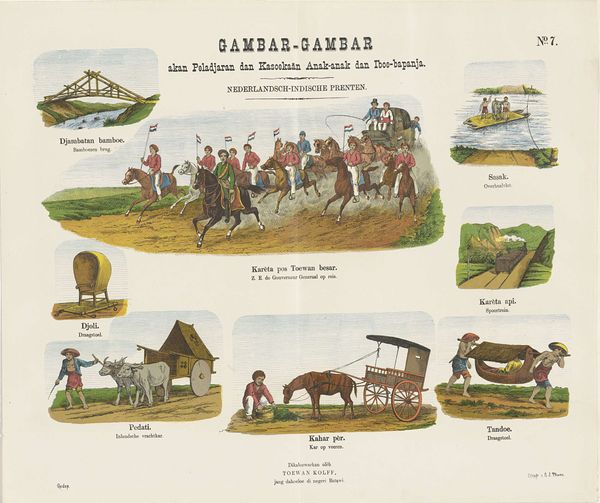
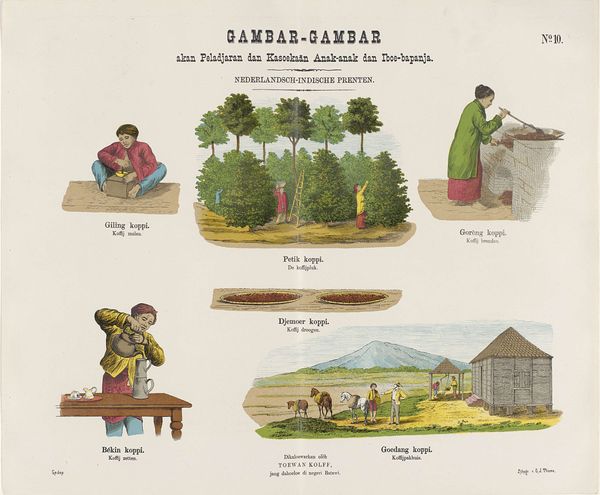
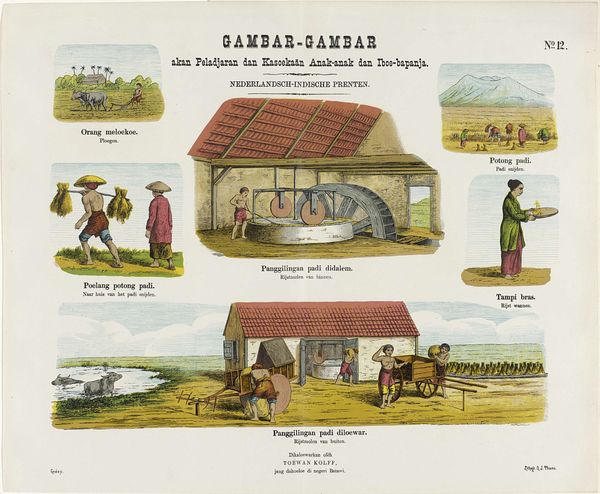
Curator: Allow me to introduce Gualtherus Kolff’s “Beroepen,” a lithograph from somewhere between 1868 and 1881. It’s part of a series known as "Netherlands-Indies Prints." Editor: My immediate thought is that it feels like a visual encyclopedia. The grid of vignettes—it’s both informational and, in a way, oddly charming. Curator: Precisely. Kolff showcases various occupations within Indonesian society during that period. Each scene is almost a miniature genre painting. Look at the modes of transportation – how goods are moved by hand, or by beast. It highlights the available infrastructure of the time. Editor: And each small tableau serves as a cultural emblem. The fisherman ("Toekang Minatoe") wielding his blade resonates beyond a mere description of labor; it speaks to the interaction between humans and nature, of the tools created and applied for subsistence. Curator: Note the presence of children, the raw materials used, the ways goods are packaged. This is about labor and life; about resources and accessibility and how colonial dynamics can alter pre-existing production norms, as new tools and materials are adopted. The composition and form all come from, and play into, how and why this work was produced and then circulated. Editor: You are right. I do see not only different jobs but the symbolic significance that each carries. Look at the image of what translates to ‘Chinese pork butcher’...he seems more than his occupation here. The print provides a lens through which colonial society might be reflected in these archetypes, laden with preconceptions and judgements. The print isn't just portraying occupations. Curator: Right, it represents something of an "official" or colonial interpretation of Indonesian society at the time. "Beroepen" reveals how lithography as a printing method becomes enmeshed within cultural dynamics and can further social control within asymmetrical colonial relations. Editor: Ultimately, for me, this lithograph leaves one with an impression of people embedded in a particular moment, connected to traditions, tools, trades that are both local, unique and subject to far broader market pressures. Curator: Yes, the intermingling of materials, work, class, labor and imagery is a compelling intersection that has held my attention for many years, each time revealing new dynamics at play.
Comments
No comments
Be the first to comment and join the conversation on the ultimate creative platform.
 Collect
 React
React Comment
More like this