1930
The Castle Mountain of S.


Listen to curator's interpretation
Curatorial notes
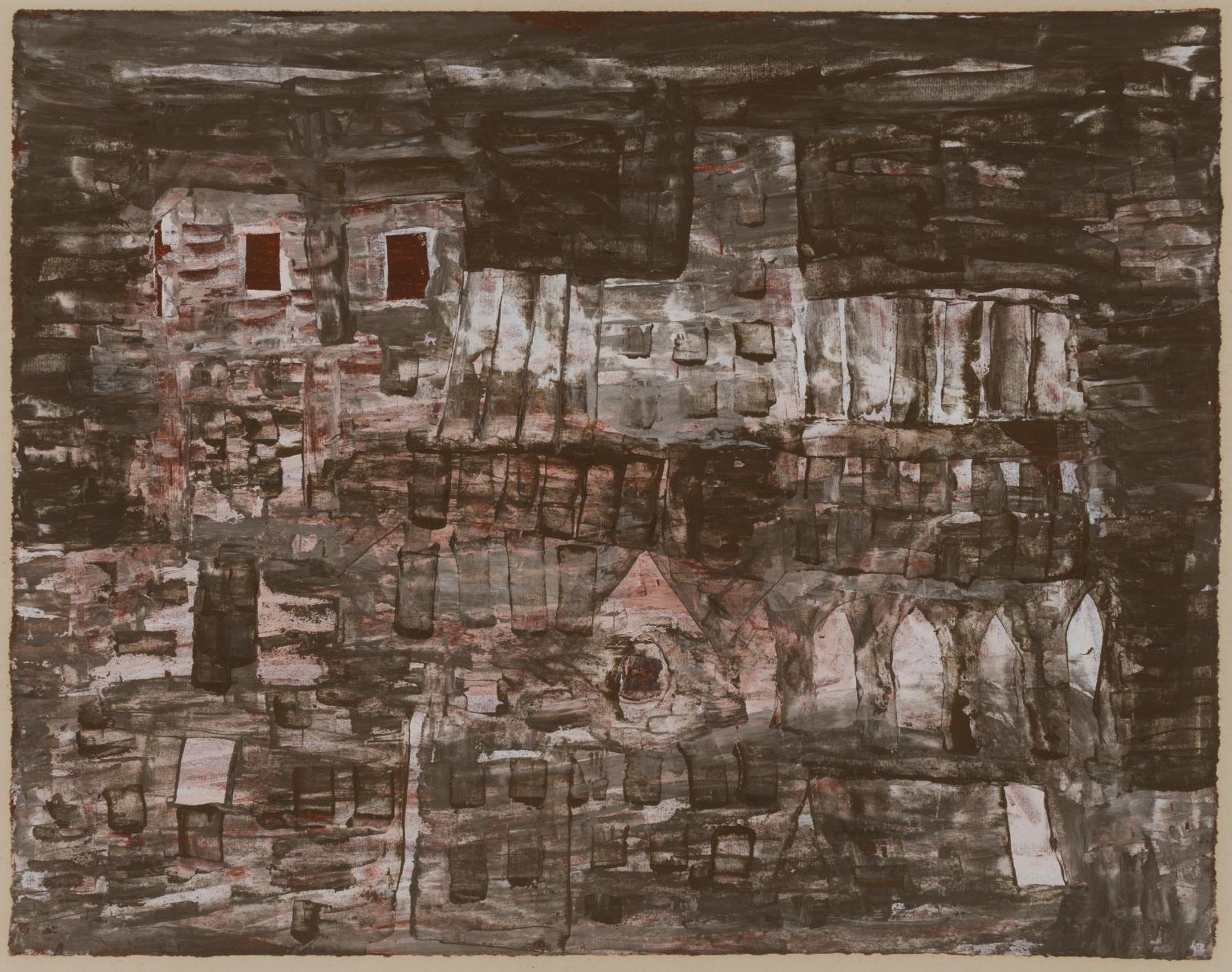
Curator: Here we have Paul Klee’s “The Castle Mountain of S.” held within the Tate Collections. It strikes me as a rather brooding, almost impenetrable fortress. Editor: Yes, there's a somber quality, isn’t there? The subdued palette seems to mute any sense of welcome or invitation, more like a barrier, a city under siege perhaps. Curator: Klee’s use of architectural motifs often explores psychological space. Perhaps the castle isn’t just a structure, but a symbol of inner defenses, the self protecting itself. Editor: That rings true, especially considering Klee's historical context, witnessing the rise of fascism and increasing political polarization. The castle could represent a refuge against those encroaching forces. Curator: Absolutely, and the layering of forms and colors suggests a palimpsest, revealing layers of history and memory embedded within its walls. It's as if the very stones are saturated with cultural weight. Editor: It makes me wonder about who is being kept out, and who or what is being kept in. I think the painting is less about physical defense and more about the walls we build around identity, and the stories they hide. Curator: It’s a fascinating point. Klee invites us to ponder the symbolism of architecture, the ways in which structures shape our understanding of safety, but also confinement. Editor: Indeed. Klee provokes such important questions about architecture as a function of social exclusion or cultural memory.