print, photography, albumen-print
landscape
ancient-egyptian-art
photography
ancient-mediterranean
albumen-print
Dimensions: height 73 mm, width 141 mm
Copyright: Rijks Museum: Open Domain
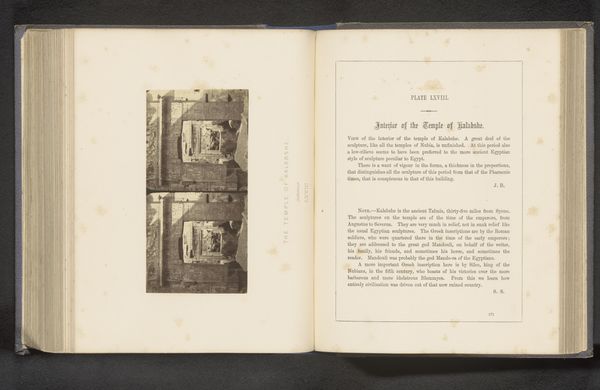
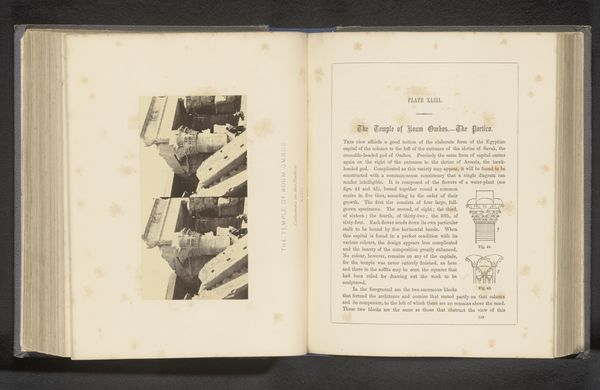
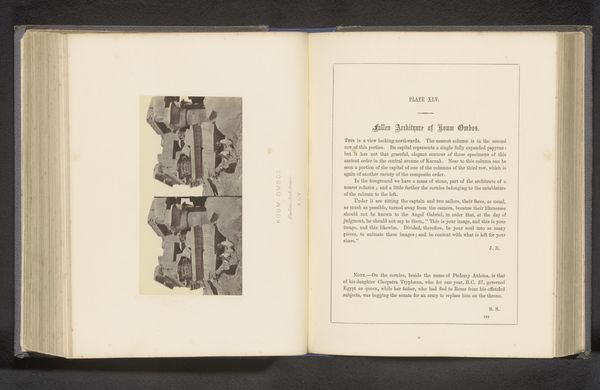
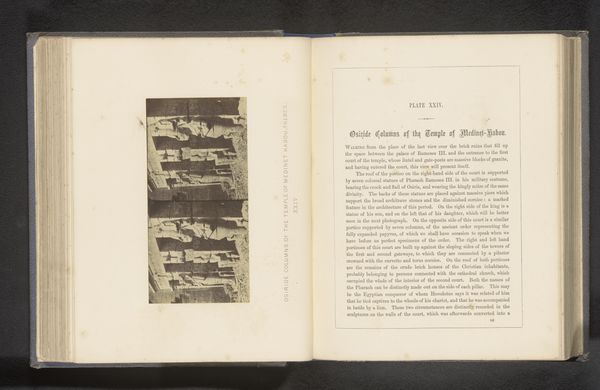
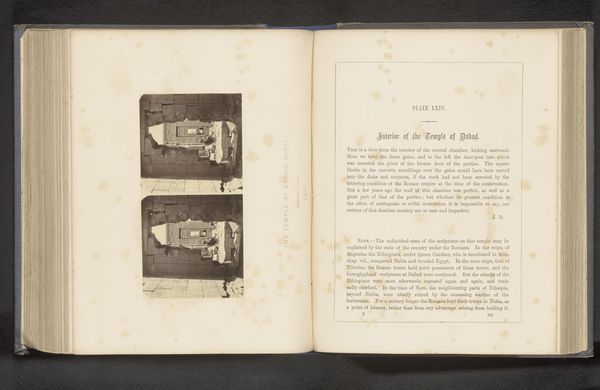
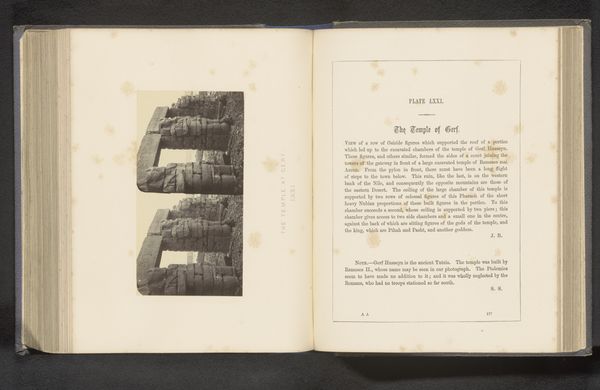
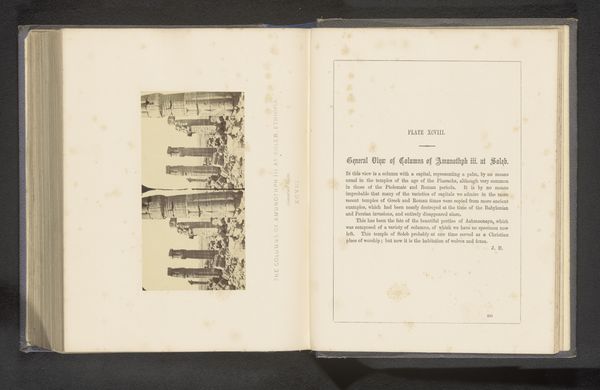
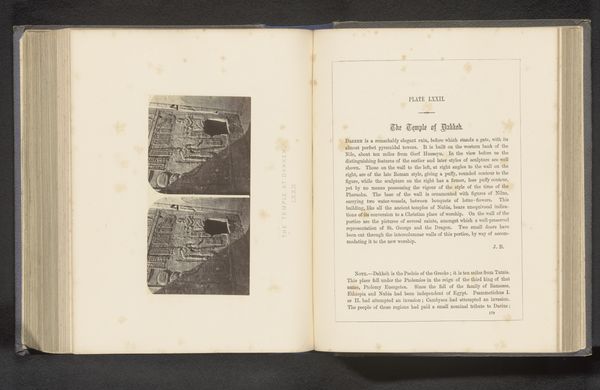
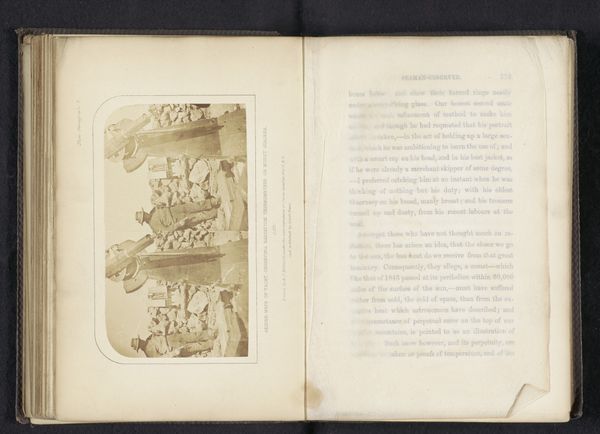
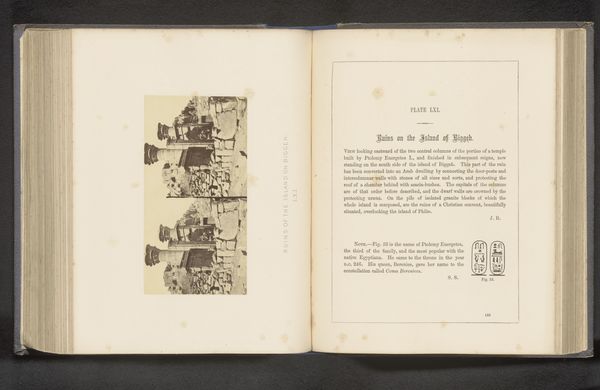
Editor: Here we see "Ruïne van de tempel van Amenhotep III", a photograph captured by Francis Frith before 1862. It looks to be an albumen print mounted in a book, housed at the Rijksmuseum. The stark sunlight and deep shadows make this ancient ruin seem particularly monumental. What aspects of this photograph strike you? Curator: Frith's photograph serves as an interesting record of both the ruin itself, and the burgeoning fascination with Egypt in the Victorian era. Consider how photographs like this fueled imperial interests; making far-off lands visually accessible, creating a sense of ownership and familiarity for a European audience. It transforms the temple into an object of study, ready to be possessed intellectually, if not physically. Editor: So, it's not just about documenting history, it's also about controlling the narrative? Curator: Precisely. The way Frith frames the ruin, almost heroically, lends itself to a specific reading of Egypt’s past: grand, impressive, but ultimately decaying and therefore ready to be "discovered" or perhaps even "saved" by the West. Do you think there’s something inherently colonial about the act of photographing ruins like this? Editor: I do, actually. By capturing and displaying images of a past civilization, it subtly implies a certain dominance over that history, a taming of the exotic. Almost as if by photographing it, it now belongs to us. Curator: Exactly. And this photograph becomes a powerful tool for reinforcing such beliefs, shaping public perceptions of both ancient Egypt and Britain’s role in relation to it. It is important to examine such images as artifacts shaped by particular interests. Editor: That's a very different way to view a photograph! I’ll certainly look at these images of ruins differently from now on.
Comments
No comments
Be the first to comment and join the conversation on the ultimate creative platform.
 React
React Comment