

About this artwork
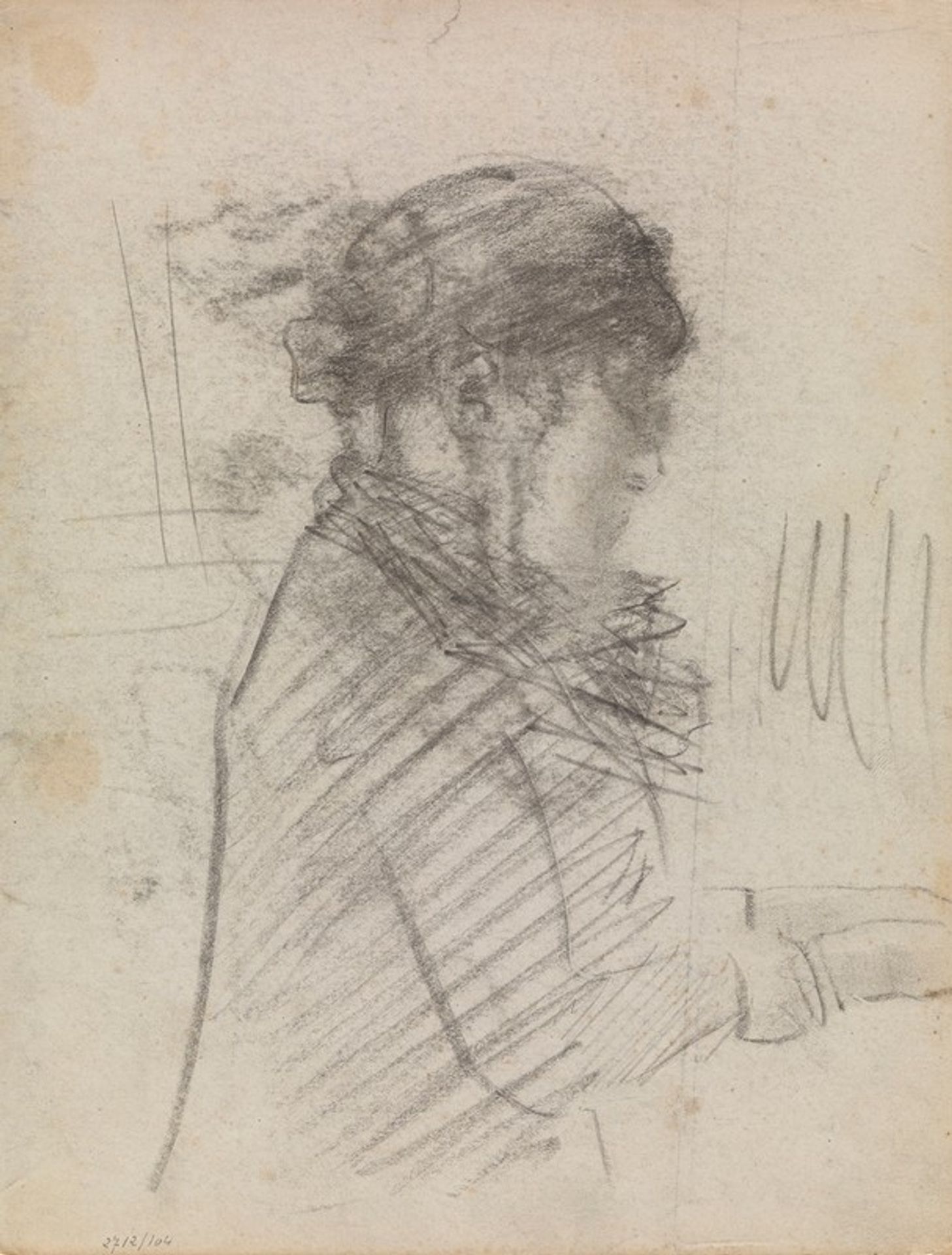
James Ensor sketched 'Ensor’s Sister at the Keyboard' using graphite on paper. The subdued palette and sketch-like quality create an intimate, almost melancholic atmosphere. The composition focuses on the figure of Ensor's sister, her form rendered with delicate, tentative lines that capture her in a moment of quiet concentration. Notice the contrast between the more defined lines of her profile and the looser, more gestural marks that suggest the surrounding space and the keyboard itself. Ensor uses line and shading to convey depth, but also to create a sense of ambiguity. The use of graphite allows for a wide range of tonal values, from soft grays to deeper blacks, which Ensor exploits to create a sense of form and volume. The sketch destabilizes the traditional portrait, focusing less on precise representation and more on capturing a fleeting impression. This evokes a feeling of transience and impermanence. The very structure of the sketch, with its emphasis on line and form over detail, serves to challenge our expectations of representation, inviting us to engage with the work on a more conceptual level.

Artwork details
- Medium
- drawing, pencil
- Copyright
- Public Domain: Artvee
Tags
portrait
drawing
impressionism
figuration
pencil drawing
pencil
Comments
No comments
About this artwork
James Ensor sketched 'Ensor’s Sister at the Keyboard' using graphite on paper. The subdued palette and sketch-like quality create an intimate, almost melancholic atmosphere. The composition focuses on the figure of Ensor's sister, her form rendered with delicate, tentative lines that capture her in a moment of quiet concentration. Notice the contrast between the more defined lines of her profile and the looser, more gestural marks that suggest the surrounding space and the keyboard itself. Ensor uses line and shading to convey depth, but also to create a sense of ambiguity. The use of graphite allows for a wide range of tonal values, from soft grays to deeper blacks, which Ensor exploits to create a sense of form and volume. The sketch destabilizes the traditional portrait, focusing less on precise representation and more on capturing a fleeting impression. This evokes a feeling of transience and impermanence. The very structure of the sketch, with its emphasis on line and form over detail, serves to challenge our expectations of representation, inviting us to engage with the work on a more conceptual level.
Comments
No comments