1780 - 1833
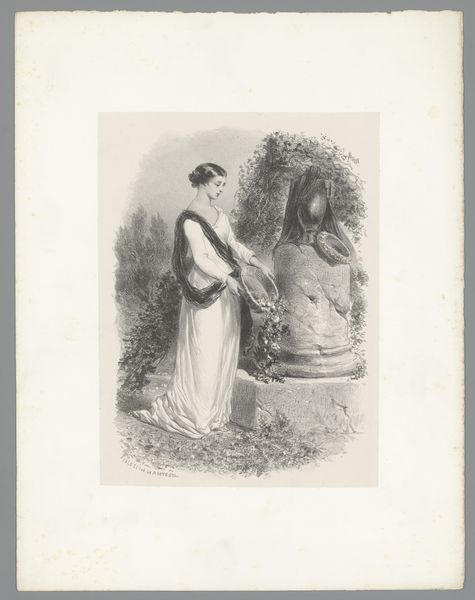
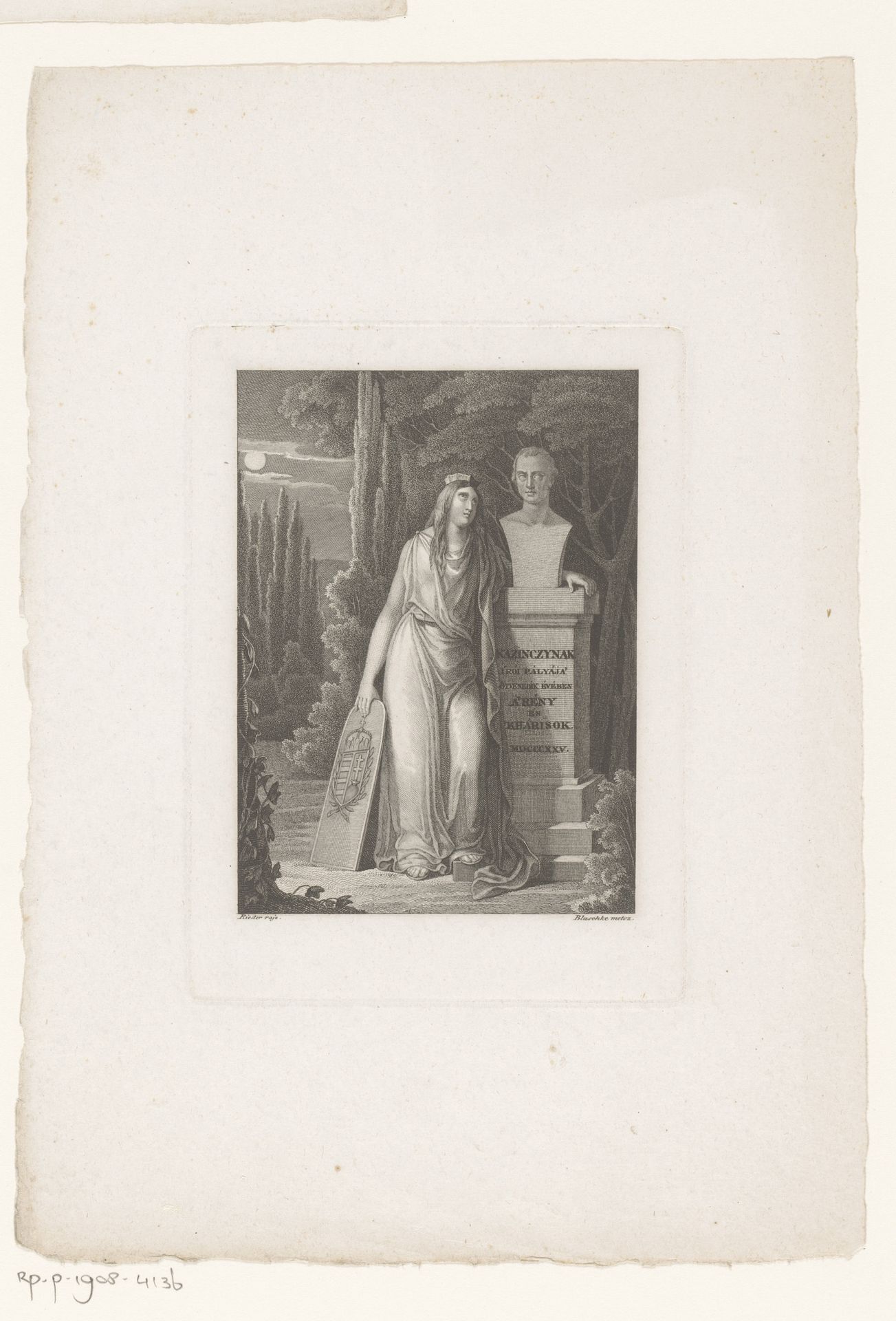
Graftombe van Ferenc Kazinczy

Listen to curator's interpretation
Curatorial notes
Editor: This is *Graftombe van Ferenc Kazinczy*, an engraving by János Blaschke made sometime between 1780 and 1833. The figure has a classical feel; the landscape in the background looks hand-drawn. What stands out to you? Curator: What I see is a fascinating document of class aspirations and the material conditions of mourning. Look at the *process* of creating this print. An engraving suggests a desire for wider distribution, to make Kazinczy's memory public and replicable. But who would have been able to afford or access this print? Editor: So it's less about personal grief and more about establishing status through artistic means? Curator: Precisely. Consider the *materials*: paper, ink, and the metal plate itself. Each carries a specific cost and social implication. The choice of engraving—a relatively precise but laborious method—over, say, a woodcut, speaks to a desire for refinement and lasting value, even permanence. Do you think the classical figure and bust do the same? Editor: Definitely, that’s about visually associating Kazinczy with classical values and taste. It's like claiming intellectual prestige. Curator: Exactly. It all goes into crafting an image –both literally and figuratively– and what does that *labour* tell you about how elites wanted to be perceived and how they chose to portray themselves at that moment? How does an object become a symbol? What's preserved, and at what cost? Editor: That’s an interesting way to consider artistic intention, almost as a deliberate act of crafting a lasting image of someone's memory using the social and cultural meanings of specific materials. Curator: Yes, it makes us think about artistic skill as a commodity but also about the artist's place in the networks of the time and whose stories are ultimately valued.