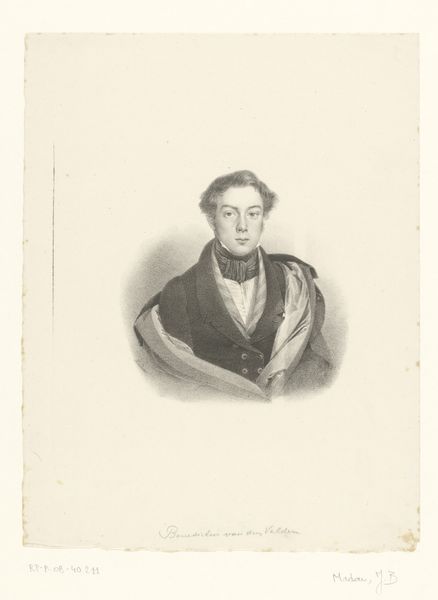
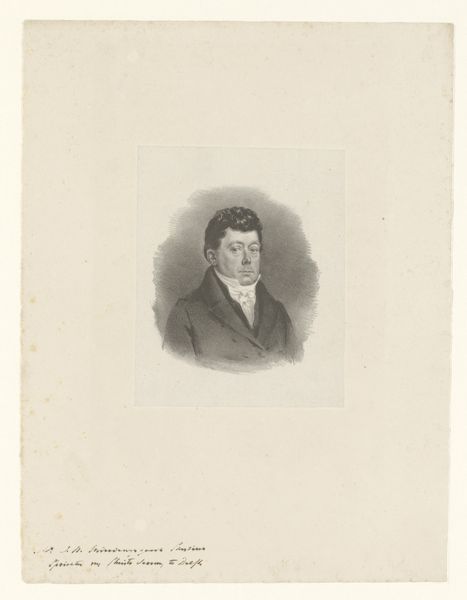
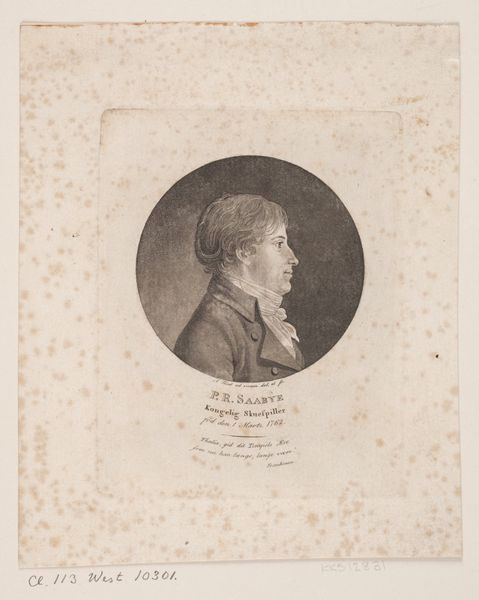
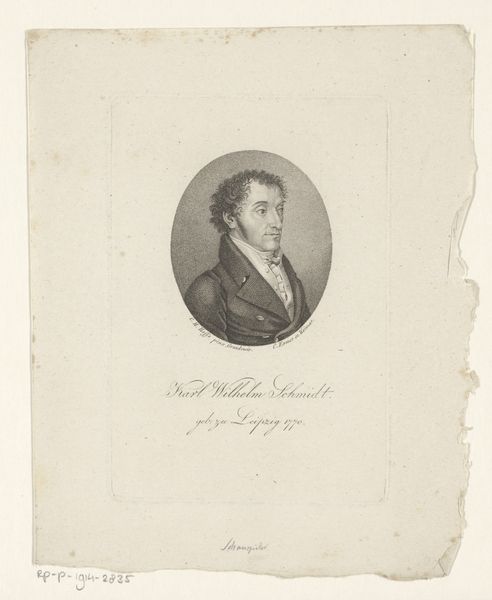
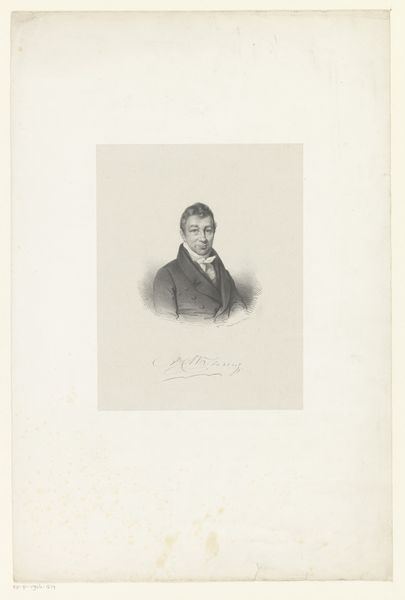
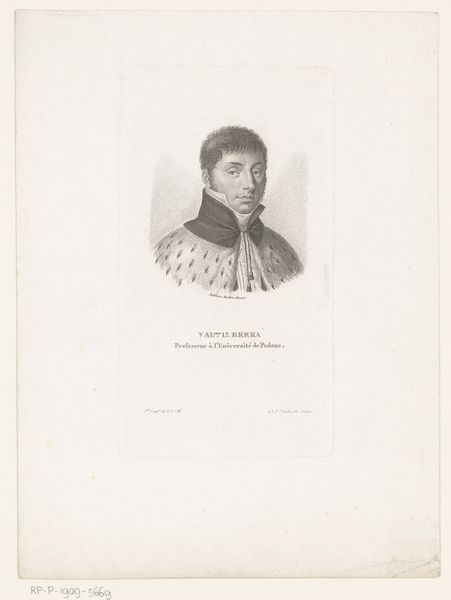
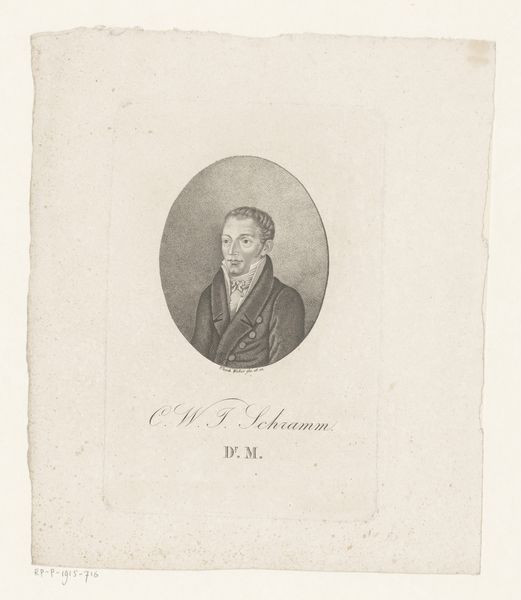
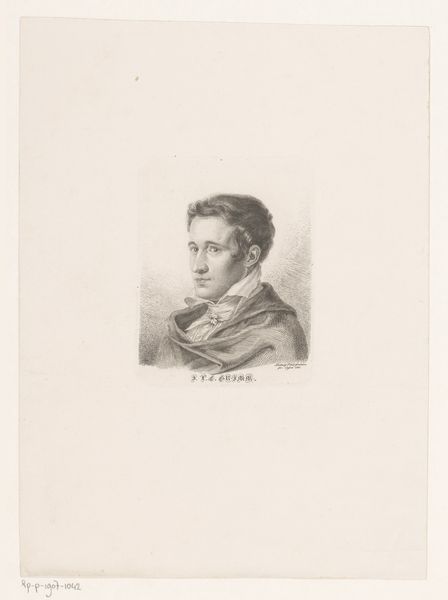
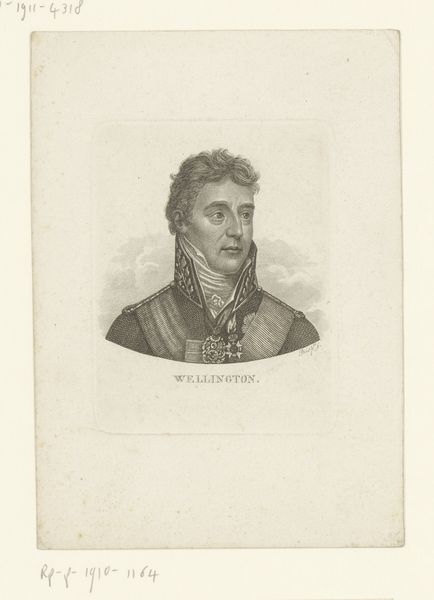
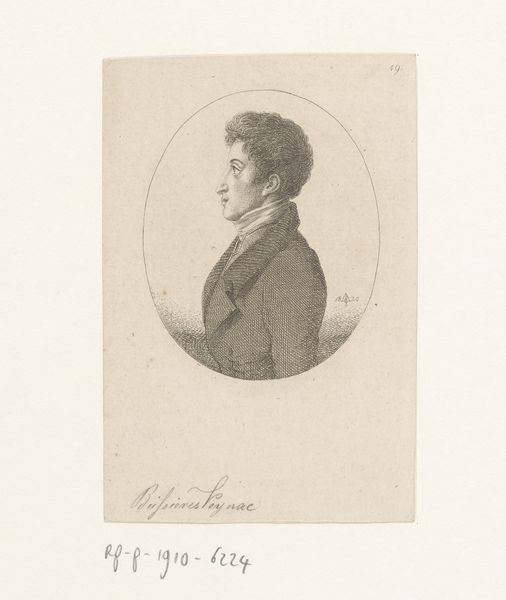
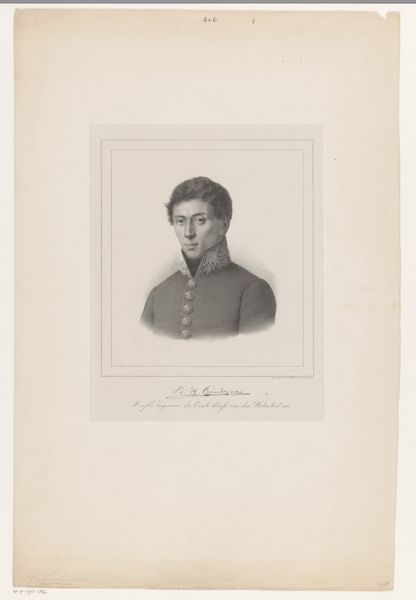
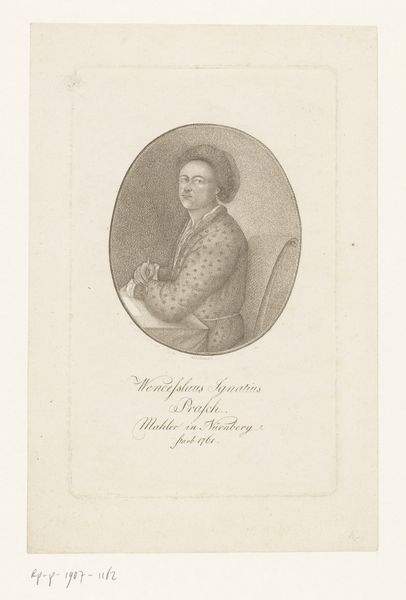
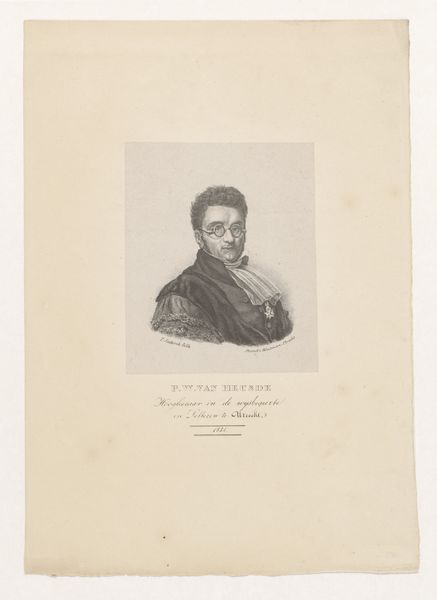
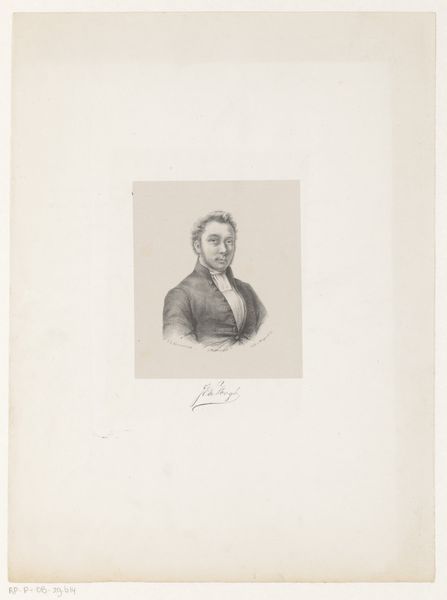
Portret van Arthur Wellesley of Wellington Possibly 1777 - 1828

friedrichludwigneubauer
Rijksmuseum
drawing, print, engraving
portrait
drawing
romanticism
academic-art
engraving
Dimensions: height 153 mm, width 102 mm
Copyright: Rijks Museum: Open Domain
Editor: This is "Portret van Arthur Wellesley of Wellington," potentially made between 1777 and 1828, attributed to Friedrich Ludwig Neubauer. It's a drawing or print – an engraving, most likely. He seems so proper and serious. What strikes you about this piece? Curator: Well, the figure of Wellington is interesting in and of itself. Consider the public image being constructed. We see a military leader, yes, with the uniform and medals, but also the faintest trace of what we might call the "Romantic hero" aesthetic. This was a period of massive shifts in power. How do you think an image like this was used? Editor: Probably as propaganda, right? To build support. Were images like these common, or were they more for an elite audience? Curator: Good question. Prints like this had relatively wide circulation. Consider how imagery of military heroes shapes public perception. What does an image of power *do* in society, and who does it serve? Do you see any evidence in the work suggesting it’s meant for the elite or a broader public? Editor: The fact that it's a print makes it seem like it could be widely available, not just a unique portrait for a wealthy family. And he seems styled almost to project power for a mass audience, right? Not just something personal. Curator: Exactly. So it functions both as an individual representation and a broader statement of authority, influencing perceptions of leadership and national identity. Reflect on the role of the artist too. Editor: I never really considered art as being used so deliberately as a tool to promote figures like Wellington, beyond the basic idea of commemorating them. It really adds a deeper layer. Curator: And seeing the visual language they used in the service of that project gives you insight into the world in which it operated. Food for thought!
Comments
No comments
Be the first to comment and join the conversation on the ultimate creative platform.
 React
React Comment