About this artwork
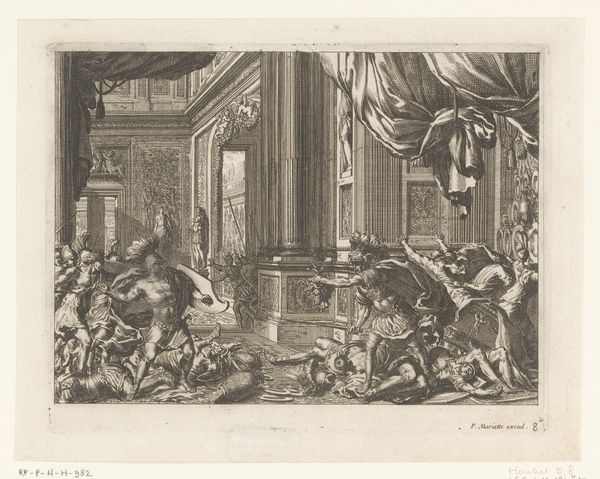
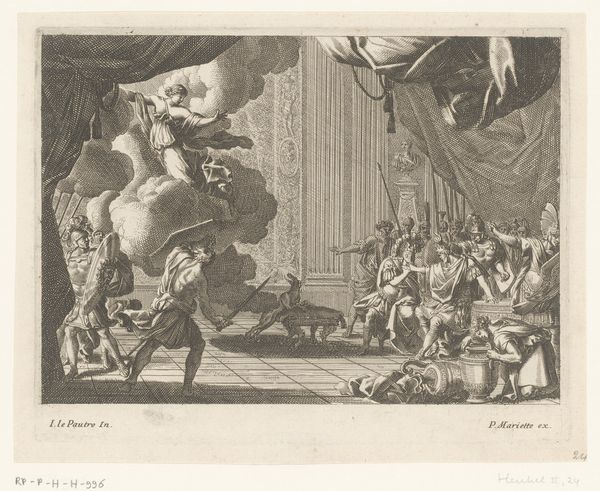
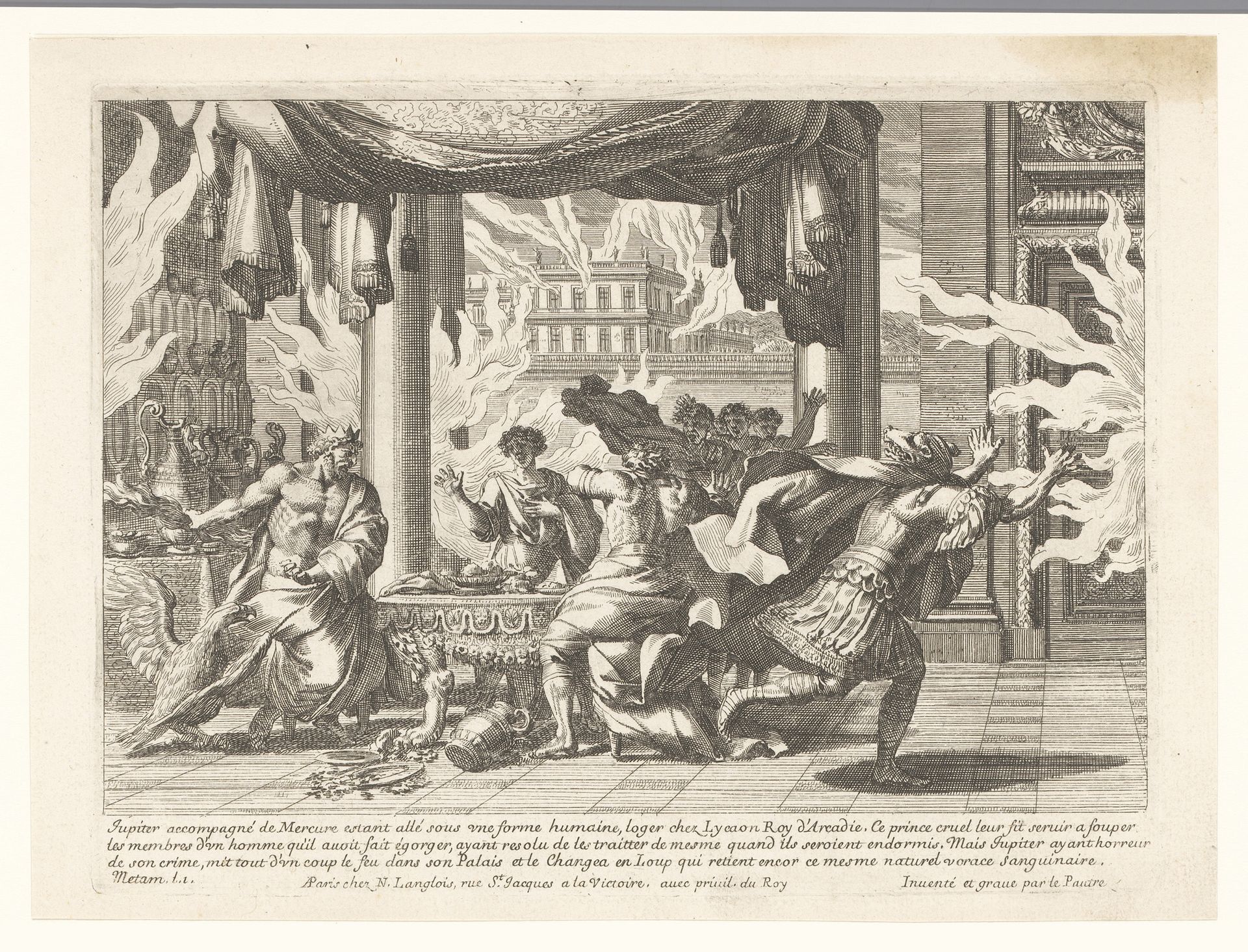
Jean Lepautre created this engraving titled "Jupiter verandert koning Lycaon in een wolf" at an unknown date. Immediately, your eye is drawn to the dramatic scene unfolding across the horizontal plane. The stark contrast between light and shadow heightens the chaotic atmosphere, as figures scatter amidst the architectural grandeur of the palace interior and the raging fire behind them. Lepautre's composition uses diagonal lines to convey a sense of instability and transformation, mirroring the metamorphosis of King Lycaon into a wolf, which is shown in the right foreground. The architecture and the drapery above suggests a space of power and privilege, while the flames consume all and suggest the destruction of moral order. Notice how the transformation from human to animal is presented, destabilizing the fixed categories of identity. This visual interplay captures a moment of metamorphosis and invites us to consider the dynamic relationship between form and meaning. The artwork thus functions as a site of ongoing interpretation, revealing new layers of meaning each time we revisit it.
Jupiter verandert koning Lycaon in een wolf
1650 - 1682
Jean Lepautre
1618 - 1682Location
RijksmuseumArtwork details
- Medium
- engraving
- Dimensions
- height 168 mm, width 223 mm
- Location
- Rijksmuseum
- Copyright
- Rijks Museum: Open Domain
Tags
Comments
Share your thoughts
About this artwork
Jean Lepautre created this engraving titled "Jupiter verandert koning Lycaon in een wolf" at an unknown date. Immediately, your eye is drawn to the dramatic scene unfolding across the horizontal plane. The stark contrast between light and shadow heightens the chaotic atmosphere, as figures scatter amidst the architectural grandeur of the palace interior and the raging fire behind them. Lepautre's composition uses diagonal lines to convey a sense of instability and transformation, mirroring the metamorphosis of King Lycaon into a wolf, which is shown in the right foreground. The architecture and the drapery above suggests a space of power and privilege, while the flames consume all and suggest the destruction of moral order. Notice how the transformation from human to animal is presented, destabilizing the fixed categories of identity. This visual interplay captures a moment of metamorphosis and invites us to consider the dynamic relationship between form and meaning. The artwork thus functions as a site of ongoing interpretation, revealing new layers of meaning each time we revisit it.
Comments
Share your thoughts