

1862 - 1866
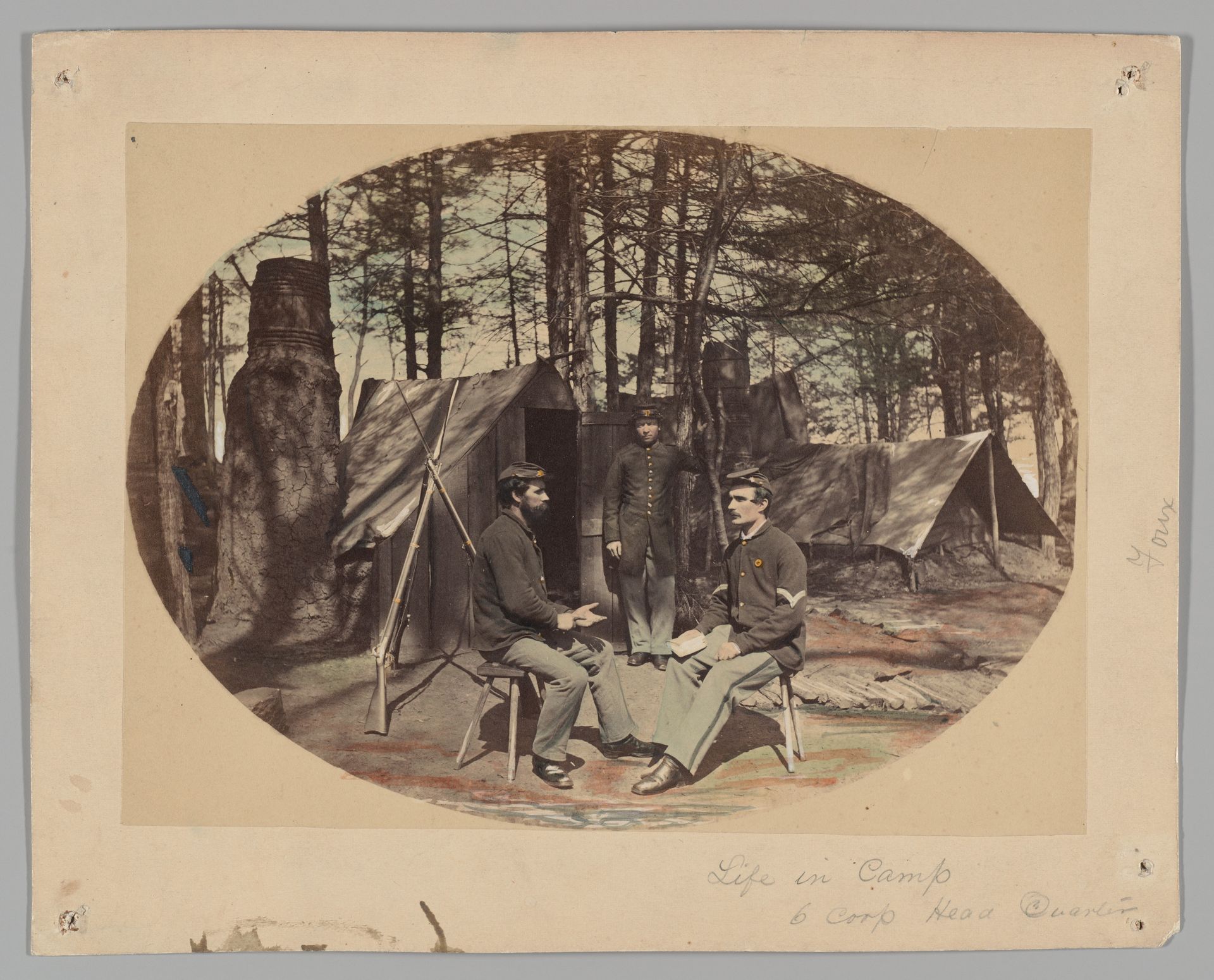
Life in Camp, 6th Corp Headquarters

Listen to curator's interpretation
Curatorial notes
Curator: Here we have "Life in Camp, 6th Corp Headquarters," a fascinating albumen print possibly enhanced with coloured pencil, dating from the American Civil War era, between 1862 and 1866. What strikes you initially about this piece? Editor: There's a sense of stillness, almost a posed tableau, yet the surrounding landscape has a natural dynamism. The light and shadow play across the figures and tents creating a compelling composition with the oval framing the shot. Curator: Exactly. Consider that staged aspect in light of the prevailing visual culture. Photography was emerging, not as candid, but very deliberately constructed, especially in recording military life. Note the choice of the title "Life in Camp," and reflect on what is missing in it. Where are the dynamics, logistics, and tragedy of a 19th century Civil War camp? Editor: And note how the tonal range in their faces is handled: the dark beard and dark eyes. I read this image also in terms of absence. They appear tired, a stillness. Are they trying to look stoic? Are they simply drained? The symmetry and oval composition provide both comfort and discomfort. Curator: Indeed. Such portraiture was vital for morale, both for the soldiers and the folks back home. These images shaped narratives of bravery and resilience—key tools for the Union. This portrait might convey a particular idea, that there is social interaction but also a great deal of internal reflection in moments like this during the War. Editor: Absolutely. The textures, created through what appear to be photographic manipulation and subtle colouring, bring forth what looks like a tension between what should feel temporary--the tents and forest -- with a posed set of social relations amongst soldiers. One reading it also brings to the fore questions of social structure and hierarchy given who is sitting versus standing in the photograph. Curator: It serves to remind us how carefully constructed these "real-life" documents of the Civil War actually were, bending reality for social purposes. By reflecting on those purposes, the social reality and legacy comes even further into light. Editor: I'm struck, finally, by how the meticulous detail contrasts with the implied chaos of war—a poignant visual paradox to behold. It truly feels both momentary but deeply entrenched with historical feeling.