

1870 - 1926
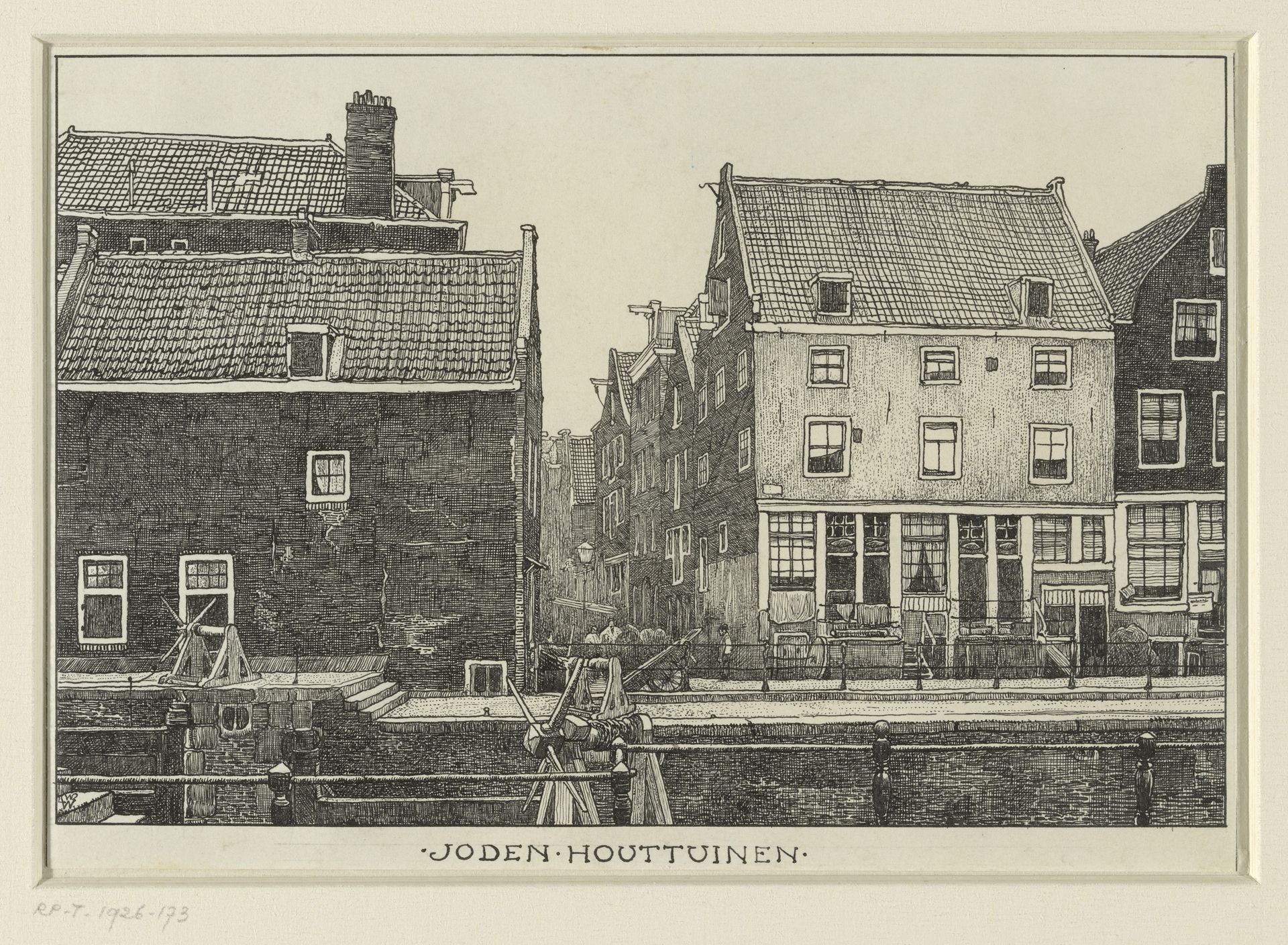
Joden Houttuinen te Amsterdam

Willem Wenckebach
1860 - 1937Location
RijksmuseumListen to curator's interpretation
Curatorial notes
Editor: Here we have Willem Wenckebach's "Joden Houttuinen te Amsterdam," a cityscape etching and print on paper made sometime between 1870 and 1926. The detail is incredible! There's something so still and serene about it, despite depicting what must have been a bustling part of Amsterdam. What stands out to you? Curator: What strikes me is how Wenckebach has captured the architectural symbols. Note the gable stones, small carved reliefs often denoting the owner’s trade or family history. Each house is a memory palace, if you will. Can you see how each subtly proclaims something about its inhabitants? Editor: So, they're like visual biographies etched onto the buildings themselves? Curator: Precisely! The image participates in a larger tradition: consider the long history of using buildings, even cityscapes, as mnemonic devices. These houses are not merely shelters; they’re signifiers loaded with social and economic information, a form of visual language once readily understood by the community. What effect does the artist’s choice of medium, etching, have on that symbolic language, do you think? Editor: I suppose etching, with its fine lines, allows for incredible detail, emphasizing the intricacies of those visual biographies... but I’d think a painting would have better captured how life would play out against the city’s backdrop, perhaps its history and culture. Curator: An excellent point. Etching's strength lies in precision, allowing for capturing minute details that may carry immense symbolic weight. Perhaps Wenckebach focused more on how to freeze memories rather than on how life carries them on. This artistic decision impacts our viewing, doesn’t it? Editor: Absolutely. I hadn't considered the conscious choice to focus on details as encoded memory before. It really changes my perspective on how to look at cityscapes. Curator: Indeed. And it brings us closer to the enduring narrative these buildings continue to tell, long after their original inhabitants are gone.