About this artwork
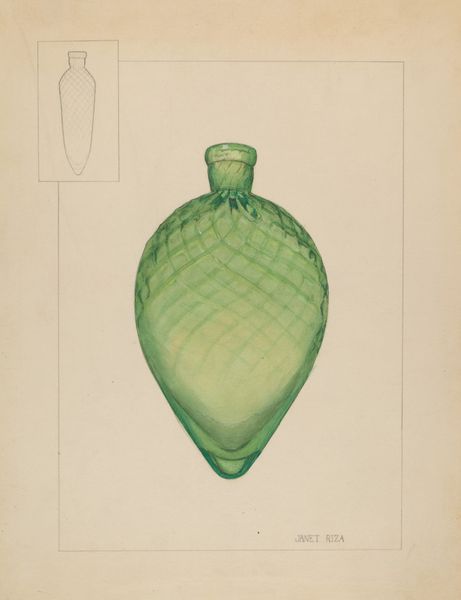
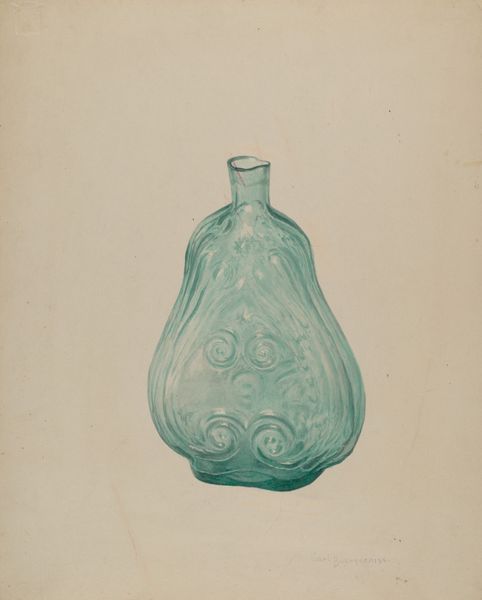
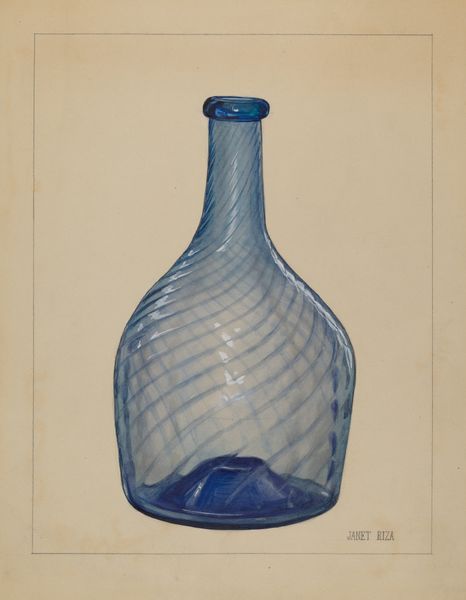
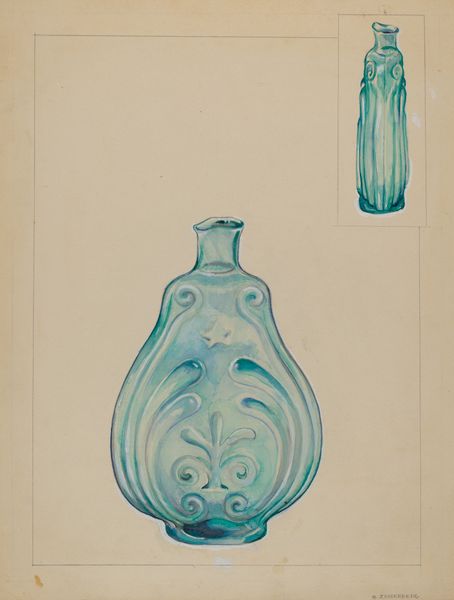
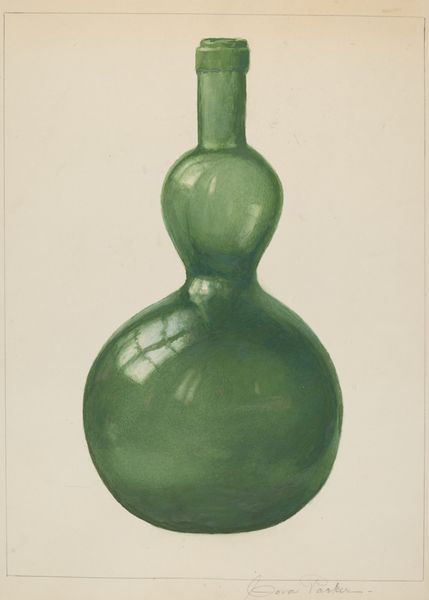
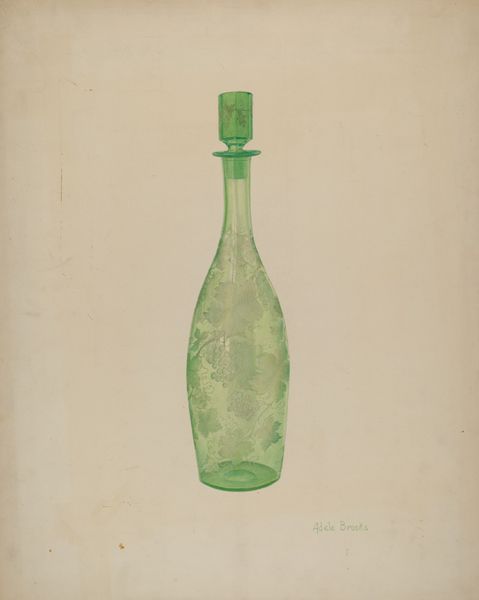
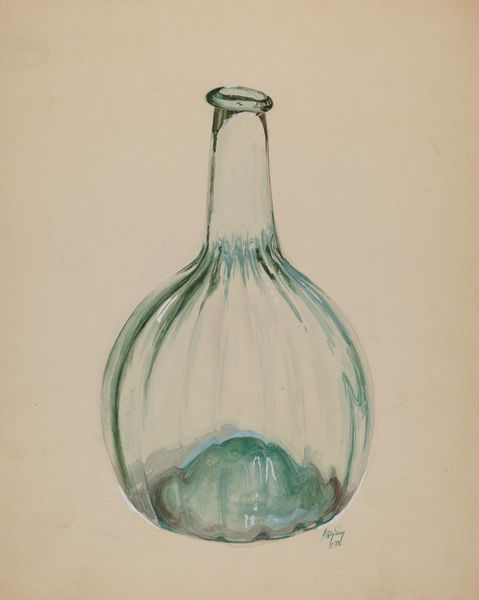
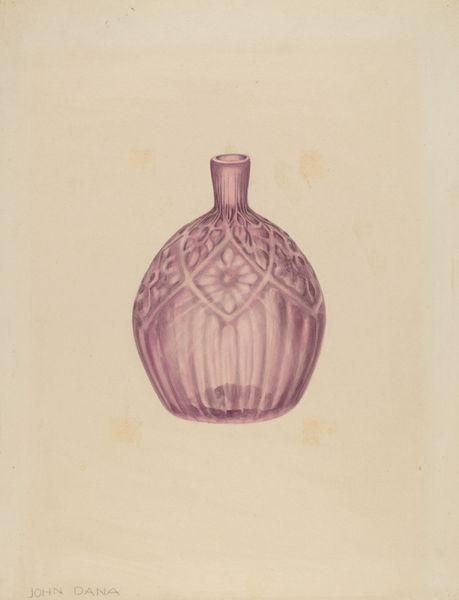
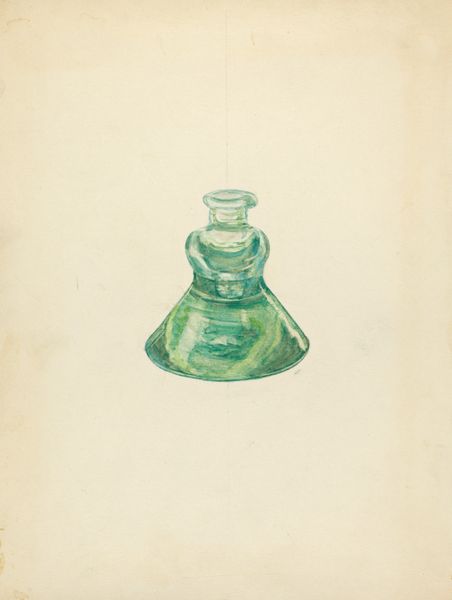
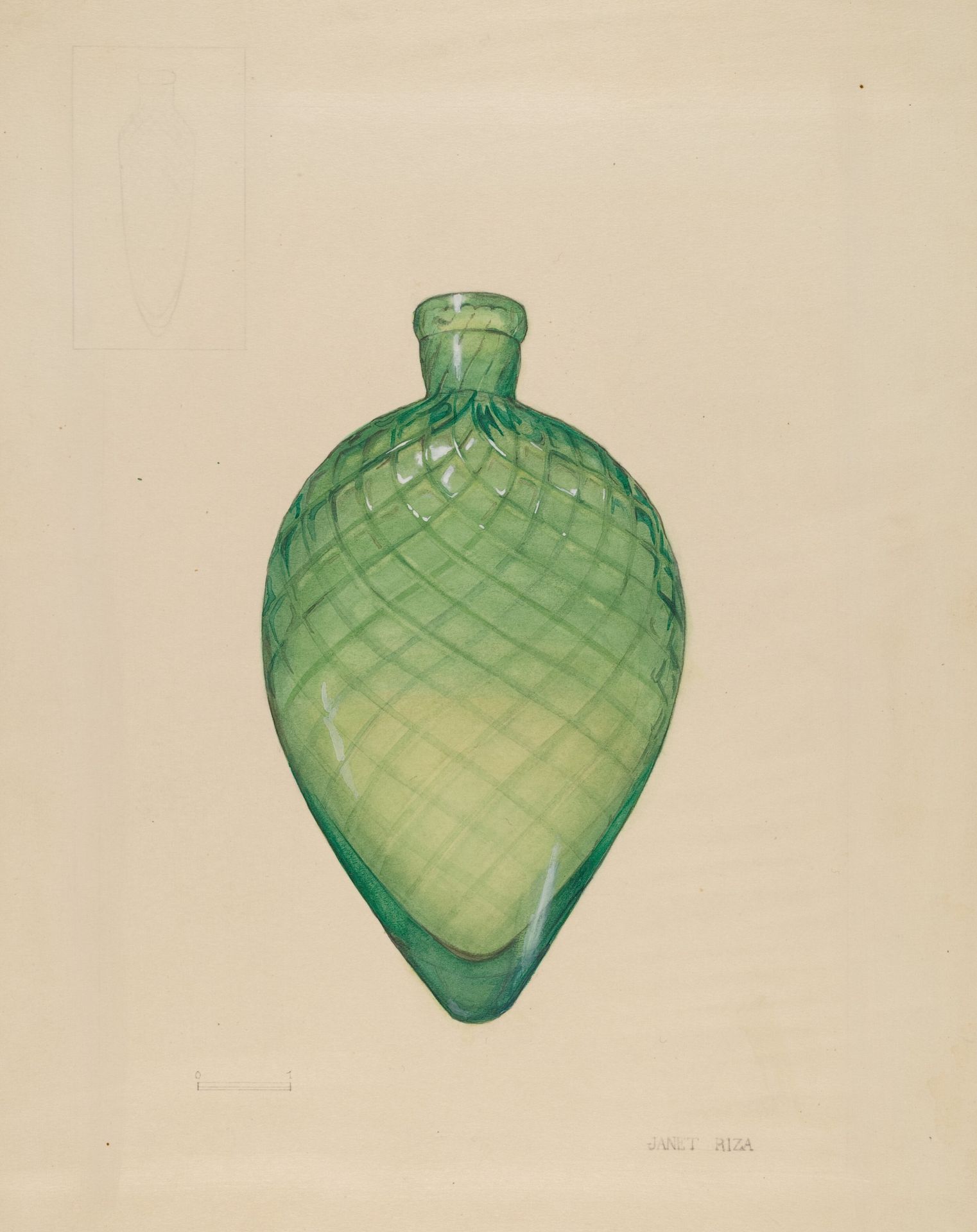
Curator: Immediately, I'm struck by the calmness, the almost ethereal quality of the piece. It's delicately rendered. Editor: Indeed. What we’re looking at is titled "Flask," a watercolor and drawing piece created around 1940 by Janet Riza. It seems a study, perhaps for a glasswork design. Curator: The cross-hatching, though, brings a subtle, almost reptilian feel. Is that the deliberate reference, to scales or a protective carapace? What's concealed within, perhaps? The vessel becomes something more than just a bottle, taking on qualities of life. Editor: Interesting observation. I tend to view this through a different lens. Considering the socio-political backdrop of the 1940s, with resourcefulness driven by wartime shortages, does the flask embody a practical necessity elegantly elevated through art? Perhaps celebrating functional beauty? Curator: Absolutely, it could certainly be read through that lens of utility, reflecting the period’s practical considerations. However, I am intrigued by that preliminary sketch barely visible in the upper-left corner, a ghost of the final form. It invites a deeper questioning. Editor: A pentimento of sorts, revealing process. Still, let’s consider that the decorative arts during this period strived for accessibility. Maybe it aimed to dignify everyday objects, promoting a democratic vision of art. It may not only allude to resilience amidst hardship, a quiet resistance expressed in valuing what is humble. Curator: I can appreciate that perspective, certainly. Although, knowing flasks, conceptually, are traditionally vessels of transformation, even alchemy, brings me back to a more mystic plane. The artist may consciously or unconsciously channel universal archetypes of renewal and sustenance. Editor: Ultimately, its the combination of cultural moment, skillful artistry, and evocative qualities that give it such endurance. It invites our continuous analysis. Curator: Yes, it exists at a fascinating intersection. One that highlights not just the skill of the artist but, the intricate dance of social symbolism and personal expression that art invariably captures.


Artwork details
- Medium
- drawing, glass, watercolor
- Dimensions
- overall: 30.2 x 22.7 cm (11 7/8 x 8 15/16 in.)
- Copyright
- National Gallery of Art: CC0 1.0
Tags
Comments
Share your thoughts
About this artwork
Curator: Immediately, I'm struck by the calmness, the almost ethereal quality of the piece. It's delicately rendered. Editor: Indeed. What we’re looking at is titled "Flask," a watercolor and drawing piece created around 1940 by Janet Riza. It seems a study, perhaps for a glasswork design. Curator: The cross-hatching, though, brings a subtle, almost reptilian feel. Is that the deliberate reference, to scales or a protective carapace? What's concealed within, perhaps? The vessel becomes something more than just a bottle, taking on qualities of life. Editor: Interesting observation. I tend to view this through a different lens. Considering the socio-political backdrop of the 1940s, with resourcefulness driven by wartime shortages, does the flask embody a practical necessity elegantly elevated through art? Perhaps celebrating functional beauty? Curator: Absolutely, it could certainly be read through that lens of utility, reflecting the period’s practical considerations. However, I am intrigued by that preliminary sketch barely visible in the upper-left corner, a ghost of the final form. It invites a deeper questioning. Editor: A pentimento of sorts, revealing process. Still, let’s consider that the decorative arts during this period strived for accessibility. Maybe it aimed to dignify everyday objects, promoting a democratic vision of art. It may not only allude to resilience amidst hardship, a quiet resistance expressed in valuing what is humble. Curator: I can appreciate that perspective, certainly. Although, knowing flasks, conceptually, are traditionally vessels of transformation, even alchemy, brings me back to a more mystic plane. The artist may consciously or unconsciously channel universal archetypes of renewal and sustenance. Editor: Ultimately, its the combination of cultural moment, skillful artistry, and evocative qualities that give it such endurance. It invites our continuous analysis. Curator: Yes, it exists at a fascinating intersection. One that highlights not just the skill of the artist but, the intricate dance of social symbolism and personal expression that art invariably captures.
Comments
Share your thoughts