drawing, graphic-art, ink
#
drawing
#
line-art
#
graphic-art
#
art-nouveau
#
medieval
#
landscape
#
ink
#
geometric
#
russian-avant-garde
Copyright: Public domain
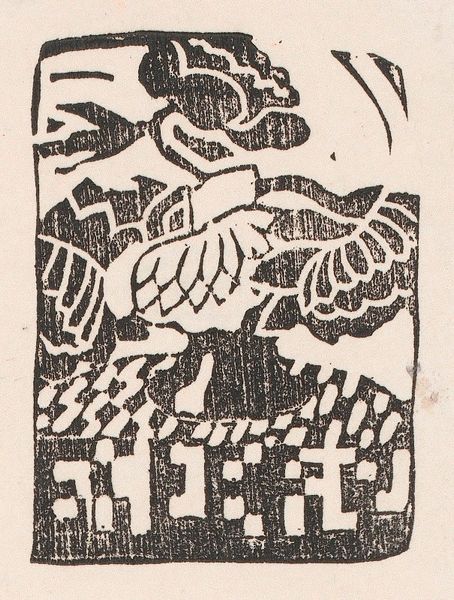
Curator: Immediately striking is the clarity of line and intricate detail of this ink drawing. It feels almost like a page lifted straight from a fairy tale. Editor: You’re right. It certainly evokes a sense of story, but the severe black and white and dense composition create a stillness, almost a solemnity. This is Ivan Bilibin's "Russian Folk Art, Illustration for the magazine World of Art," dating back to 1904. Curator: Bilibin's work often pulled from traditional Russian folklore and combined it with elements of Art Nouveau. You can see it here, I think, in the stylized depictions of nature—the repetitive wave patterns, the floral motifs, and the highly ornamental bird. It's charged with visual cues speaking to older, almost pagan beliefs, particularly the importance of avian symbols. Editor: Absolutely. Birds, especially swans or ducks like this one, often function as psychopomps, guides of souls. Notice, too, how the image seems deliberately flattened. Bilibin isn’t trying to create an illusion of depth, but instead emphasizes the design on the page itself, echoing traditional woodcuts. How do you see that choice affecting our reading? Curator: I think that flatness focuses us on the symbolic rather than the literal. It reminds us these are archetypes, representing broader themes of journey, spirituality, and the enduring power of folk traditions. The tower to the left mirrors an organic blossoming shape to its right – it asks if one came from the other, or perhaps, which will outlast the other. Editor: Fascinating! It served as an illustration for a magazine focused on art. Consider its place within the context of early 20th-century Russia, a time of rapid social and political upheaval. Bilibin’s embrace of folklore became a way to reclaim a sense of national identity in the face of modernization and western influence. It became something like a quiet visual argument. Curator: Exactly. Bilibin offers more than just a pretty picture; he delivers a visual archive, reaffirming the importance of cultural memory. What stories remain when all we can offer is black and white, shape, and symbol? Editor: In revisiting Bilibin’s design today, we can read its statement anew about art, social change, and the resonance of visual emblems across a century. Curator: Agreed; even in this relatively simple graphic art, the deep roots of visual languages reveal a connection between Russia's present and ancestral voices.
Comments
No comments
Be the first to comment and join the conversation on the ultimate creative platform.
 Collect
 React
React Comment
More like this