About this artwork
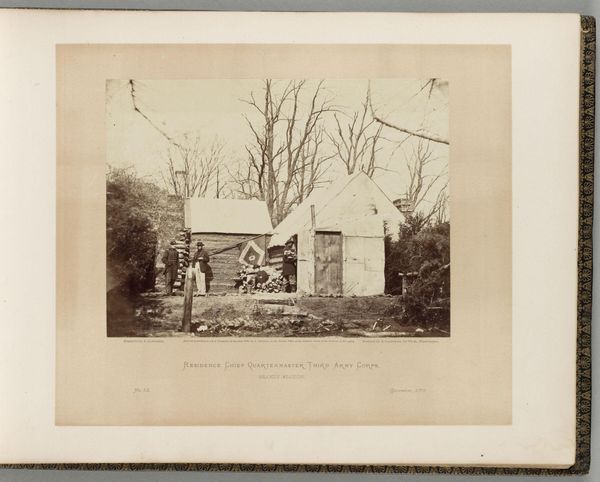
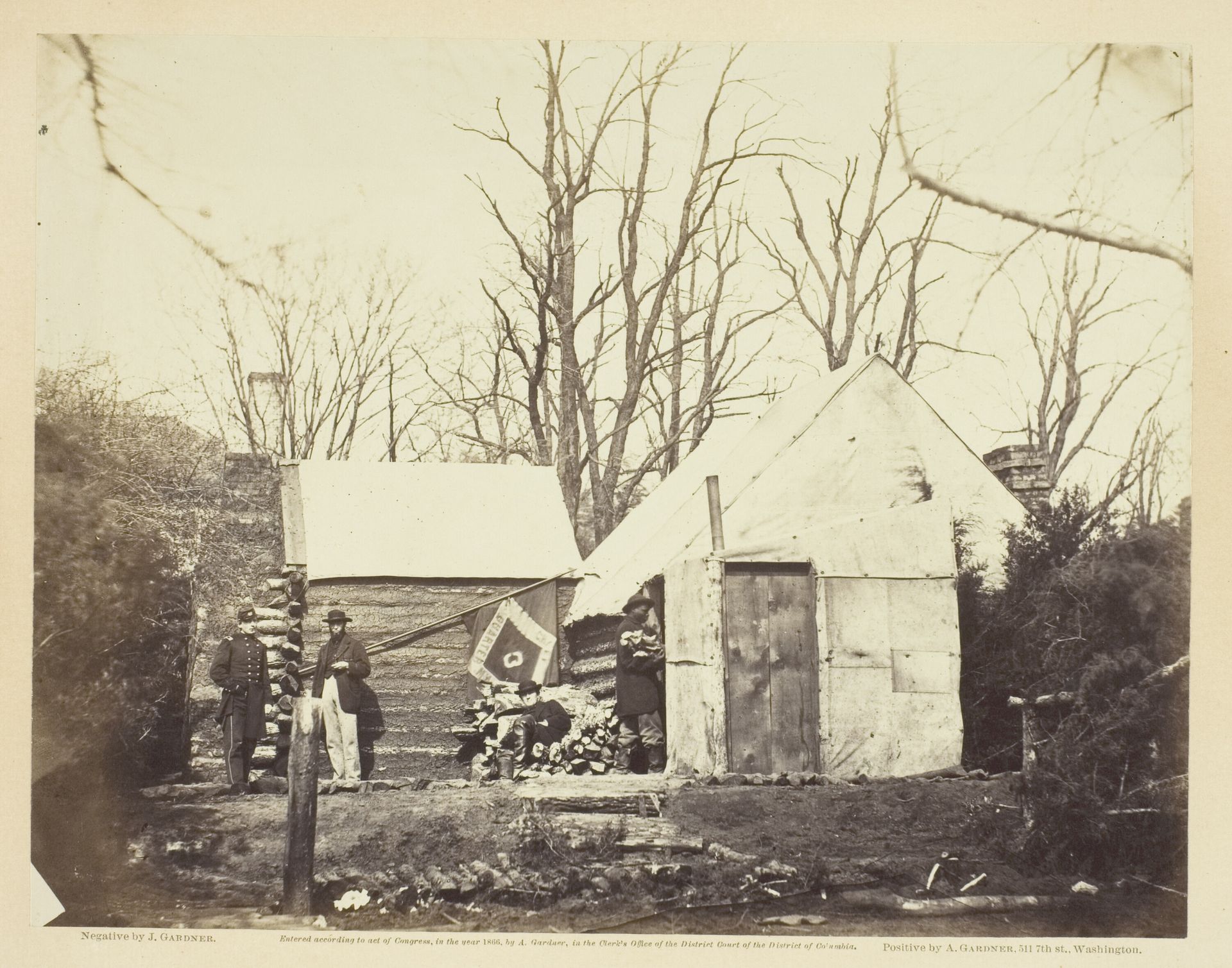
This photograph of the Residence Chief Quartermaster Third Army Corps at Brandy Station, was taken by James Gardner. The most striking visual symbol in this photograph is the flag. In this context, it represents the identity, allegiance, and logistical capabilities of the Third Army Corps during the American Civil War. Flags are a cornerstone of military identity, evoking powerful emotions, serving as rallying points, and representing the collective will of a unit. We see echoes of this symbolism in the standards of ancient Rome, the banners of medieval knights, and even in modern corporate logos. They stir collective memory and subconscious associations of loyalty and solidarity. The very act of displaying such an emblem has the powerful psychological effect of instilling pride and a sense of belonging. However, such symbols can also evoke fear in the enemy, as the non-linear and cyclical progression of the icon continues to resurface and take on new meanings in different historical contexts.
Residence Chief Quartermaster Third Army Corps, Brandy Station
1863


Artwork details
- Medium
- photography, gelatin-silver-print
- Dimensions
- 17.7 × 22.9 cm (image); 31.1 × 44.7 cm (album page)
- Location
- The Art Institute of Chicago
- Copyright
- Public Domain
Tags
Comments
Share your thoughts
About this artwork
This photograph of the Residence Chief Quartermaster Third Army Corps at Brandy Station, was taken by James Gardner. The most striking visual symbol in this photograph is the flag. In this context, it represents the identity, allegiance, and logistical capabilities of the Third Army Corps during the American Civil War. Flags are a cornerstone of military identity, evoking powerful emotions, serving as rallying points, and representing the collective will of a unit. We see echoes of this symbolism in the standards of ancient Rome, the banners of medieval knights, and even in modern corporate logos. They stir collective memory and subconscious associations of loyalty and solidarity. The very act of displaying such an emblem has the powerful psychological effect of instilling pride and a sense of belonging. However, such symbols can also evoke fear in the enemy, as the non-linear and cyclical progression of the icon continues to resurface and take on new meanings in different historical contexts.
Comments
Share your thoughts