About this artwork
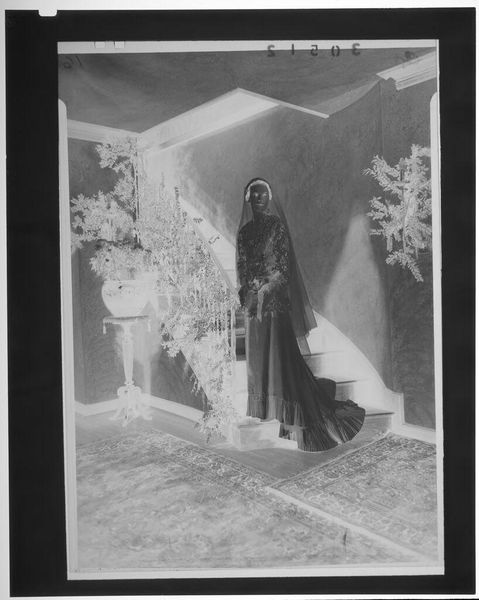
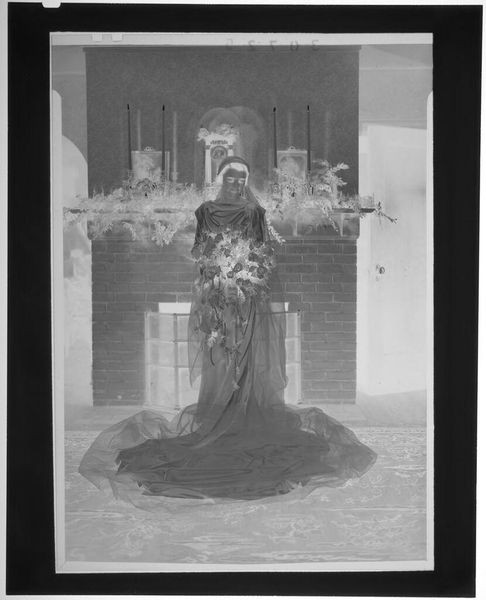
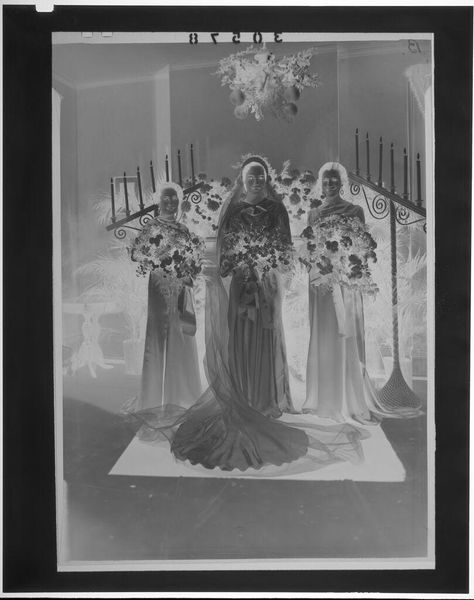
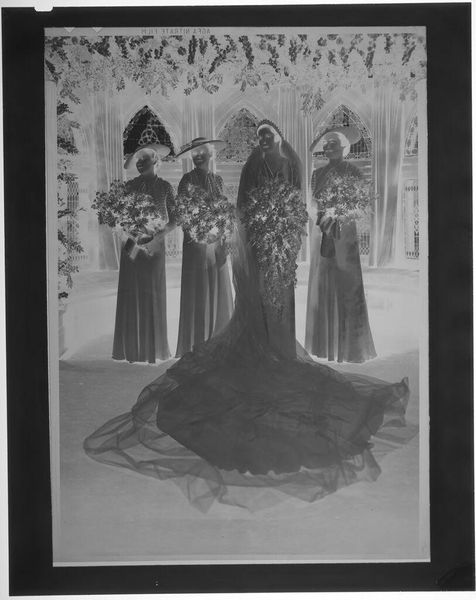
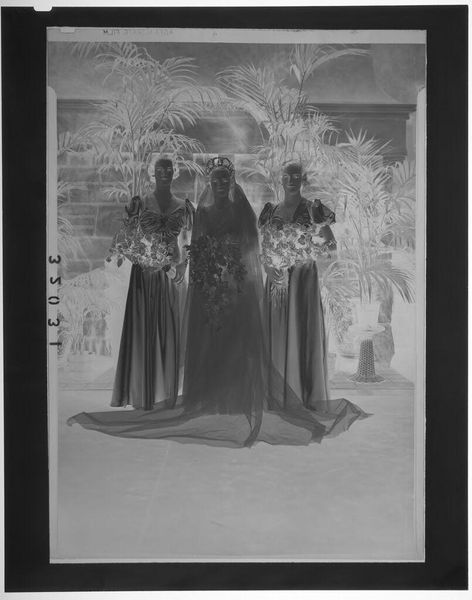
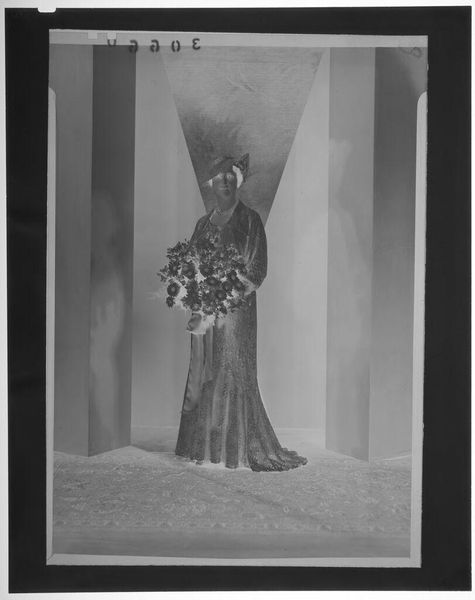
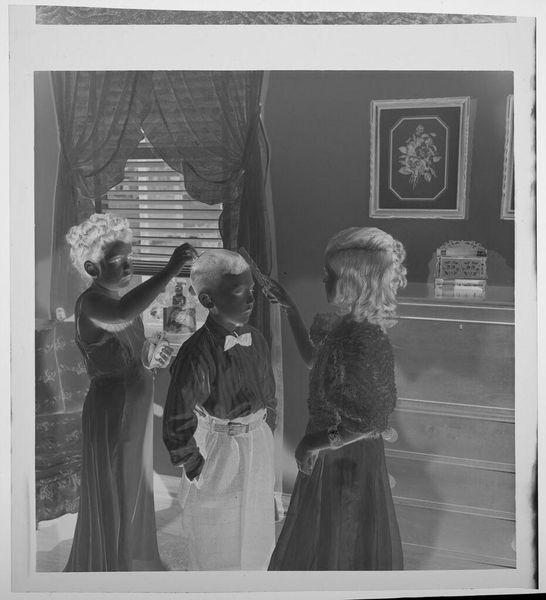
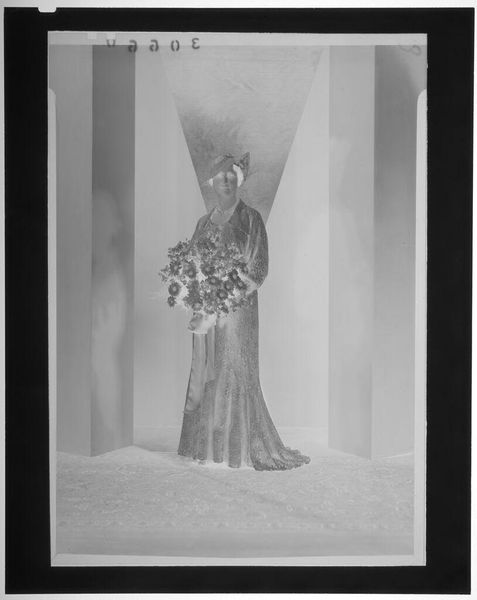
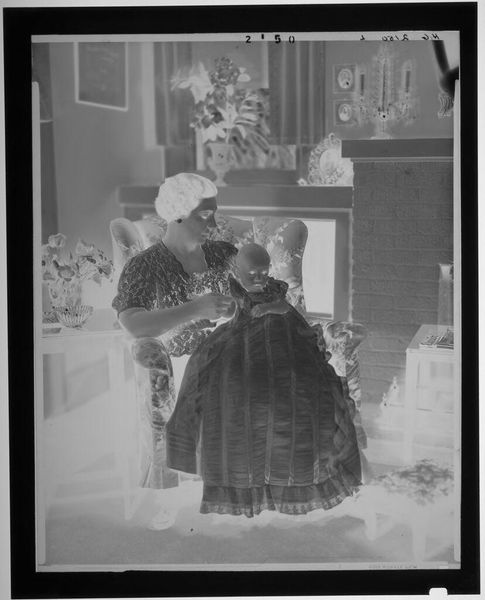
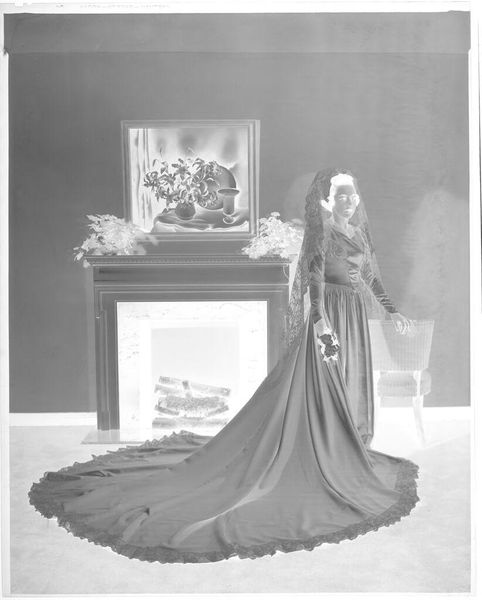
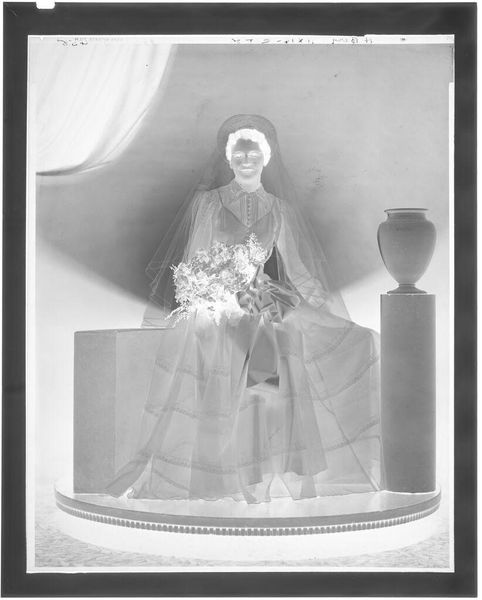
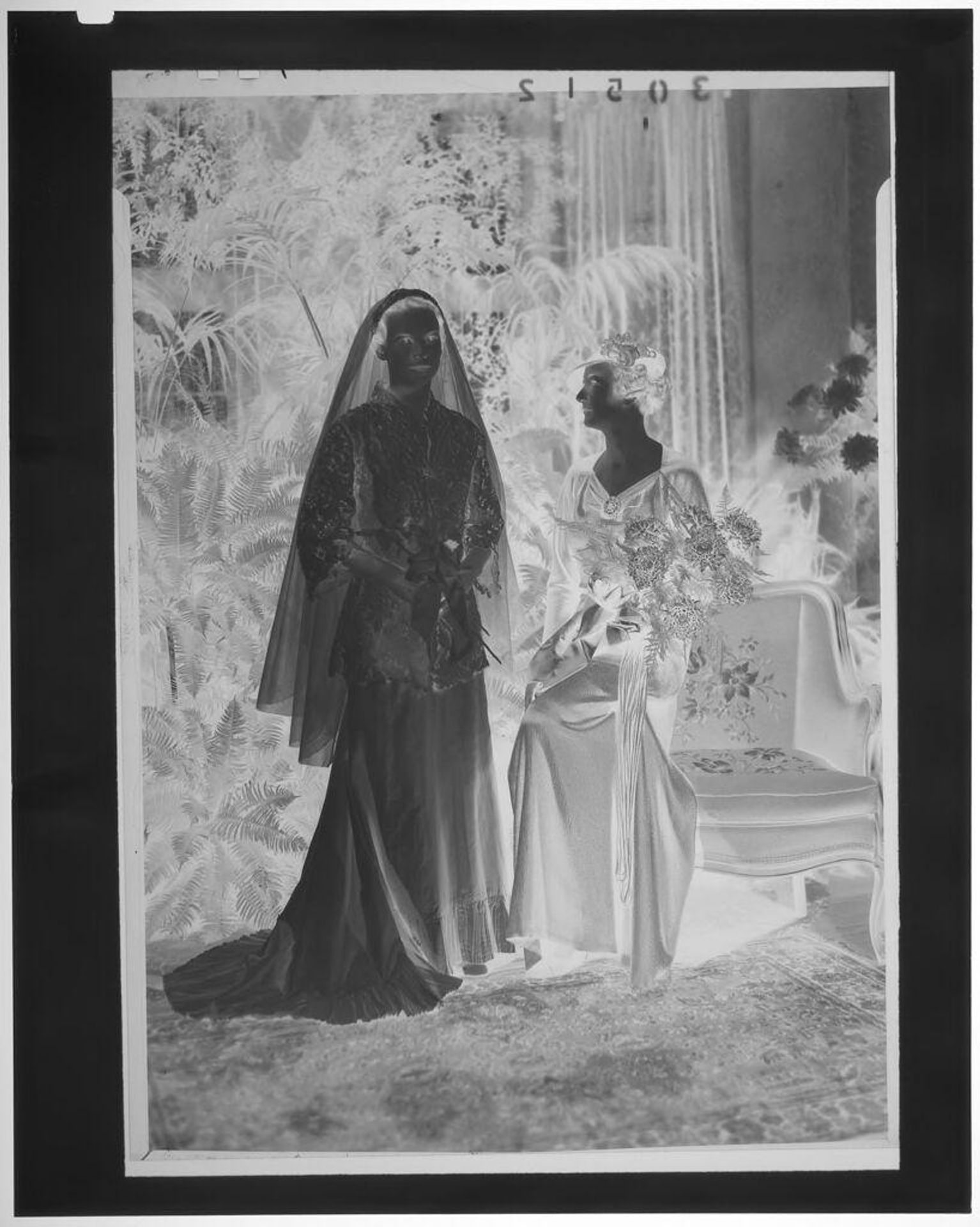
Editor: This photograph by Martin Schweig, titled "Untitled (portrait of bride with mother watching her in elegant room decorated with plants)," is a striking image. The composition is quite formal, and it has a staged feel. What can you tell me about its historical context? Curator: Looking at this, I'm struck by the deliberate construction of the scene. It speaks to the performative aspect of weddings, particularly within specific social classes. How might the staging, the poses, and even the setting reflect societal expectations or aspirations of the time? Editor: That’s interesting. So it's not just a portrait, but a social statement? Curator: Exactly! Consider the role of photography itself. It was becoming more accessible, yet still carried a certain weight and formality, particularly for such an important event. This image captures that intersection of personal ritual and public presentation. Editor: I hadn't thought of it that way. I see now how much the historical context shapes our understanding. Curator: Precisely. Considering the image’s public role informs our understanding of its significance.
Untitled (portrait of bride with mother watching her in elegant room decorated with plants)
1935

Artwork details
- Dimensions
- image: 12.7 x 10.16 cm (5 x 4 in.)
- Location
- Harvard Art Museums
- Copyright
- CC0 1.0
Comments
Share your thoughts
About this artwork
Editor: This photograph by Martin Schweig, titled "Untitled (portrait of bride with mother watching her in elegant room decorated with plants)," is a striking image. The composition is quite formal, and it has a staged feel. What can you tell me about its historical context? Curator: Looking at this, I'm struck by the deliberate construction of the scene. It speaks to the performative aspect of weddings, particularly within specific social classes. How might the staging, the poses, and even the setting reflect societal expectations or aspirations of the time? Editor: That’s interesting. So it's not just a portrait, but a social statement? Curator: Exactly! Consider the role of photography itself. It was becoming more accessible, yet still carried a certain weight and formality, particularly for such an important event. This image captures that intersection of personal ritual and public presentation. Editor: I hadn't thought of it that way. I see now how much the historical context shapes our understanding. Curator: Precisely. Considering the image’s public role informs our understanding of its significance.
Comments
Share your thoughts