About this artwork
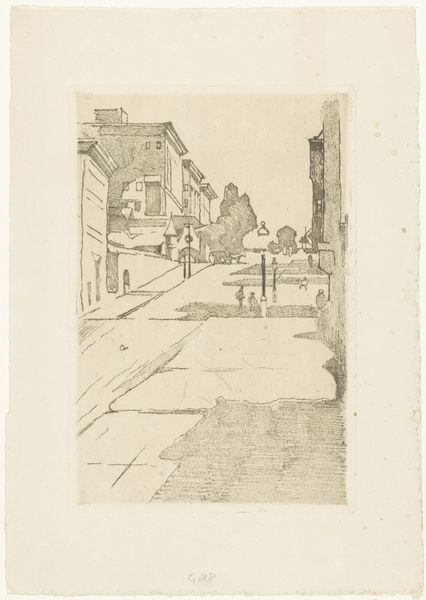
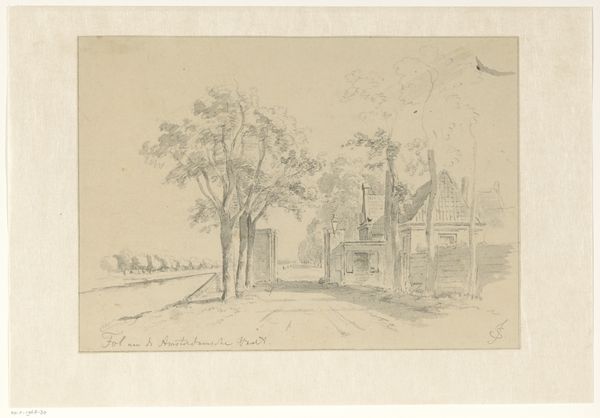
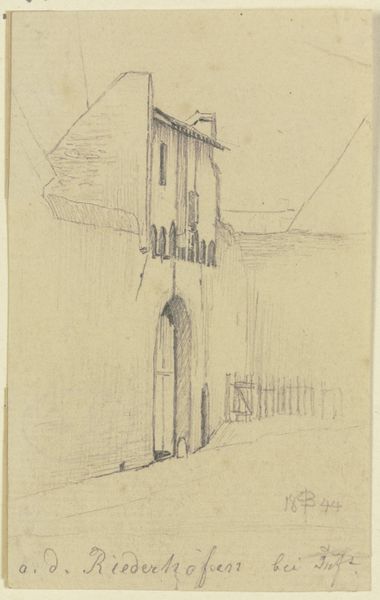
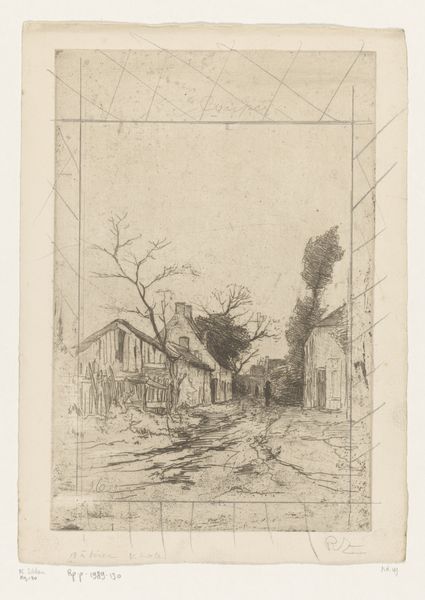
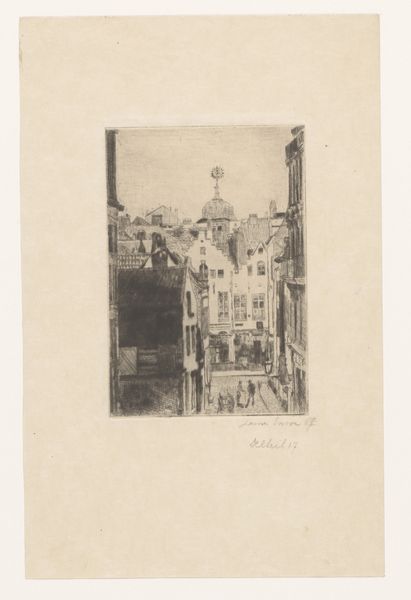
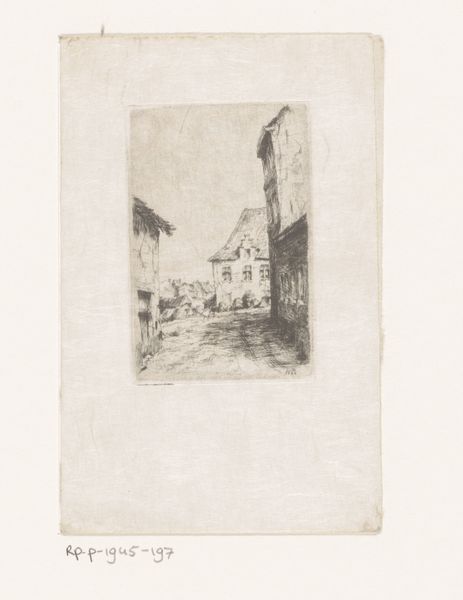
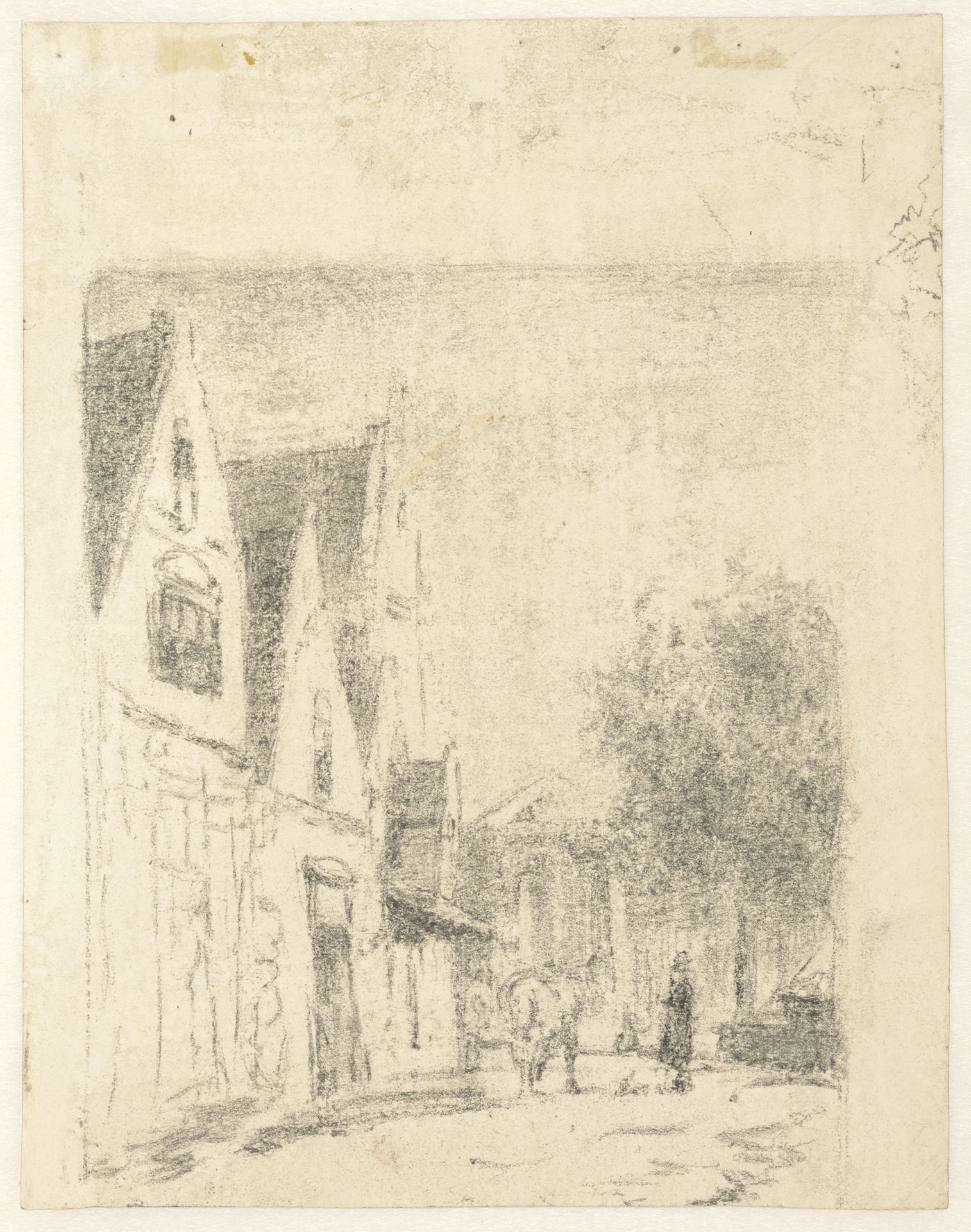
Cornelis Springer's pencil drawing presents a street scene anchored by the architecture on the left, its triangular rooflines echoed in the receding buildings. The shading across the facade suggests a muted dialogue between light and shadow. Springer employs a structural framework that invites us to consider the relationship between the solid architectural forms and the transient figures within the street. The composition is divided, yet harmonious; the buildings create a strong vertical anchor, counterbalanced by the implied horizontal movement of the street itself. This interplay between static and dynamic elements reflects an engagement with semiotics, where buildings stand as signs of permanence, while figures suggest the fleeting nature of human activity. The lack of vibrant color directs our attention to the fundamental structure, to the lines and shapes that define our understanding of space. Springer's deliberate mark-making emphasizes how form itself communicates meaning, beyond mere representation.
Gezicht op een straat met een paard en een man
1827 - 1891

Cornelis Springer
1817 - 1891Location
RijksmuseumArtwork details
- Medium
- drawing, pencil
- Dimensions
- height 312 mm, width 242 mm
- Location
- Rijksmuseum
- Copyright
- Rijks Museum: Open Domain
Tags
Comments
Share your thoughts
About this artwork
Cornelis Springer's pencil drawing presents a street scene anchored by the architecture on the left, its triangular rooflines echoed in the receding buildings. The shading across the facade suggests a muted dialogue between light and shadow. Springer employs a structural framework that invites us to consider the relationship between the solid architectural forms and the transient figures within the street. The composition is divided, yet harmonious; the buildings create a strong vertical anchor, counterbalanced by the implied horizontal movement of the street itself. This interplay between static and dynamic elements reflects an engagement with semiotics, where buildings stand as signs of permanence, while figures suggest the fleeting nature of human activity. The lack of vibrant color directs our attention to the fundamental structure, to the lines and shapes that define our understanding of space. Springer's deliberate mark-making emphasizes how form itself communicates meaning, beyond mere representation.
Comments
Share your thoughts