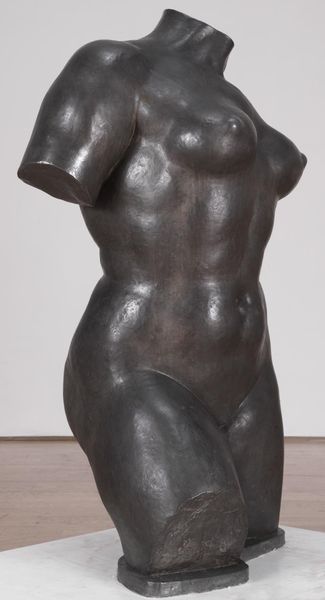
Dimensions: object: 1753 x 610 x 400 mm, 165 kg
Copyright: © ADAGP, Paris and DACS, London 2014 | CC-BY-NC-ND 4.0 DEED, Photo: Tate
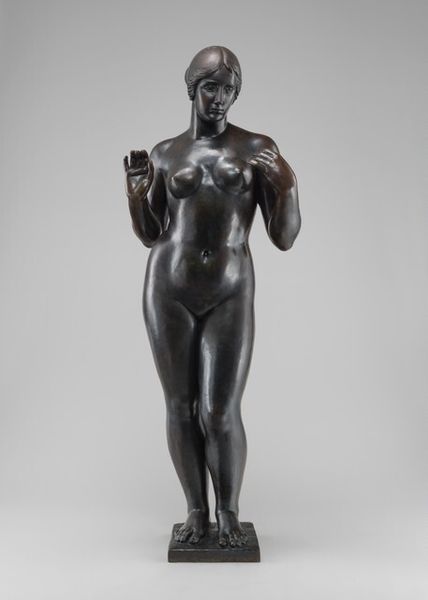
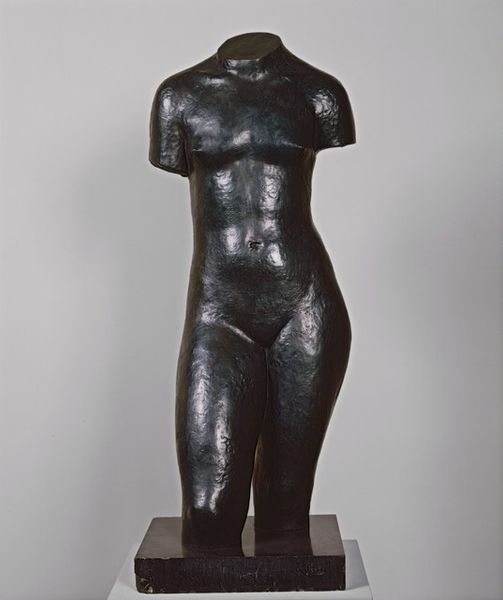
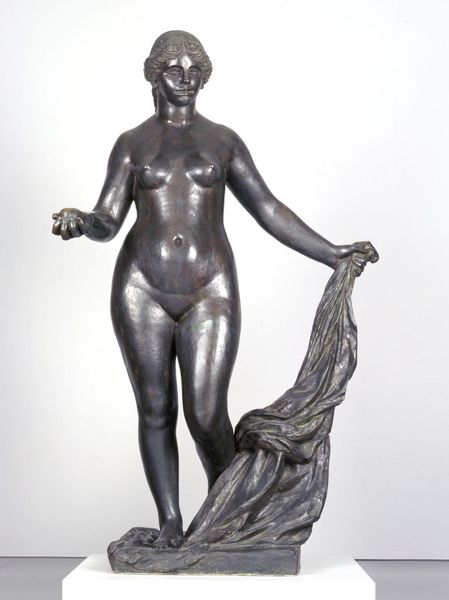
Editor: Here we have Aristide Maillol’s bronze sculpture, Venus with a Necklace. She seems so grounded, powerful even. What statements do you think Maillol is making by choosing bronze as the medium? Curator: Bronze casting in Maillol’s time involved skilled labor and industrial processes. The choice of bronze elevates the female form through valued material, yet its production situates it within a system of labor and consumption. Editor: So, it's not just about idealizing beauty, but also about the means by which we create and value objects? Curator: Precisely. How does this understanding shift your perception of Venus? Editor: I see now that this Venus embodies the intersection of art, industry, and the labor involved in creating representations of beauty. Thanks for shedding light on this! Curator: You’re welcome. Thinking about art through material and production opens up rich avenues for interpretation.
Comments

tate 12 months ago
⋮
http://www.tate.org.uk/art/artworks/maillol-venus-with-a-necklace-n04576


Join the conversation
Join millions of artists and users on Artera today and experience the ultimate creative platform.
tate 12 months ago
⋮
According to the artist, this sculpture was developed from another life-size nude entitled 'Summer', made in 1910. The model for this 'Venus', however, was a Spanish maid who came to work for Maillol at the end of the First World War. Maillol later recalled that he worked on the piece over a period of several years. A plaster version, complete with necklace, was exhibited in Paris in 1928 and a bronze cast was sold the same year. Named after the goddess of love, this sculpture epitomises Maillol's vision of feminine beauty. Gallery label, August 2004
 Collect
More like this