About this artwork
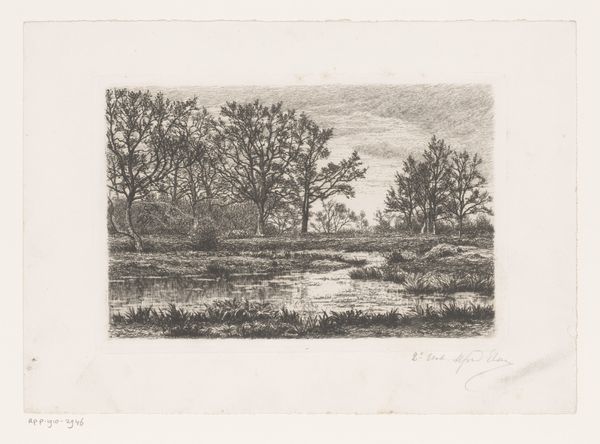
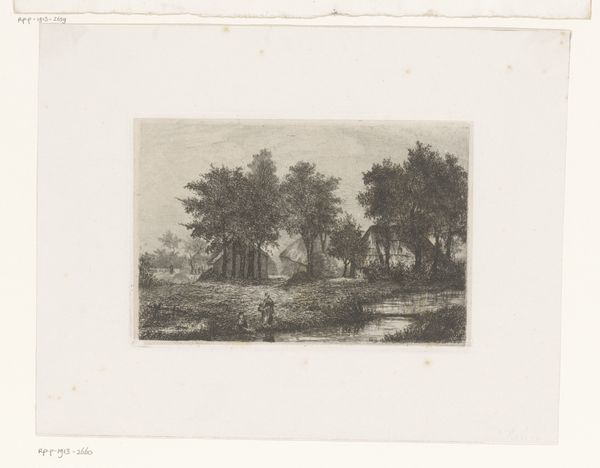
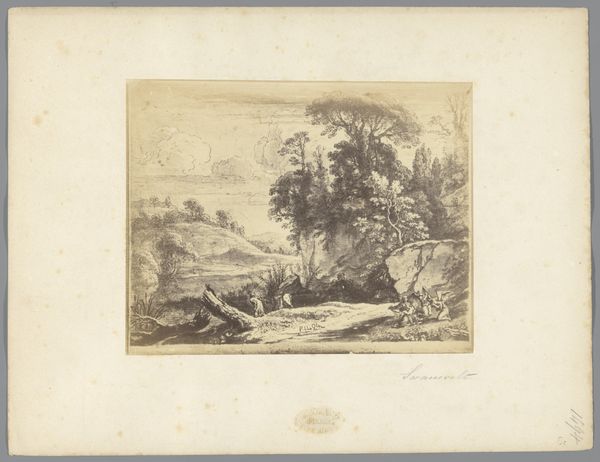
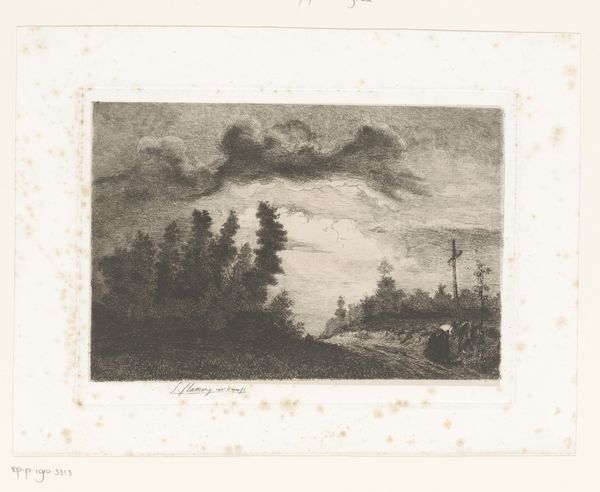
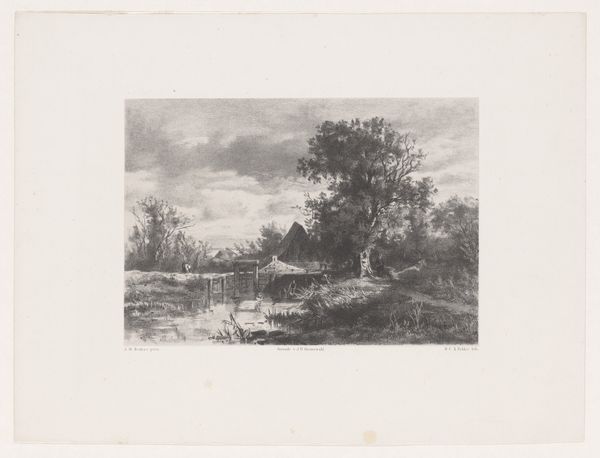
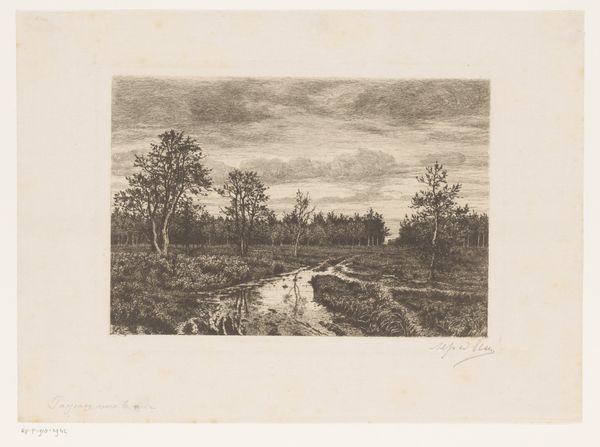
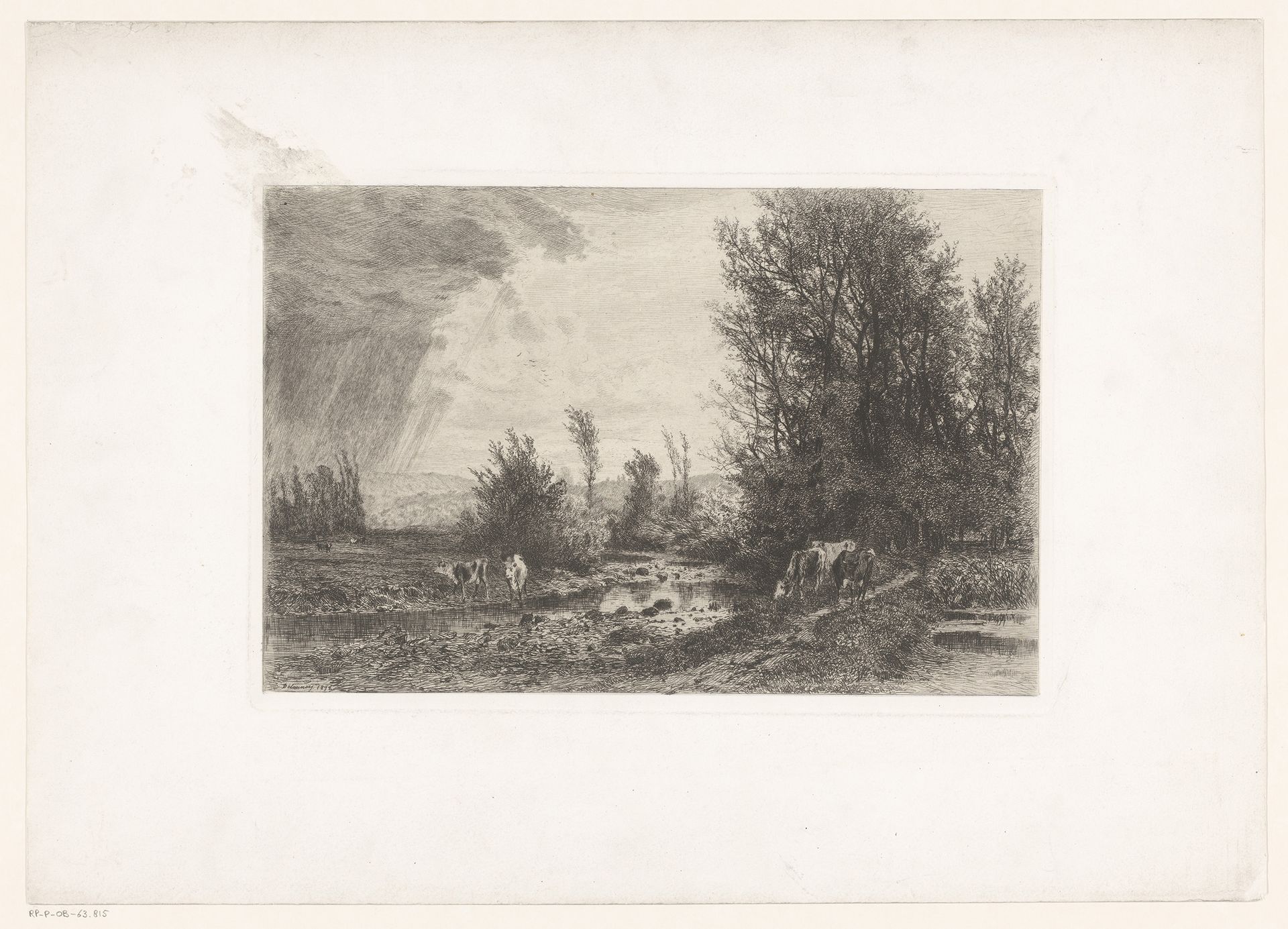
Alfred Alexandre Delauney created this etching titled, Landschap met koeien langs beek, or Landscape with cows along a stream. As an artist working in the 19th century, Delauney situated himself within a landscape tradition that often served to evoke national identity and cultural values. During this era, rural life was frequently romanticized, acting as a sentimentalized counterpoint to the growing industrialization of Europe. This landscape, however, is noticeably devoid of human figures. It begs the question, what does it mean when the laboring body is missing from a landscape? What kind of stories get told when the land exists for itself? This representation can be interpreted as a statement on the relationship between humans and the natural world, emphasizing the intrinsic value and beauty of the land irrespective of its utility. By focusing on the serene presence of animals and the undisturbed flow of water, the etching encourages a reflective contemplation of nature's inherent worth, subtly critiquing an anthropocentric view. It presents a vision of harmony.

Artwork details
- Medium
- etching
- Dimensions
- height 219 mm, width 327 mm
- Location
- Rijksmuseum
- Copyright
- Rijks Museum: Open Domain
Tags
16_19th-century
etching
landscape
realism
Comments
No comments
About this artwork
Alfred Alexandre Delauney created this etching titled, Landschap met koeien langs beek, or Landscape with cows along a stream. As an artist working in the 19th century, Delauney situated himself within a landscape tradition that often served to evoke national identity and cultural values. During this era, rural life was frequently romanticized, acting as a sentimentalized counterpoint to the growing industrialization of Europe. This landscape, however, is noticeably devoid of human figures. It begs the question, what does it mean when the laboring body is missing from a landscape? What kind of stories get told when the land exists for itself? This representation can be interpreted as a statement on the relationship between humans and the natural world, emphasizing the intrinsic value and beauty of the land irrespective of its utility. By focusing on the serene presence of animals and the undisturbed flow of water, the etching encourages a reflective contemplation of nature's inherent worth, subtly critiquing an anthropocentric view. It presents a vision of harmony.
Comments
No comments