About this artwork
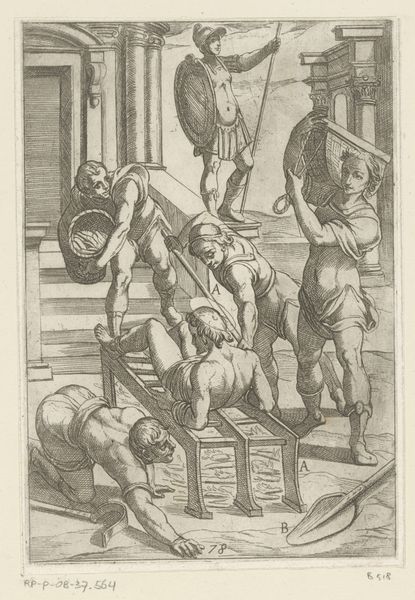
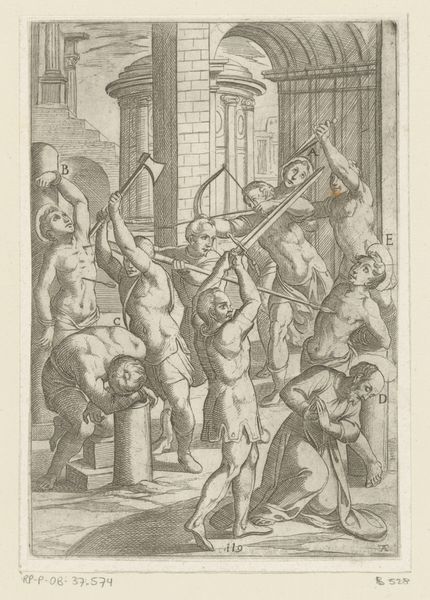
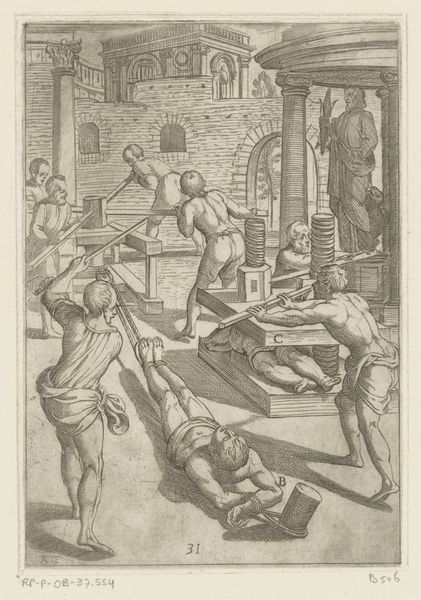
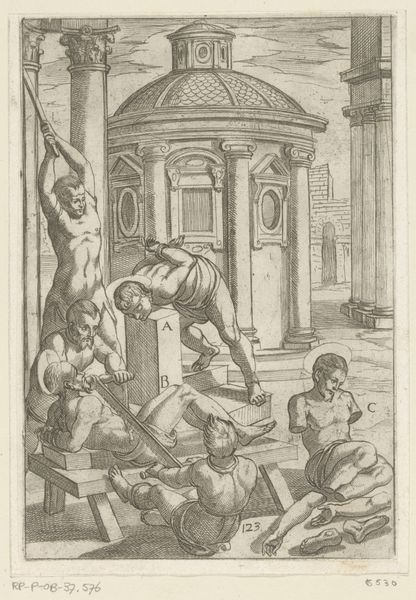
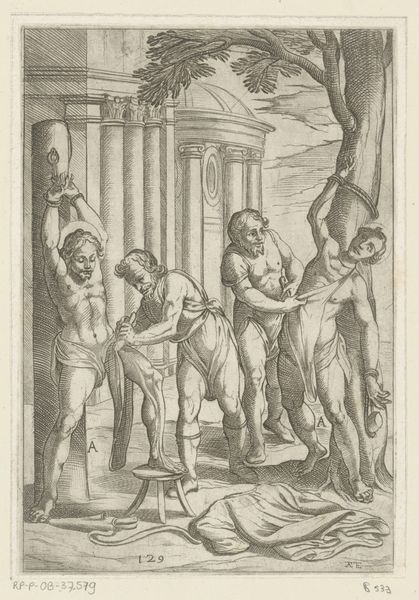
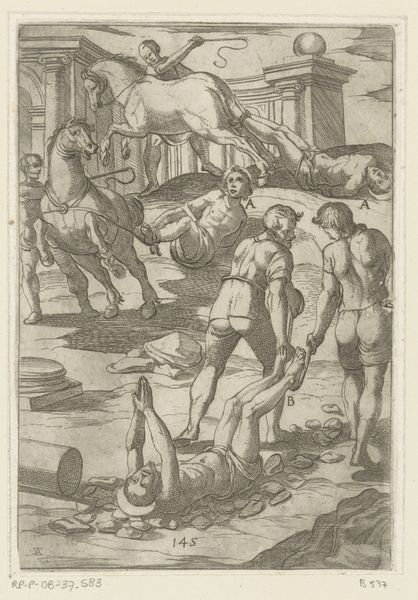
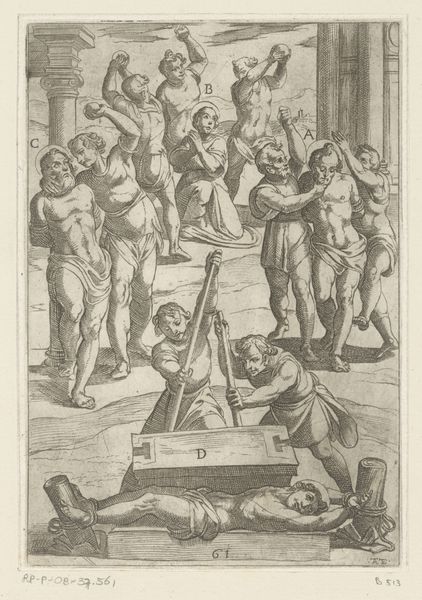
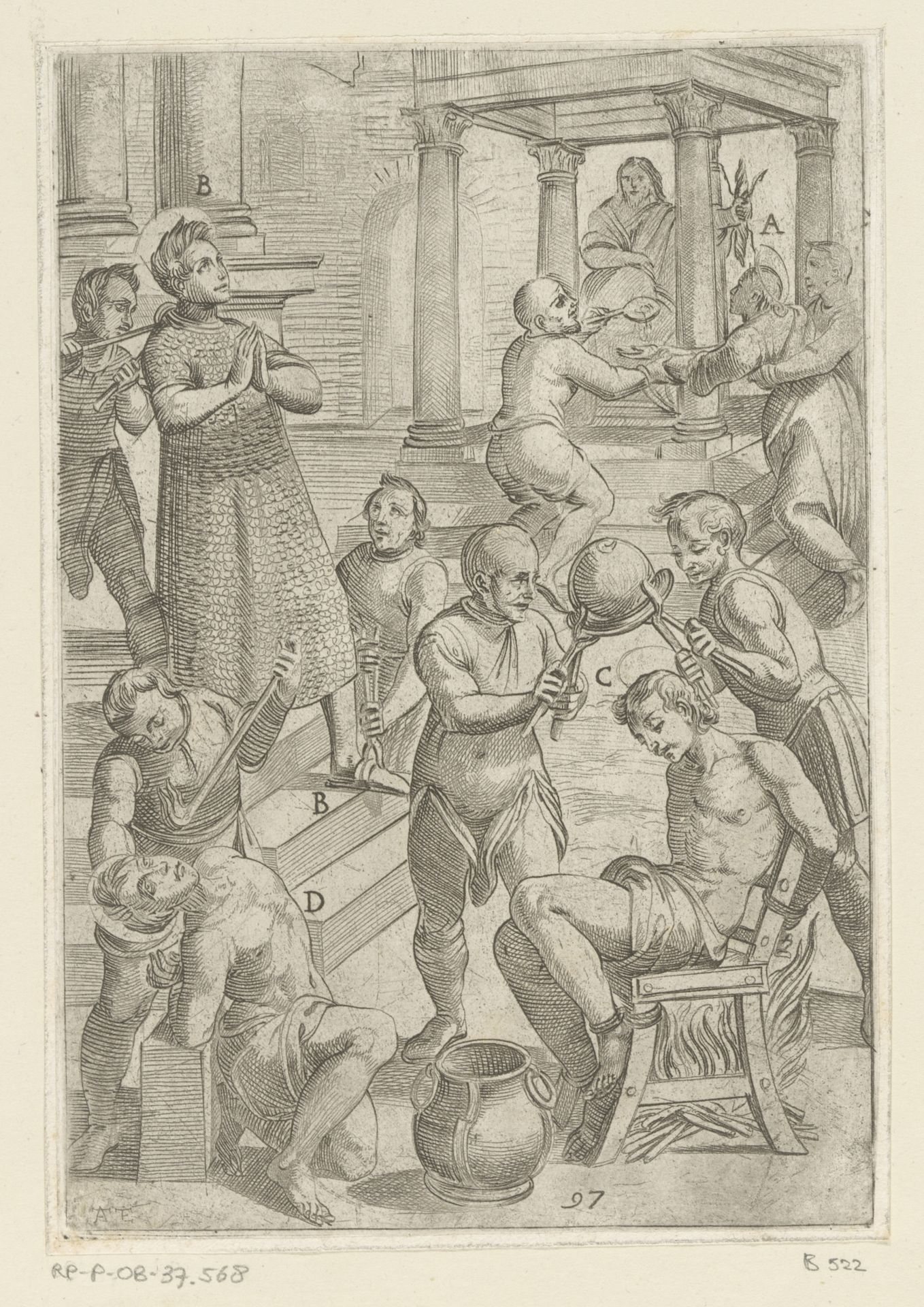
This engraving by Antonio Tempesta, made in the late 16th or early 17th century, depicts a scene of torture, showing the burning and strangling of a saint. Such images were common in Early Modern Europe, acting as potent reminders of religious conflict. Tempesta, an Italian artist, worked in Rome, a city dominated by the Catholic Church. The image creates meaning through visual codes. The 'saint' has a halo, but he is being tortured nonetheless. The architecture suggests an Ancient setting, reminding us of early Christian martyrs. Consider how the rise of Protestantism lead to violence across Europe. Catholic artists made many images showing the suffering of Catholic saints. These images were used to inspire the faithful, but they also demonized those responsible for persecution. Were such prints propaganda? Perhaps they simply answered a market demand. The history of such images, as objects of devotion and political debate, is complex. A good understanding of the religious and political history of the time can help us better appreciate the place of this image in its own culture.

Artwork details
- Medium
- print, engraving
- Dimensions
- height 194 mm, width 133 mm
- Location
- Rijksmuseum
- Copyright
- Rijks Museum: Open Domain
Tags
Comments
Share your thoughts
About this artwork
This engraving by Antonio Tempesta, made in the late 16th or early 17th century, depicts a scene of torture, showing the burning and strangling of a saint. Such images were common in Early Modern Europe, acting as potent reminders of religious conflict. Tempesta, an Italian artist, worked in Rome, a city dominated by the Catholic Church. The image creates meaning through visual codes. The 'saint' has a halo, but he is being tortured nonetheless. The architecture suggests an Ancient setting, reminding us of early Christian martyrs. Consider how the rise of Protestantism lead to violence across Europe. Catholic artists made many images showing the suffering of Catholic saints. These images were used to inspire the faithful, but they also demonized those responsible for persecution. Were such prints propaganda? Perhaps they simply answered a market demand. The history of such images, as objects of devotion and political debate, is complex. A good understanding of the religious and political history of the time can help us better appreciate the place of this image in its own culture.
Comments
Share your thoughts