c. 21th century
Shawl


Listen to curator's interpretation
Curatorial notes
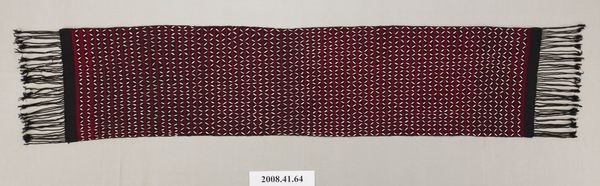
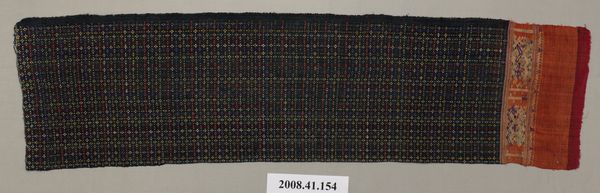
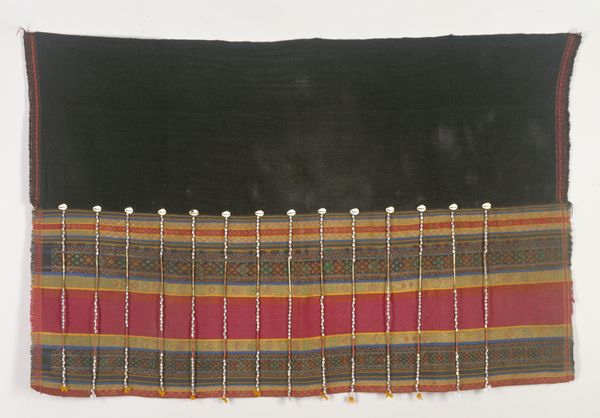
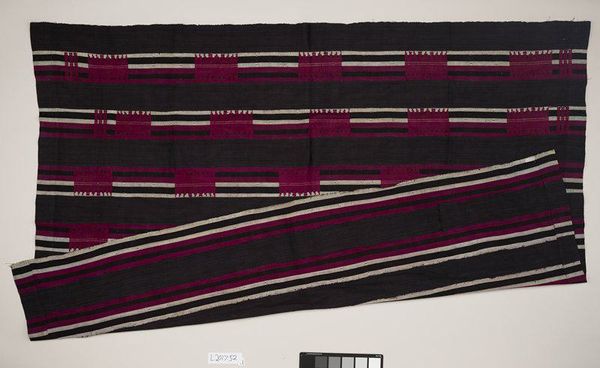
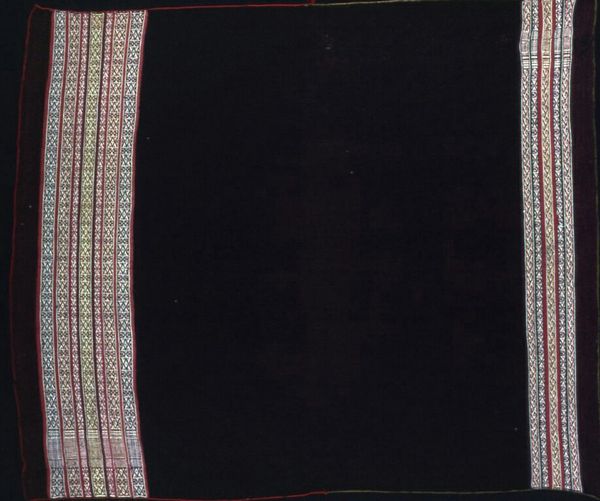
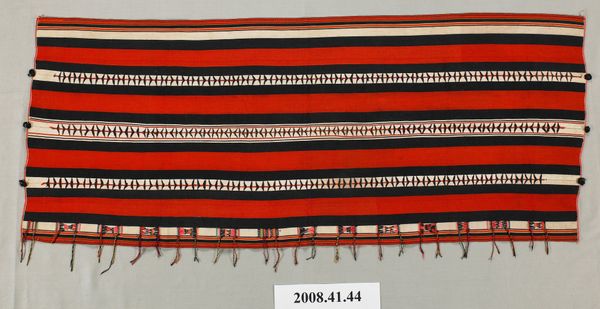
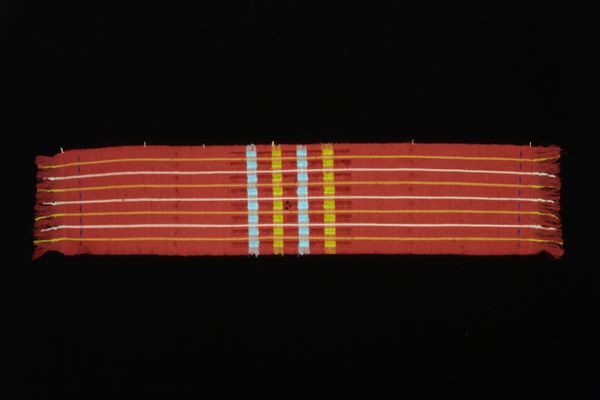
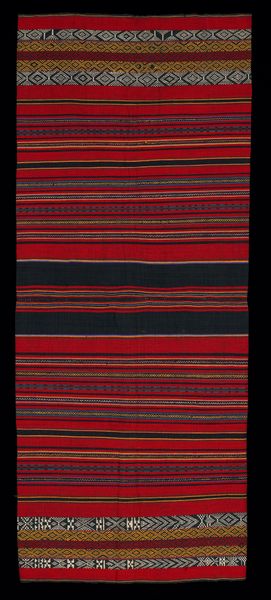
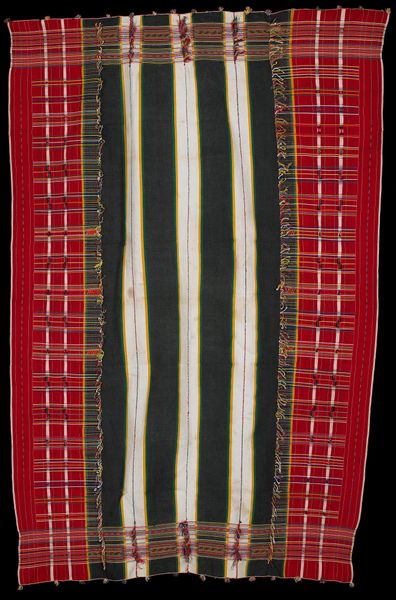
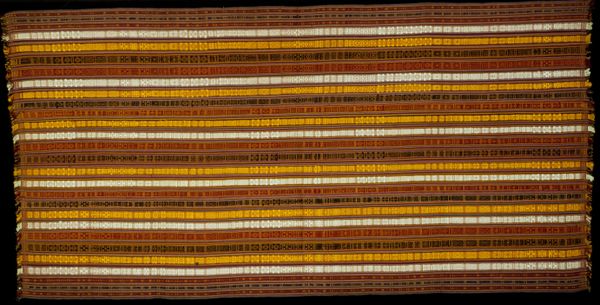
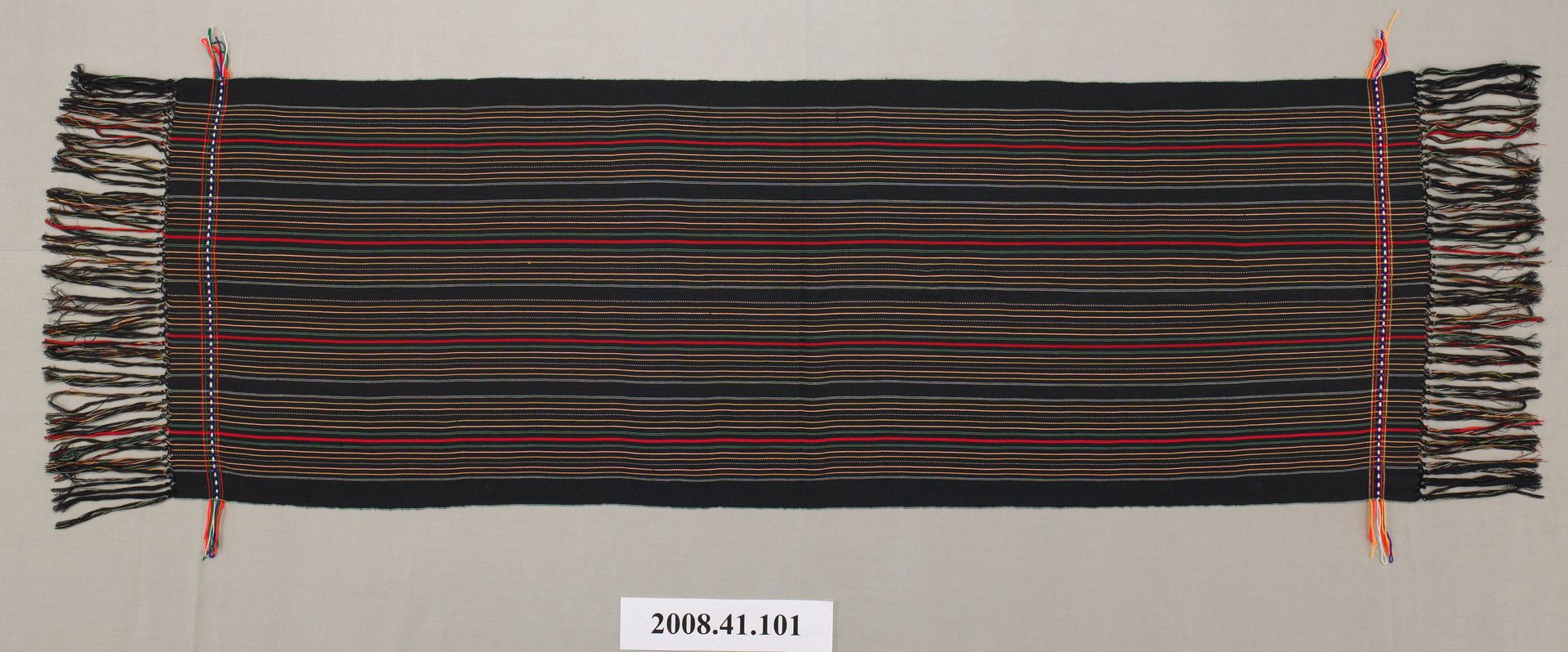
Editor: We’re looking at a shawl from the 21st century, created by the Padaung people. It's made from cotton, wool and other fibres. The lines create such a simple, understated pattern. What strikes you about this piece? Curator: I observe a disciplined use of line and color. The horizontal stripes, rendered in earthy tones punctuated by thin bands of red, dictate the visual rhythm. Note the considered placement of these chromatic accents; they prevent the composition from becoming monotonous. The materiality, too, is integral. Editor: How so? Curator: The wool and cotton, their very textures, contribute to the overall aesthetic. Imagine this pattern rendered in silk or painted – the effect would be entirely different, wouldn’t it? The slight imperfections inherent in the weaving process also introduce an element of chance, a departure from absolute geometric precision, enriching the composition. Editor: I see what you mean. So it’s not just about the colors and shapes, but how the materials and techniques work together? Curator: Precisely. The interplay between form, color and materiality is the essence of this textile. It exemplifies how visual harmony can emerge from simplicity and restraint. And how these can then be assessed as an art form of beauty within the design. Editor: That's a fresh perspective for me. Thank you. I never thought about weaving in that way. Curator: Likewise; I've been challenged to consider the textile in new light.