1663
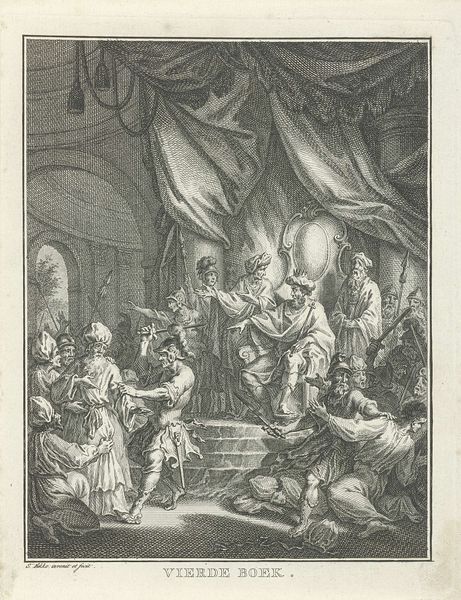
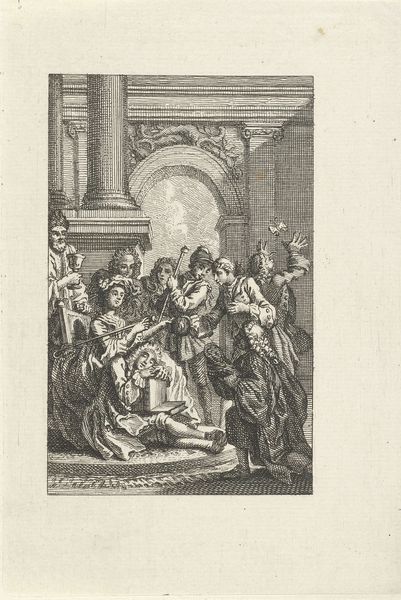
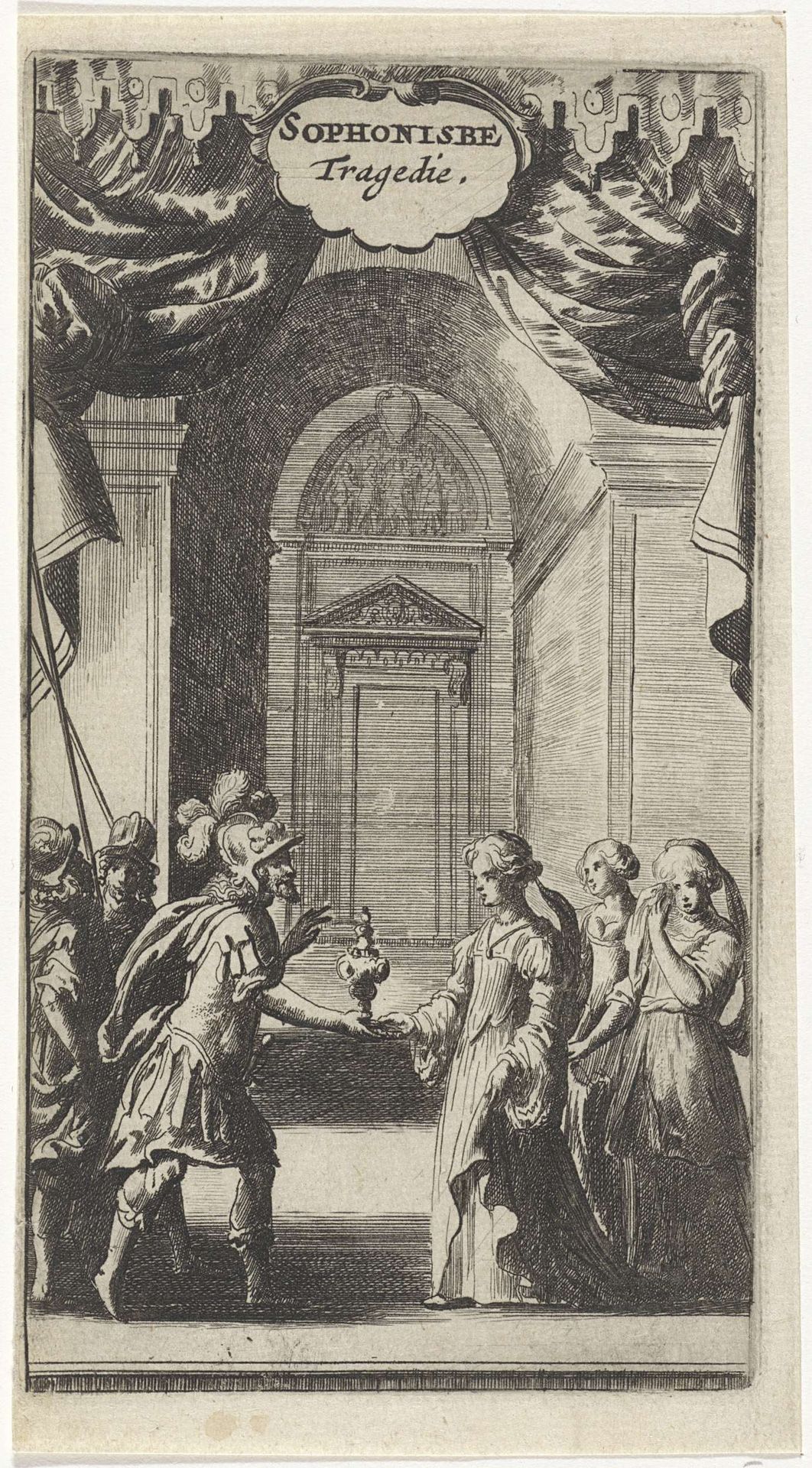
Masinissa biedt Sophonisba de gifbeker aan

Abraham Dircksz. Santvoort
1634 - 1669Location
RijksmuseumListen to curator's interpretation
Curatorial notes
Abraham Dircksz. Santvoort etched this small print, "Masinissa biedt Sophonisba de gifbeker aan," sometime in the 17th century. The central motif is, of course, the cup, a vessel laden with death yet offered with a veneer of honor. Consider how often the cup appears in our collective consciousness, from the poisoned chalices of antiquity to the Holy Grail. It is always more than a simple container. Here, the cup is a paradox: a symbol of both life's end and a twisted form of liberation for Sophonisba. We see echoes of this motif across time. Think of Caravaggio's "David and Goliath," where the severed head is a gruesome cup overflowing with death. These images tap into primal fears and desires, a dance between Eros and Thanatos played out on the stage of history. This echoes through centuries, each artist reshaping the narrative, yet the cup, that potent symbol, remains.