1883
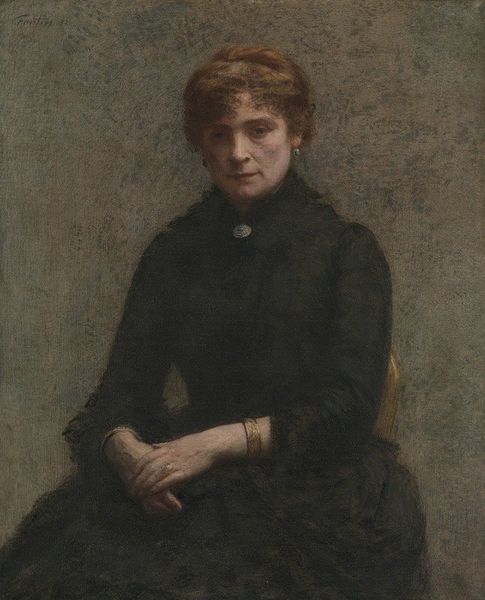
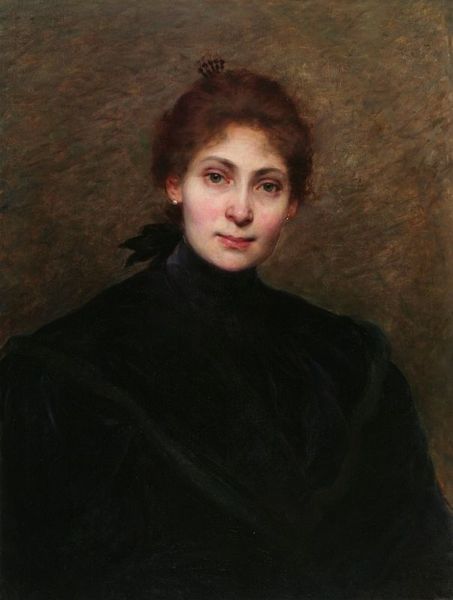
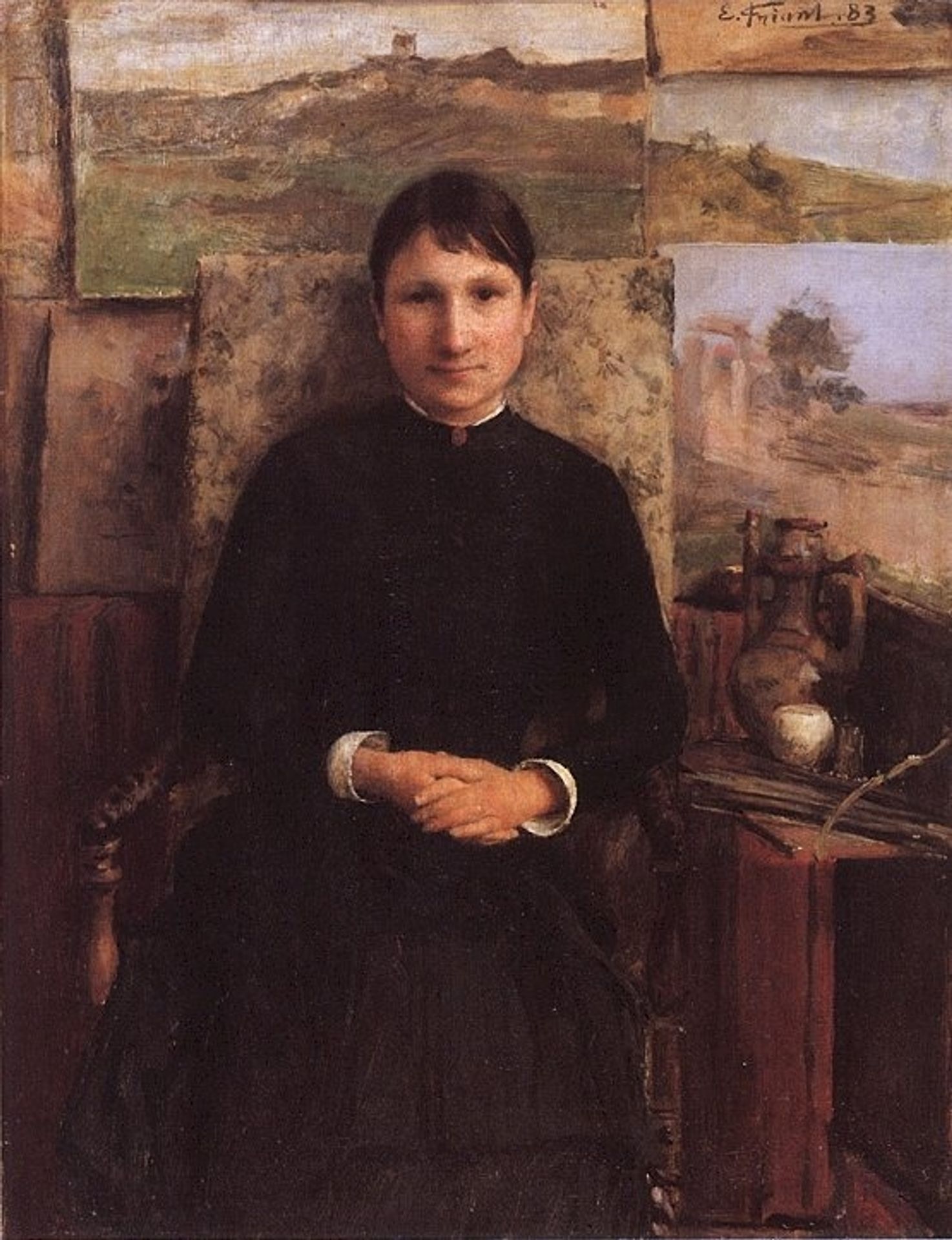
Portrait of Madame Petitjean

Émile Friant
1863 - 1932Location
Musée des Beaux-Arts de Nancy, Nancy, FranceListen to curator's interpretation
Curatorial notes
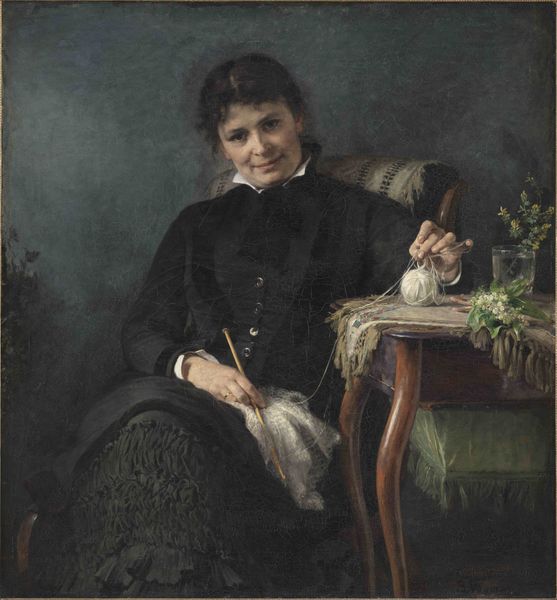
Curator: Today, we’re looking at Émile Friant’s 1883 “Portrait of Madame Petitjean,” currently residing here at the Musée des Beaux-Arts de Nancy. Editor: My first thought? Intimate and restrained. There’s a certain formality, almost austerity, conveyed through the somber color palette. Curator: Friant painted Madame Petitjean surrounded by the tools and products of her trade: her canvases, brushes, and sketches. Note how the canvases displayed behind her almost function as an extension of her person, a testament to her labor. Editor: Precisely. I see the way Friant is working to blur lines. This isn’t merely a portrait, it's a carefully constructed narrative around female artistic labor, situating her production within a context of skill and dedicated, hands-on practice. The choice of oil paint itself lends a weight and depth to the textures. Curator: That’s it exactly. Women artists in the 19th century faced unique social and structural challenges, often excluded from formal training and opportunities. Friant highlights her self-determination by carefully depicting her control over her environment and work. Her gaze meets ours directly, claiming a space within a patriarchal society. Editor: Absolutely. The materials are front and center, but not just aesthetically. Consider the social implications of oil painting itself during that period – a medium historically associated with prestige and masculine mastery. Madame Petitjean is positioned within that framework, engaging directly with the dominant artistic structures of the time. Curator: There is a subtle but undeniable sense of empowerment conveyed by this quiet portrait. Friant presents a fellow artist as a worker, a creator, and an intellectual. This portrait subtly challenges the prevalent view of women relegated to purely domestic spaces. Editor: And that’s a beautiful disruption Friant brings through a dedicated study of materiality. Looking closely at "Portrait of Madame Petitjean," you see more than just an individual – you see a skilled artist carving her own space, material by material. Curator: A perfect note to end on. Her dedicated handcraft, now immortalized through paint and careful composition.